Table of Contents:
When water damage happens, as a contractor, your first reaction might be to focus on drying. But you shouldn’t. Wait… isn’t that your entire job? Isn’t that why the homeowner called you? Again… no.
More important than drying alone is how you plan on drying the project to minimize the damage from spreading but also minimize the necessary repairs after the drying process concludes. That’s exactly where mitigation makes the difference and defines the quality of restoration work.
In this article, we’ll take a closer look at the difference between drying and mitigation, explain when each approach makes the most sense, and show how making the right call can save the property and make the recovery process much smoother for everyone involved.
Drying vs. Mitigation
The confusion between drying and mitigation is common because both are responses to water damage, and they often happen side by side, but they may not be the same thing.
Drying is the process of removing moisture from the environment and from affected materials, usually with the help of air movement, dehumidification, and temperature control. Its goal is to lower moisture levels to prevent further deterioration. Drying could include extracting standing water, removing materials and setting drying equipment.
Mitigation, however, starts earlier. It’s about taking immediate steps to control the situation and create a plan that minimizes the damage.
This means looking for opportunities to save materials when possible. It means taking additional steps to monitor the drying process. It most likely means extended dry times.
When to Prioritize Drying
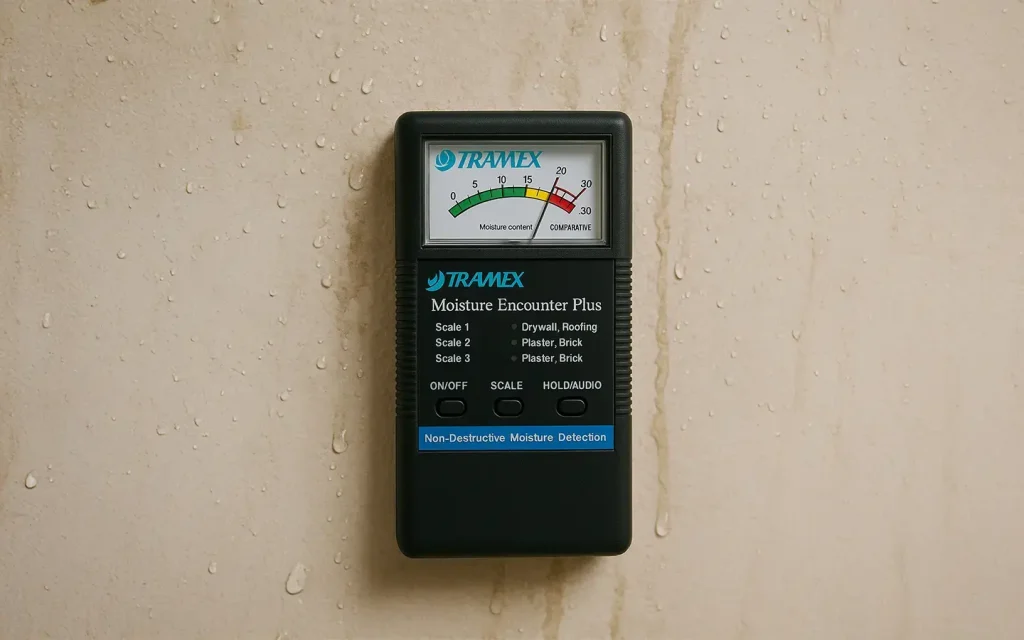
Drying is a tool in the mitigation process. Drying is necessary when there is water damage. But the IICRC ANSI s500 gives us principles we can use to dry water damage. This means contractors may choose to dry in different ways.
When the water damage is the result of contaminated water, demo and cleaning should be done per the standard. What should be removed can be found in the appendix of the s500. Some surfaces are non-porous, so they can be cleaned.
Other components of a home are semi-porous or porous. Since there is no evidence the contamination can not be thoroughly cleaned and removed in porous and semi-porous materials, source removal is necessary.
After the contamination is removed, the affected area must be flushed with pressurized water and extracted. This is the most efficient way to ensure contamination is removed so the drying process can proceed with rapid air movement.
But on water damage projects that are the result of a clean water source, category 1 projects, there is some leeway in what can be cleaned and saved or removed. Therefore, there tends to be many different ways to handle these projects.
Some contractors choose to remove trim, others remove trim and drywall to speed drying. Is this correct? It depends. If the goal is to dry quickly, then yes. This is something the customer should decide. Try to get the adjuster and the homeowner on the same page.
But is this the only method of drying? Is it always correct?
The Role of Mitigation in Restoration
The definition of mitigation is to limit or reduce the severity of something. In most cases, restoration contractors won’t be able to limit the extent of where the water damage occurs.
If the source of the water damage hasn’t been addressed by the time we get there, then step one is to stop the water from running. But in most cases, this has been handled before we get there.
So how would a restoration contractor mitigate a water damage project? During the planning phase of a Category 1 project, the contractor can limit the extent of the reconstruction necessary to put the home back together. This would mitigate the cost of the overall project.
Contractors can do this by learning to dry full assemblies. When circumstances allow for it, leave the baseboards, drywall, and even insulation in place. Then focus on drying the areas that are hardest to dry. This means setting screws and monitoring the moisture content of the area below the sill plate.
When mitigation is handled properly, the rest of the restoration process becomes much more manageable. Repairs are simpler, overall timelines are shorter, and the risk of new problems is lower.
The mitigation may take longer and may be more expensive, but the overall cost of the project will certainly be less. No trim, no drywall, no painting walls, etc.For property owners, this will mean fewer disruptions and less damage overall.
Factors to Consider When Deciding

What factors should a contractor look at before deciding if mitigating a project by drying assemblies with less demo is possible?.
It depends on the specifics of the situation, starting with the type of water damage.
Water damage as a result of water from a clean water source is much easier to mitigate. Before mitigating, consider if water has become contaminated because it has touched other contaminated materials in the home.
In cases of flooding, though, the water carries bacteria and other harmful substances, which usually means you’ll need to remove affected materials instead of trying to save them through drying.
The materials themselves also play a big part.
For example, porous materials like drywall soak up water quickly. If contaminated, it needs to be removed. If not contaminated, drywall, trim and even the insulation paper can be dried under the right circumstances. Non-porous materials, on the other hand, like plywood underlayment, don’t absorb water as easily and can often be cleaned and saved if you act in time.
Finally, there’s the question of cost.
Avoiding demolition and replacement wherever possible keeps the project more affordable, but that only works when you understand the situation early and take the right steps. The better your timing and judgment, the more control you have over the final cost of the job. Also, there may be situations where drying in place is not actually mitigating a project. For example, drying a tile floor for 8 days with an Injectidry system when the tile only costs a dollar per sq ft is not mitigating a project.
How Reets Drying Academy Can Help
Knowing when to use mitigation and when to focus on drying is something that comes with experience, but the right training makes the decision-making process clearer.
At Reets Drying Academy, we focus on helping restoration professionals build that understanding from the ground up.
Our courses are built around real job scenarios, so you can learn how to assess water damage properly and choose the right approach for each situation.

Nick Sharp
Nick Sharp has worked with Jeremy Reets for nearly 2 decades. He started in carpet cleaning and mitigation before moving to the construction side as a project manager. He then was the senior estimator for Champion Construction for over 8 years. Since its inception in 2015, Nick has been an instructor of our Restoration Estimating & Negotiating course. His most recent venture is as a restoration estimate consultant. Nick is an Xactware Certified Trainer and also has his Levels 1-3 Xactimate Certifications. He’s a bad boy on that sketch but better at finding where you may be losing money!


770-712-7293