Key Takeaways
- PICs (Products of Incomplete Combustion) pose potential serious, often invisible hazards on fire damage jobs.
- Benzo(a)pyrene is a known carcinogen historically linked to occupational cancer.
- The chemical hazards today far exceed those of the past due to synthetic materials.
- Selecting and using proper PPE based on specific job conditions is essential.
- Thorough verification testing and documentation ensures safe results for your clients and protects your business.
What Are Products of Incomplete Combustion (PICs)?
Insert the video with David Hodge
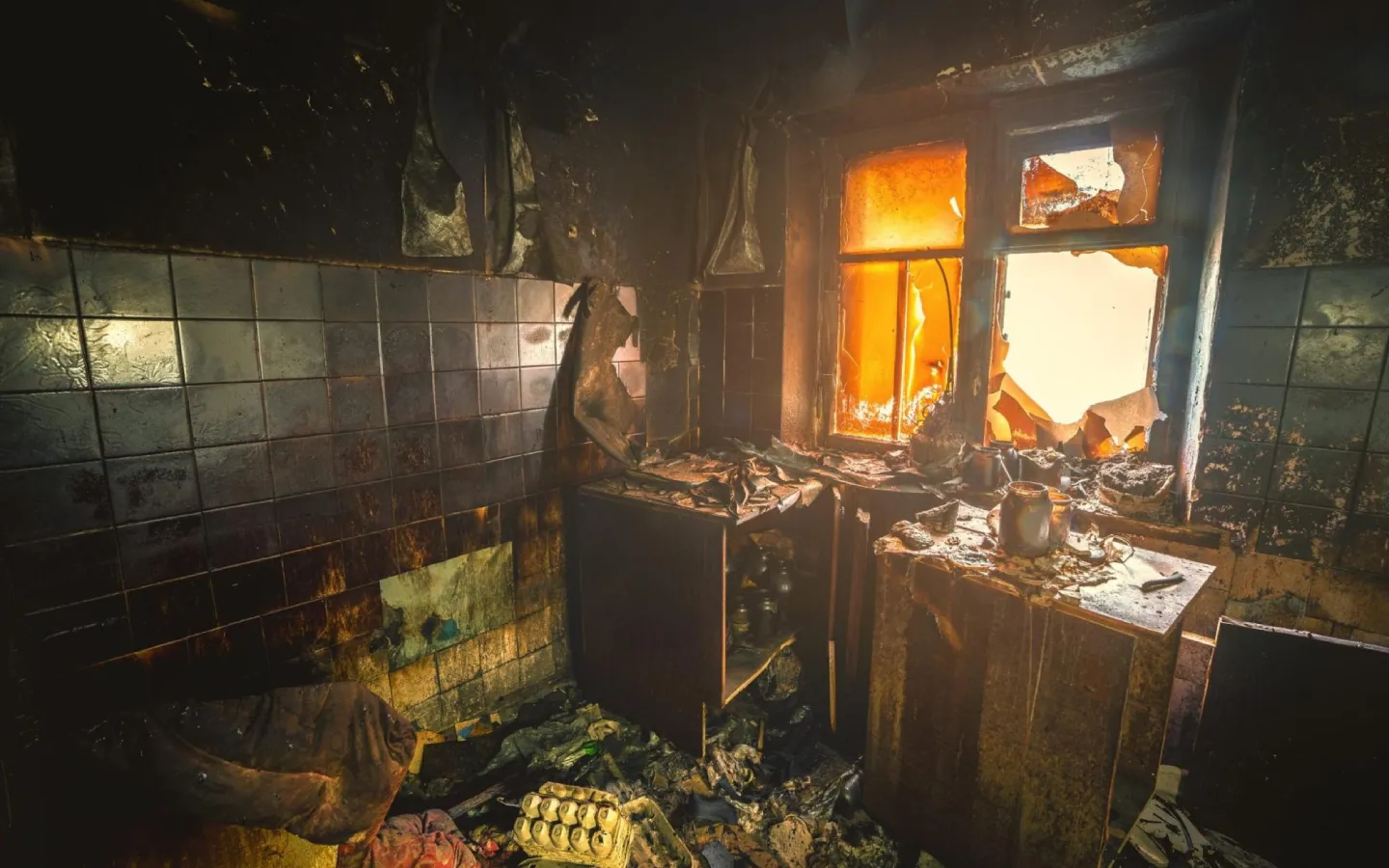
If you’re working on fire damage restoration projects, remember: you’re dealing with more hazards than you might realize. Many technicians show up to fire jobs wearing street clothes, maybe an N-95 mask, and nitrile gloves if they’re careful. Is that enough protection? Usually not.
Most people think the primary hazards on fire jobs are obvious: ash, char, soot. However, there’s something else lurking that you can’t always see: hazardous substances called Polycyclic Aromatic Hydrocarbons of PAH .
When materials burn without fully combusting, which happens in nearly every fire, they release byproducts, called Products of Incomplete Combustion, or PIC for short These byproducts found in smoke (gases, vapors, and particles) can be hazardous, even after the vapors and gases have dissipated and can include harmful substances like volatile organic compounds (VOCs), polycyclic aromatic hydrocarbons (PAHs), acids, and other substances.
One particularly concerning chemical, that is part of the PAH family, you might encounter is called benzo(a)pyrene.
Benzo(a)pyrene: A Long History of Harm

Let’s take a quick step back in time to understand why this matters. Back in the late 1700s, a British surgeon named Sir Percivall Pott studied chimney sweeps workers in England. During that period, chimneys were cleaned by young workers who often wore little or no clothing and had poor hygiene practices.
Think about what was being burned in those fireplaces. Were they burning chemically treated starter logs like today? No, just plain wood or coal. Even so, a residue called creosote builds up inside chimneys, containing high levels of chemicals, including benzo(a)pyrene. Without proper protection and hygiene, the workers absorbed this chemical through their skin as it was attached to soot residues.
What happened next was alarming: many of these workers, most of which were prepubescent boys developed scrotal cancer directly related to this exposure. They even had a name for it in those days: “soot warts”.
If basic wood fires caused such serious health issues over 200 years ago, imagine the severity today when we have plastics, foam furniture, synthetic flooring, electronics, and chemically treated materials burning in house fires. The hazards have multiplied dramatically, and that makes protecting yourself even more crucial.
How PICs Impact Your Health Today
PIC hazards such as benzo(a)pyrene are proven carcinogens. They can enter your body through inhalation, skin contact, or cross-contamination from unclean equipment or PPE.
A single exposure might not immediately harm you. However, repeated exposure over weeks, months, or years can lead to serious long-term health issues including respiratory illness, liver problems, and increased cancer risk.
If your technicians walk into a fire-damaged property without proper personal protective equipment to protect all exposure routes, they’re taking unnecessary risks. Remember, you can’t see or smell many of these contaminants clearly. That’s why assuming they’re always present is the safest approach.
Need in-depth fire restoration training that teaches you all this and more?
Book your IICRC FSRT/OCT Combo Class!
How To Properly Protect Yourself From PIC Hazards
Now that you understand how serious PIC hazards can be, let’s talk about protection.
According to OSHA, Personal Protective Equipment (PPE) should typically be considered a last line of defense. But for fire restoration jobs, PPE is usually your first and most practical defense against chemical hazards.
Then what’s the right PPE to use? It depends directly on the hazards present at each job. You cannot assume one setup works for every fire restoration scenario.
At a minimum, proper PPE for handling fire damage cleanup includes:
- Full-face respirators with cartridges rated for gases, vapors, and particulates (N95 is usually insufficient)
- Chemical-resistant gloves
- Disposable protective suits (Tyvek or equivalent)
- Eye protection
- Clear, documented decontamination procedures for gear and personnel
Evaluate every job separately based on the materials burned, the intensity of the fire, how extensively smoke and residues spread, and how long exposure will last. Remember, PIC hazards are microscopic and often invisible. They can remain in the air and on surfaces long after the fire is out, so don’t underestimate the risks.
And if you’re weighing what PPE is worth providing on fire jobs, our article on why PPE isn’t just a cost of doing business should help you see the real value PPE brings to your team and your bottom line.
Final Steps: Verification and Documentation
Your job isn’t complete until you verify and document that hazardous contaminants have been effectively removed. Professional testing methods include airborne particulate measurements, surface wipe sampling for VOCs or PAHs, and professional odor evaluations.
Documenting these results proves to clients that you’ve done your job correctly, as well as keeps you protected against future claims or liabilities.
Want to learn how to properly restore fire and smoke damage and turn that work into real profit?
Get trained with Reets Drying Academy!

Nick Sharp
Nick Sharp has worked with Jeremy Reets for nearly 2 decades. He started in carpet cleaning and mitigation before moving to the construction side as a project manager. He then was the senior estimator for Champion Construction for over 8 years. Since its inception in 2015, Nick has been an instructor of our Restoration Estimating & Negotiating course. His most recent venture is as a restoration estimate consultant. Nick is an Xactware Certified Trainer and also has his Levels 1-3 Xactimate Certifications. He’s a bad boy on that sketch but better at finding where you may be losing money!


770-712-7293