Table of Contents:
Are you starting a water damage restoration business? A common question new business owners have is, “What kind of water restoration equipment should I get?” That naturally leads to a second question, “How much equipment should I get?” Here’s a list of recommended water mitigation equipment for starting a water damage restoration business.
Why Are Proper Tools Crucial for Water Restoration Projects?
Have you ever tried to build something and can’t find the right bit for your drill? You have one that’s too big… one that’s too small…. But not the right one. It’s frustrating isn’t it. When you don’t have the proper tools to handle a project, the time and frustration builds.
Water restoration equipment is no different. When you are on site and trying to dry a home, having the proper tools is crucial.
Step 1 is making sure you are purchasing tools that are useful, accurate and will increase efficiency and safety.
Step 2 is making sure those tools are well maintained and available (meaning not getting lost or left at the shop!)
This article will discuss what equipment is needed for water restoration. It will also address the water restoration tools necessary to complete a clean, dry and justified project.
Water Extractor or Wet-Dry Vacuum
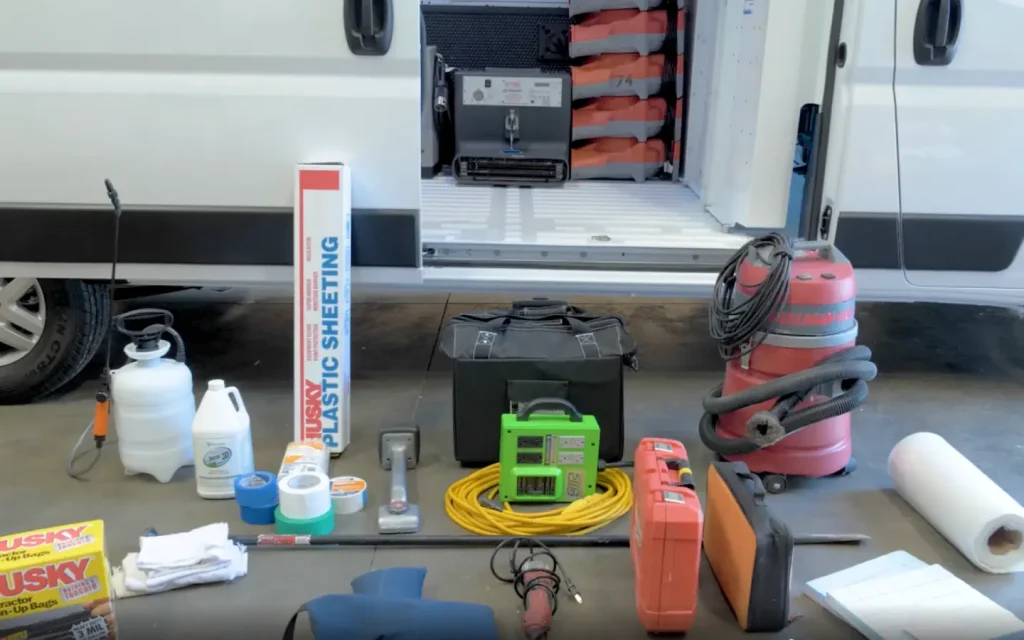
Extracting water is critical to the direction of water restoration projects. For water extraction, there are a few water restoration tools you could consider.
First, truck-mounted extractors are commonly used. For companies that are venturing into water restoration from the cleaning industry, you may already have a truck mounted extractor. This is a hefty investment. Truck mounts are good for not only water extraction but also cleaning category 2 and 3 projects. Unfortunately, the maintenance on a truck mount can be extensive. If you’re a new company looking for mitigation equipment, this may not be the best option.
A secondary option would be this extractor. This portable unit is a good solution for commercial high-rise buildings. It can also be used for residential use. You’ll want to get a water claw attachment as well for weight assisted extraction.
If you aren’t ready to invest in a water extractor, you may want to get a wet-dry vac from your local hardware store. It won’t tide you over forever, but it’ll get you through for some time.
Moisture Meter

Water restoration contractors use moisture meters to examine the conditions inside the building, adjust the conditions to create a drying environment, and document the project from wet to dry. What moisture meters do we recommend for water restoration projects? Here are a few meters we recommend:
Hygrometer

Thermo hygrometers sense temperature and relative humidity in the air. Some models may display dew point, GPP and vapor pressure as well. The key to a great hygrometer is how quickly it acclimates to different atmospheric conditions. Here are a few hygrometers you should consider purchasing for your water damage restoration tools package.
IR Camera

An infrared camera is used to identify the differences in temperature on surfaces and displays them on the camera as different hues or colors. When purchasing water restoration tools, an IR camera is valuable. Whereas you should when it comes to investing in best quality, do not spend $5000 on an IR camera. For what we use them for in this industry, you don’t need it. A $400-$500 IR camera will give you what you need to start. Here are a few suggestions:
Dehumidifiers
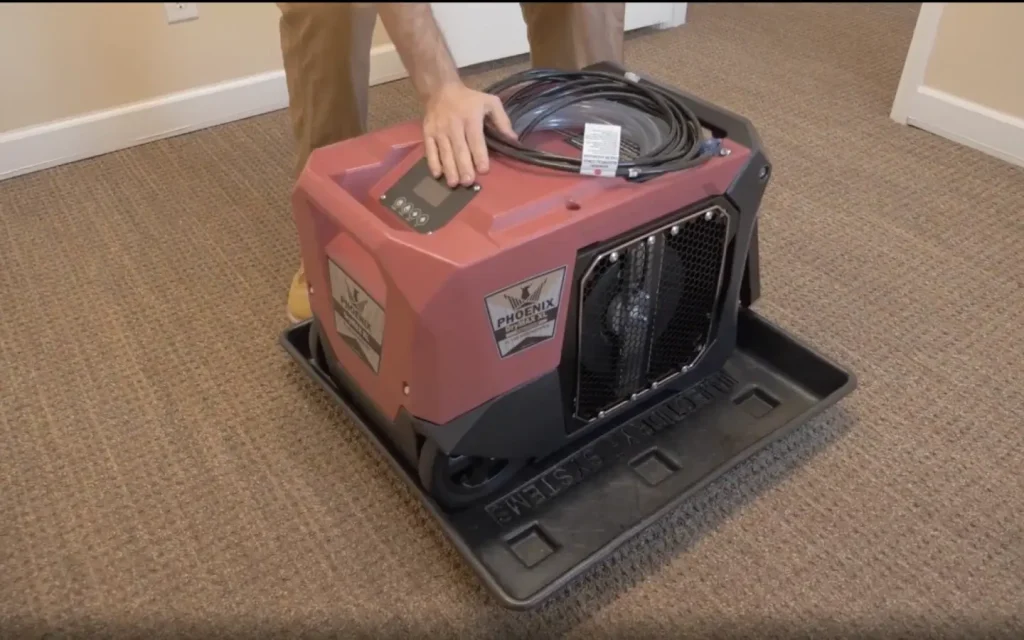
Dehumidifiers are essential pieces of water damage equipment. You need to decide if you will purchase large dehumidifiers or extra large dehumidifiers. A good rule of thumb when deciding on how many dehumidifiers, air movers, and AFDs (air filtration devices) to purchase is:
- For every 1 XL Dehumidifier, buy 7-8 air movers, and 1 AFD
- For every 2 Large Dehumidifier, buy 10 air movers, and 1 AFD
Here are a few dehumidifiers you may consider purchasing:
- XL Dehumidifier recommendations:
- Large Dehumidifier recommendations:
Air Movers

When thinking about equipment needed for water restoration, air movers are the number one thing most contractors think about. To accelerate the drying process, air movers should be set according to the formula set out in the ANSI s500 standard.
If you are just starting in the industry, there are a number of different places you can get air movers second hand. You can look on Facebook marketplace or reach out to various groups that sell water restoration equipment packages. Then once you are established, you can replace your air movers in stages.
We suggest getting 7-8 air movers if you have 1 XL Dehumidifier or get 10 air movers if you have 2 large dehumidifiers. You will need to decide if you want radial air movers or axial air movers. Pick your air mover and stick with it because they stack together, the repair parts are all the same, and they look better on the jobs. Here are a few air mover recommendations if you want to purchase new mitigation equipment:
Air Filtration Devices
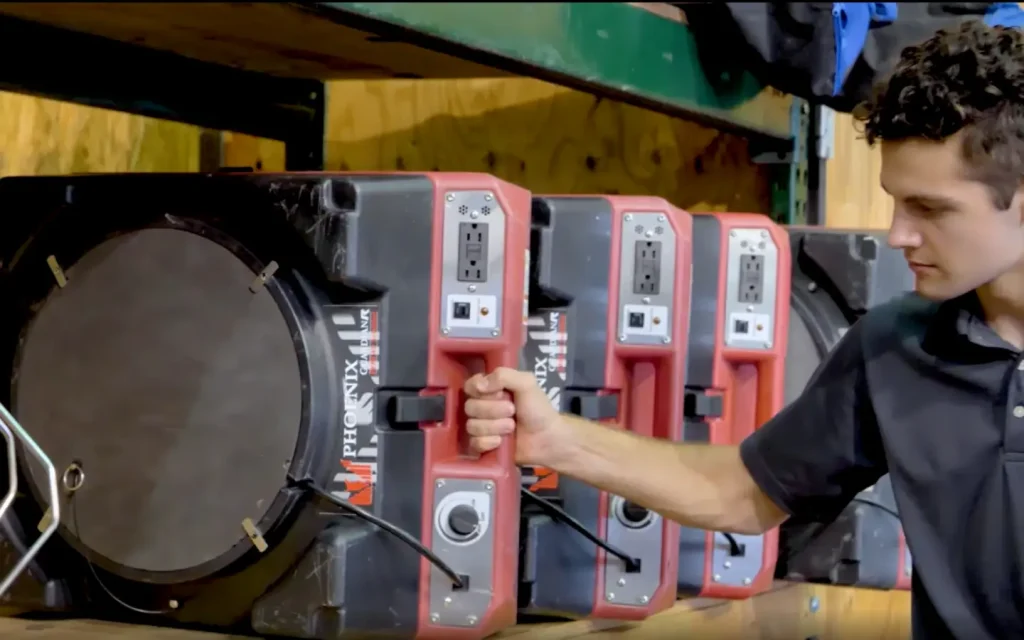
The health and safety of your employees and those that are inhabiting the home with water damage is a top priority. As a result, you should be using air filtration devices whenever necessary. For directions on when to use air filtration devices, be sure to look at the ANSI s500. If you’re concerned about getting paid for air filtration devices on category 1 projects, you should go to an estimating course that is designed for mitigation contractors.
When you buy one XL Dehu (or 2 large dehus), buy one 500 CFM AFD. We recommend this and not going with larger units. It works better to have smaller units spread out because they can capture particles and contaminants in different areas versus having just one really big one in one spot. Here are a few air filtration device recommendations:
HEPA Vacuum
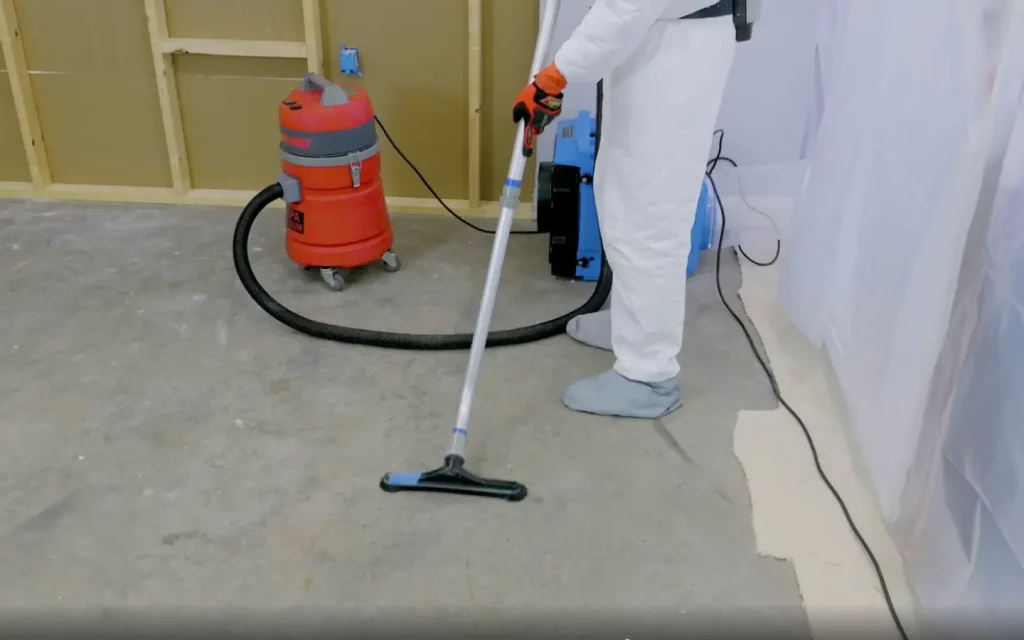
The main objective of water restoration is to leave the home clean and dry while reducing risks and potential hazards. Per 2021 ANSI s500 When utilizing air movement to dry homes, there are circumstances where we should be cleaning beforehand. This cleaning should reduce aerosolizing particulates. This could mean wet wiping or HEPA vacuuming before turning on air movers.
HEPA vacuums will also be necessary when handling fire or mold projects. Having a HEPA vac that is a backpack can be very helpful for technicians. These are the HEPA vacs we recommend:
Water Restoration Hand Tools

You’ll need a number of water restoration tools to perform controlled demolition when necessary. Some of these may be hand tools like a pry bar, hammer and pocket knife. You will also need power tools to remove drywall, glued down hardwood and other components. There are a variety of name brands and varying costs to these hand tools. There is also a lot of brand loyalty when it comes to tools. We won’t wade into those waters…
But we would like to suggest getting a drywall saw that has an attachment which allows it to be used in conjunction with a HEPA vacuum. Here’s an example:
Personal Protective Equipment
Depending on the hazard assessment done on a project, you will need varying levels of PPE. PPE might range from disposable gloves and an N-95 to full coveralls, respirators, boots and gloves. Once again, there are varying brands to know. Here are a few recommendations to start building your PPE for water restoration.
Conclusion
Buying water restoration equipment to start your new water restoration company is an exciting, expensive, amazing and nerve-wrecking proposition. In the end, buy quality equipment that you won’t need to replace and repair all the time. The best ability is availability.
Having clean, quality water mitigation tools and equipment will make a good first impression with your customer. As you progress, look at replacing equipment in a rolling fashion. No need to overhaul everything. Instead, replace your water damage equipment in waves.
If you’re just starting out and need to know how to effectively use your water damage tools and equipment, come to Reets Drying Academy for the IICRC WRT/ASD course as soon as possible.

Nick Sharp
Nick Sharp has worked with Jeremy Reets for nearly 2 decades. He started in carpet cleaning and mitigation before moving to the construction side as a project manager. He then was the senior estimator for Champion Construction for over 8 years. Since its inception in 2015, Nick has been an instructor of our Restoration Estimating & Negotiating course. His most recent venture is as a restoration estimate consultant. Nick is an Xactware Certified Trainer and also has his Levels 1-3 Xactimate Certifications. He’s a bad boy on that sketch but better at finding where you may be losing money!


770-712-7293