Table of Contents:
Did you know that there are several hundred thousand chemicals in use today and over 30 million workers in the U.S. are either exposed to or work with those chemicals? Many of them can be hazardous. Approximately 50,000 deaths and over 199,000 illnesses to U.S. workers annually, are attributed to chemical exposures, according to the Dept. of Labor.
And sometimes it feels like the cleaning and restoration industry uses about 99% of those.
How OSHA Classifies and Regulates Hazardous Chemicals
OSHA regulates health and safety when it comes to our use of hazardous chemicals according to the Hazard Communication Standard.
The United States adopted what’s called the Globally Harmonized System in 2012. Under it, hazardous chemicals are classified into three classifications: physical, health, and environmental hazards.
OSHA regulations focus on physical and health hazards, while the EPA focuses on environmental, for the most part. Every year, OSHA releases their top 10 most cited violations of their standards for the previous year. In 2024, the #2 most cited violation of ALL industries was violation of the Hazard Communication Standard, with 3,277 violations listed. OSHA also lists these by industry, and in General Industry alone for 2024, 3 of the top 10 citations for violations were in Hazard Communication:
- #2: Not having written programs
- #3: Not supplying training and information
- #6: Not providing readily accessible Safety Data Sheets (SDS)
Labeling and training are all requirements under your written hazard communication standard.
Do you have one? Is it comprehensive enough? It might be something you should look at.
The Risk of Skipping Written Programs
Not having a proper written safety program is not just a compliance issue. It can put your business and your team at real risk. OSHA fines can be steep, and violations are part of public record, which can damage your reputation with clients and partners.
Lack of clear safety protocols can also lead to confusion on job sites, improper handling of hazardous materials, and preventable injuries. For restoration companies, these mistakes can cause job delays, lost revenue, and increased liability.
A written program ensures your team knows exactly what to do, helps keep training consistent, and protects your business from costly mistakes. The good news is, creating a strong written program doesn’t have to be complicated or time-consuming. Here’s how we make it easier for restoration companies.
OSHA Compliance and Written Plans Made Easy for Restoration Companies
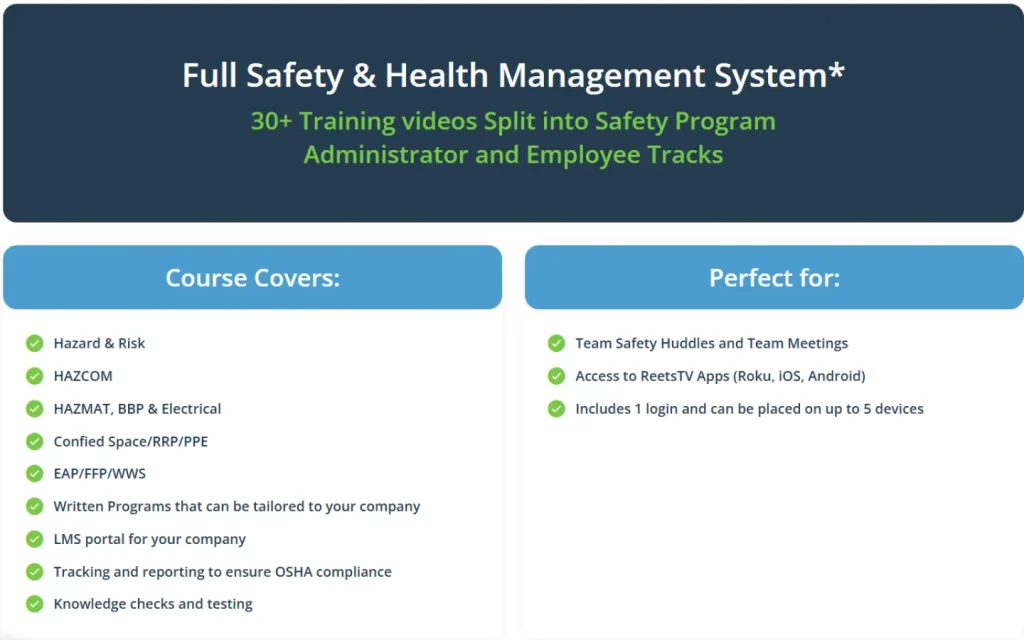
The Reets Safety and Health Management System is designed specifically to make OSHA compliance simple for cleaning and restoration companies.
This robust safety management system comes with:
- Pre-written programs required to be OSHA compliant
- Over 30 high-quality safety training videos
- Automated reminders for respirator fit testing and employee safety training
👉 See what’s inside Safety and Health Management System!
Protect Your Team and Your Business
Having a comprehensive written safety program is not just about following regulations. It is about building a safer workplace, protecting your crew, and safeguarding your business from unnecessary risks.
The Reets Safety and Health Management System gives you the tools to do it right without the time and stress of starting from scratch.
For more information about pricing and deals, call Trevor: 770-712-7293

Nick Sharp
Nick Sharp has worked with Jeremy Reets for nearly 2 decades. He started in carpet cleaning and mitigation before moving to the construction side as a project manager. He then was the senior estimator for Champion Construction for over 8 years. Since its inception in 2015, Nick has been an instructor of our Restoration Estimating & Negotiating course. His most recent venture is as a restoration estimate consultant. Nick is an Xactware Certified Trainer and also has his Levels 1-3 Xactimate Certifications. He’s a bad boy on that sketch but better at finding where you may be losing money!


770-712-7293