Table of Contents:
Fire damage isn’t just about what you can see—it’s about everything you don’t see.
Fire disasters may leave behind a mix of problems—structural damage, water damage from firefighting, and particles of incomplete combustion (PIC) that can find their way into places you wouldn’t expect. If any steps are missed you could leave behind lingering smoke odors, potential health hazards for the property owner or elevated moisture that could lead to microbial growths.
That’s why proper training matters. Knowing the right techniques can save time, money, liability, and frustration. I’ve spent the last 20 years working in this industry, learning what works and what doesn’t. Whether you’re just getting started or looking to improve, these are eight key lessons that will make your fire restoration jobs smoother, more efficient, and more profitable.
Things You Should Know About Fire Restoration
Fire restoration is not just cleaning what you see. This work requires constant education about specific knowledge, techniques, and equipment to properly restore properties to pre-loss conditions. The following lessons are what I’ve learned through years of hands-on experience in the field of fire remediation.
Lesson 1: Fire Restoration is a Long Process
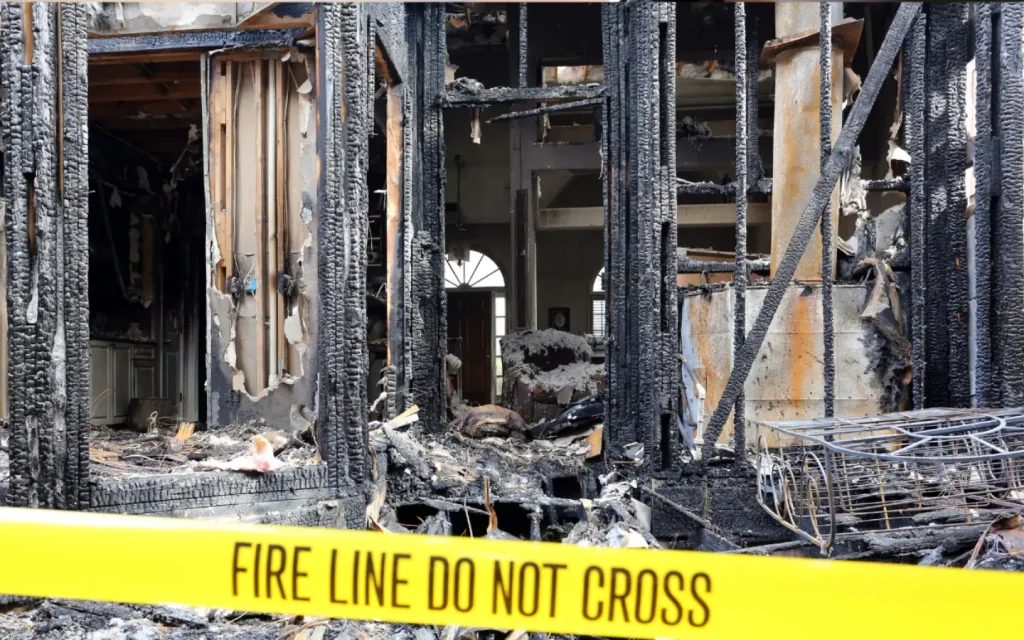
Fire damage may include water damage. Thus, it should be addressed quickly.
More factors go into restoring fire damage as opposed to water damage. In fact, repairing fire damage could also include water mitigation due to firefighting efforts. Also, damage to water sources within the property due to the fire can cause secondary property and contents damage.
To complete projects in an orderly manner, there is a balancing act of coordination with companies. It’s noteworthy to mention that the actual structural and contents cleaning process is very labor-intensive. Any reputable and professional disaster restoration company will not rush this process.
Fire restoration can require significant time investment. It may take a while to get all the revenue, but it can yield profitable results when approached correctly.
Lesson 2: Education Makes A Difference
“The key to efficiency is proficiency.”
That’s a saying I came up with to always keep in the forefront of my mind for every job. Many companies don’t focus on training. However, techs who fully understand the processes are more productive and thorough. To start, you must know how the fire is classified.
Figure out what type of Particle of Incomplete Combustion (PIC) is on-site, where applicable. To determine this, you will need to have an Indoor Environmental Professional perform testing. This will help you decide what PPE is necessary and the best way to clean, restore, or discard damaged components.
Even minor mistakes can cost you time and money.
Taking a course from an IICRC-approved educator, such as IICRC FSRT or IICRC OCT, will increase profitability. Both courses are available at Reets Drying Academy. The certification will help you land jobs over other companies that are not adequately trained or certified.
When considering fire service training, don’t just focus on the location of the facility.
Accessibility is important. More important is finding training that will focus on systems, procedures, and your company’s profitability. Look at the facility’s reputation and the reviews, and learn about the instructor. What is their specialty? Are they up-to-date with the latest industry information? Travel costs can quickly be recouped if the class focuses on technical details and has a business mindset.
Lesson 3: Psychology Plays a Part in Fire Restoration

Every homeowner is different. Many go through a grieving process after seeing their home destroyed or altered by the effects of fire. This can happen even if no one perished in the fire. They may express this grief in various ways. Because you are there during the restoration, helping a homeowner may mean wearing a hat that’s not all business. It means thinking about the emotions of the homeowner as well.
Delays in production are expected, especially when decisions must be made concerning contents. Contents may include sentimental items. Having a clear plan of action after assessment will help things to go more smoothly by establishing proper expectations.
That same psychology can also come into play when facing invisible odors.
After you have gone through the principles of deodorization (remove the source, clean the contamination, recreate the conditions of penetration, and seal, if necessary), you may not sense an odor. But that doesn’t mean the homeowner won’t. You must take care of this issue throughout the entire fire and smoke damage restoration job, not just at the end.
Find ways to help the homeowner’s psyche by addressing their concerns up front and continuously during the fire restoration.
Lesson 4: Proper Chain of Custody Will Save You Trouble Later
Sure, it may not be a legal investigation, but you should document fire restoration like it’s one.
In the beginning, you may be so focused on just getting to the property, staking a claim on the job, and starting production that you may not be quite as detailed in your documentation as you should be. Taking the time to do this will prevent many headaches further down the road.
Chain of Custody is paramount when it comes to content handling management.
Each part of the process needs to be documented in detail, from packing and removal to storage, cleaning, restoration, and return. Whenever the contents are going to be touched, there needs to be a record of it because, inevitably, there will be an inquiry about the handling.
This will be from either the insurance company you are working with or the homeowner.
The claims adjuster isn’t going to pay you for actions you can’t prove were performed. The homeowner can lose trust in your ability to complete the fire damage restoration process just by not being able to locate or tell them the status of items you’ve removed from the home that they requested before the project is complete. The effect of this can be experienced when you are trying to receive payment for the job but there is an unwillingness to sign off until those issues are addressed.
It’s so much easier today than a couple of decades ago to thoroughly document contents.
Many content restoration programs are available to choose from that are capable of allowing you to record, download, and share using a handheld electronic device. This information can then be easily retrieved, and when the homeowner asks you about the silver set, you can pull it up in the database and see the box number, whether it was cleaned and restored, and the current location.
Remember, though, that good software is only one piece of suitable processes and is not a replacement. So, have a documented chain of custody in your Standard Operating Procedures.
Lesson 5: Don’t Waste Time on Non-Salvageable Items During Fire Restoration

Another waste of money and time in fire restoration can be non-salvageable items.
If you don’t have a plan, looking at a vast sea of contents in a home can be overwhelming. When you understand what items can be reasonably restored and which ones will cost you more to try to restore than to replace or what items are a physical detriment to the homeowner, decisions can be made more quickly.
This piggybacks off of the education lesson (Lesson 2). If you know the effect of PIC on materials and, more importantly, people, you know in an instant that you are writing off plastic kitchen containers instead of trying to clean them.
It can be a sensitive subject to tell the homeowner that some of their belongings cannot be salvaged.
It needs to be discussed with them at the very beginning of the fire remediation process so that it will not be a surprise when you recommend that they claim certain items. There will be times when they may insist on keeping an item that you have recommended against salvaging. In such cases, for both parties, consider getting more than just a verbal agreement.
Lesson 6: Don’t Neglect Proper PPE When Handling Fire Restoration
It makes sense to wear certain PPE (Personal Protection Equipment) when entering a property that has been damaged by fire. It only takes a few minutes inside without a mask before your lungs alert you to put one on. However, permanent or life-threatening damage may already be done.
What PPE will be necessary for a fire project? We discussed the need for a respirator, but what type of respirator is necessary for that particular job? You don’t want to step on anything that can puncture your feet or get your socks wet, so you wear the appropriate footwear? What constitutes appropriate footwear? You likely wear gloves because your hands will get filthy while handling things. But what gloves should you wear?
These are all important questions that can’t be decided until the project is inspected by a competent person in your company or a qualified person, like an industrial hygienist or indoor environmental professional. Then, according to OSHA 1910.132d, a hazard assessment must be completed to determine what PPE is necessary based on the hazards present or likely to be present in the project.
But you may think you’re a tough guy (or gal) and don’t need any equipment.
If so, consider what the National Cancer Institute has to say about soot (PIC): “Soot is a byproduct of the incomplete burning of organic (carbon-containing) materials, such as wood, fuel oil, plastics, and household refuse. The fine black or brown powder that makes up soot may contain a number of carcinogens, including arsenic, cadmium, and chromium. People may be exposed to soot by inhalation, ingestion, or absorption through the skin.”
Knowing the risks should be motivation enough to use PPE even if you are entering the premises for a brief amount of time. Even if the fire has been out, and you’re just going to estimate the job.
PPE should also be worn when contents have been removed to an alternate site, and the cleaning process is underway. A degreaser with a high pH is strong enough to take the paint off your car, even when it’s diluted. Imagine what it can do to your hands or how toxic it can be if absorbed into the skin. Walking into an ozone chamber while the ozone machine is active can strip you of olfactory senses. Proper precautions for the sake of health and safety should be followed during the entire fire damage restoration process.
To make sure your company is OSHA compliant regarding PPE, check out our health and safety system.
Lesson 7: Take Plenty of Pictures

There’s no such thing as taking too many pictures during a fire and smoke restoration job.
It’s important to have a record of everything. The pictures should be varied. Different angles of the same room or item can be taken. Model and serial numbers can be captured and recorded during content handling. Pre-existing damaged items should have close-ups to add to the detailed description of the damage. The pictures should also be as clear as possible.
You can permanently delete pictures that you don’t end up needing. But there’s nothing worse than realizing you don’t have proof of an action you have taken during the process or of the condition of belonging that is currently in your company’s possession.
Even if it doesn’t seem relevant at the moment, take pictures like the paparazzi because, in this instance, less is not more. Also, be aware of new technology when it comes to documenting homes or contents damaged by fire. 3D cameras like Matterport and Docusketch are priceless when it comes to documenting a home or contents damaged by fire. Software like Companycam can also be helpful.
Once again, though, good processes can’t be substituted.
Lesson 8: Use Third-Party Restoration Contractors From the Start
You can move all of the contents off-site and then figure things out from there so you can empty the house in a short amount of time.
You’ve paid employees by the hour for counting and packing an entire house full of sooty and odor-ridden clothes that cannot be processed at your facility, so now you have to transport them to another location for a different company to clean. That company has to do its inventory in addition to the work, and you will be charged for their time and can feel your profits dwindling.
Once you assess the job and have a scope of work, you will save time and money by contracting specialty restorers for certain aspects of fire damage remediation. A clothing restoration, furniture restoration, or art restoration company will give you an estimate and then dispatch their crew to inventory, remove, and restore those items for the agreed-upon price.
You will be given a copy of the inventory and can check on the status of the items by reaching out to the company. This will help you concentrate on removing contents from the house or commercial building that will be cleaned at your facility without adding days to the project.
Or, if you don’t want to be held liable for these items as the general contractor, you can request the homeowner or adjuster send third-party subcontractors on their own. Then, you can focus on your specialty, possibly doing everything you can, and stabilize the environment until the other parties are contacted and have concluded their work.
Reets Drying Academy: Get Your Fire Restoration Training
As you can see, fire damage restoration isn’t something you can afford to learn through trial and error. Every mistake costs time, money, and trust—and in this industry, your reputation is everything. The professionals who succeed are the ones who invest in training, master their craft, and stay ahead of industry changes.
At Reets Drying Academy, we don’t just teach fire restoration. We show you how to handle jobs efficiently, avoid common mistakes, and run a profitable restoration business.
Our IICRC FSRT (Fire and Smoke Restoration Technician) certification courses give you real-world techniques that work, whether you’re on your first fire job or your hundredth.
If you’re ready to get fire restoration right, let’s get started.

Nick Sharp
Nick Sharp has worked with Jeremy Reets for nearly 2 decades. He started in carpet cleaning and mitigation before moving to the construction side as a project manager. He then was the senior estimator for Champion Construction for over 8 years. Since its inception in 2015, Nick has been an instructor of our Restoration Estimating & Negotiating course. His most recent venture is as a restoration estimate consultant. Nick is an Xactware Certified Trainer and also has his Levels 1-3 Xactimate Certifications. He’s a bad boy on that sketch but better at finding where you may be losing money!


770-712-7293