Table of Contents:
As either the owner or an employee of a disaster restoration company, you’ve likely been concerned about Personal Protection Equipment (PPE). Yet, there is still a bit of misinformation surrounding PPE and its proper usage.
The use of PPE should be a priority for any company to keep the employees safe in a variety of hazardous situations in this industry.
If you work in disaster restoration, you need to know the risks employees face on each job and make sure your company provides the right equipment, proper training, easy access, and regular maintenance to keep them protected. That includes being aware of any expiration dates or certification renewals.
In this article, we’ll go deeper into some of the most common PPE myths that still cause confusion in the field.
PPE Myth #1: The Same Mask Can Be Used for Any Job

So you have an N-95, eh? That should protect you from everything, right? Nope.
Facts: Each job needs to be assessed in order to select the correct respirator. Some jobs, such as a mold or fire remediation, may require a full-face, PAPR type of respirator, and in some circumstances, maybe even a supplied air respirator.
The highest level of protection means that your employer provides for you a medical evaluation with a subsequent fit test so that your respirator is tailored to you as an individual and that you are able to breathe properly.
Factors that can also affect this is whether or not you have facial hair since it prohibits some masks to completely seal the passages.
Not all filtering facepieces masks are the same. Some are manufactured for use as a deterrent against dust particles and some are for medical use against viruses. The ones for medical use can only be used once and need to be discarded daily.
They are all ultimately regulated by the Center for Disease Control (CDC) through other laboratories such as the National Institute for Occupational Safety and Health (NIOSH) which is what you typically see on the instructions for the masks. You should be sure to use the one that best fits the situation.
Also, you can bill for each protective mask used. Wait! Isn’t that a part of the line item WTRPPE? Yes! But each time you go back to monitor the job, are you wearing the same N-95, for example? Make sure to use the line item WTRPPEM to help recoup the cost of those masks.
To find out how PPE affects profitability, come to our Estimating and Negotiating course.
PPE Myth #2: You Don’t Need to Wear Gloves as Long as You Wash or Sanitize Your Hands Regularly During a Job
Facts: Perhaps you think that because you go to a water damage that originated from a sanitary source, that you’re just dealing with water so gloves are optional. Consider this: you are still exposed to normal substances in that home that could potentially cause infection.
So, if you have a laceration or a small cut on your hands, you could be in danger of contracting a number of unsavory adverse health conditions. This is potentially avoidable by wearing the appropriate gloves and changing them when necessary.
Like respirators, the gloves you use should match the hazards within the work that needs to be performed. The demo of materials will require a more durable glove than what you would wear for extraction. Or it may require you wear both a nitrile glove and a glove that is puncture resistant at the same time.
In order to know what gloves are required, your company shall have a Competent Person assess the project to determine the necessary PPE and have a Site Safety Survey completed by the competent person, or qualified person, to determine other control measures, prior to starting a project. This isn’t just a recommendation, it’s a federal requirement.
The Hazard Assessment details the necessary PPE for known hazards and potential hazards onsite. Competent or qualified? Sounds like possible justification for supervisor hours to me.
PPE Myth #3: If You’re Going to Do Something Quickly, It’s Not Necessary to Wear PPE
How long does it take for an accident to happen? Umm, rather quickly.
Facts: Even if you don’t plan on being at a job for a long time or have a specific task to accomplish, it’s still important to assess the potential hazards and the risks to your health and safety that you may be facing and wear PPE accordingly. In fact, it’s the law!
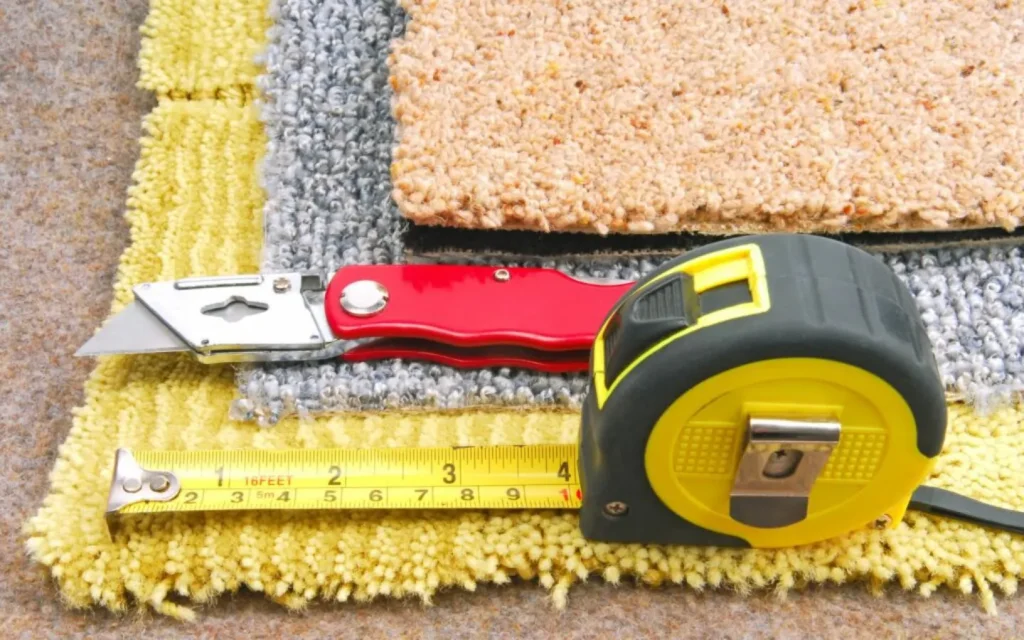
For instance, maybe you just need to cut out a flooring sample to leave for the insurance adjuster. No matter how skilled you may be, your utility knife could slip and end up leaving you with a gash if you aren’t wearing PPE.
Now, you’ve opened yourself up to infection, your production is decreased because you have to tend to the injury and you can’t even remember the last time you disinfected or changed your blade. All of this could happen in a short amount of time and is avoidable if just a little bit of thought is put into it from the beginning.
Or, maybe you’re an estimator scoping a home damaged by fire. There has been no demo or cleaning done yet. You’re just there to get your sketch and pictures. Is it really necessary to do a Hazard Assessment? Do you really have to wear PPE (PPE suit, respirator, etc)? Yes!!! Just because you aren’t doing the demo and hard labor, doesn’t mean you aren’t at risk on a job. This article details just a few of the potential hazards you may be exposed to. It is enough to make you think back to all the times you went on those jobs in shorts and a t-shirt and cringe.
PPE Myth #4: You Can Reuse PPE After It’s Contaminated

If you just wash it at the end of the day, everything should be fine, right?
Facts: As with most PPE, it is the most effective if you follow the manufacturer’s instructions.
Most coverall suits are single use only. They are not meant to be reused. They shall be inspected before use to make sure they do not have barrier breaches (holes or tears).
Washing the suit isn’t recommended. This affects the integrity of the garment, which puts the efficacy of it in question. It is difficult to know how protective it is after washing it.
During use, aside from perspiration on the inside of the garment, the outside is covered with chemicals and/or particles like microscopic mold spores or fecal matter. Reuse may lead to cross-contamination.
PPE Myth #5: Billing for PPE is Not Warranted

How would you bill for this properly? First, keep accurate records of how many suits were used on each job. A technician can go through many suits in one day due to breaks, lunch, bathroom visits, tears, etc. Remember from Myth #2, PPE CANNOT be determined until the individual project is assessed, therefore making it JOB SPECIFIC, and not overhead
The WTRPPE or WTRPPE+ line items cover the cost of the suits themselves, depending on the type being used. But what isn’t included in these line items is the labor to don, perform required user checks, decontaminate, and doff the PPE, and that time really adds up over the course of a job.
Time how long your techs take and accurately bill for this. For example, let’s say it takes 15 minutes to don and 15 minutes to doff a suit and respirator. Each tech used 4 suits in the day. You had 4 techs on site. That is 8 hours of labor that needs to be billed. At $50 an hour… you may have missed $400! Over the course of 200 jobs… $80,000!!!! Lesson? Don’t forget to bill for the labor!
We break down more of the billing challenges, especially when dealing with adjusters who misunderstand PPE costs, in this article.
PPE Myth #6: The More PPE You Wear, the More Protected You Will Be

If you just put on one of everything, that equals the maximum protection, doesn’t it?
Facts: Balance is the key to many things. If you wear too much PPE, it can threaten your health and safety just the same as wearing too little. A brief assessment of the job before you start is the best way to choose the correct amount of equipment for the hazards that exist on that one job.
If you are on call and have to go to an emergency restoration job after hours, the available PPE should be loaded in the work vehicle so that you are able to make the correct selections based on the specific hazards after arriving and surveying the damage.
Learn More at Reets Drying Academy
There is always more to learn when it comes to safety, compliance, documentation, and running a profitable restoration business. That is exactly what we teach at Reets Drying Academy.
We offer both livestream and in-person training, so you and your team can get the knowledge you need, whether you are across the country or attending onsite.
Check out our full course schedule and get your team trained the right way.

Nick Sharp
Nick Sharp has worked with Jeremy Reets for nearly 2 decades. He started in carpet cleaning and mitigation before moving to the construction side as a project manager. He then was the senior estimator for Champion Construction for over 8 years. Since its inception in 2015, Nick has been an instructor of our Restoration Estimating & Negotiating course. His most recent venture is as a restoration estimate consultant. Nick is an Xactware Certified Trainer and also has his Levels 1-3 Xactimate Certifications. He’s a bad boy on that sketch but better at finding where you may be losing money!


770-712-7293