Table of Contents:
Despite all we know about restorative drying, many restorers are still hesitant to apply energy.
They’re cautious because of vague warnings about the dangers of heat. But in most cases, it’s not heat that’s the problem. It’s the lack of understanding around how energy actually works in the drying process.
This article breaks down where energy fits into the four drying principles, and how it works together with airflow and humidity to make drying possible.
Where Energy Fits into the Four Drying Principles
To understand how energy actually supports drying, we first need to look at how it interacts with the other three core principles: extraction, airflow, and humidity control, and then the proper application.
For restorers looking to deepen their understanding of extraction, airflow, humidity, and energy (temperature control), the IICRC Water Damage Restoration Technician/Applied Structural Drying (WRT & ASD) course at Reets Drying Academy offers comprehensive training grounded in real-world application and industry standards.
How Airflow Supports Energy Transfer
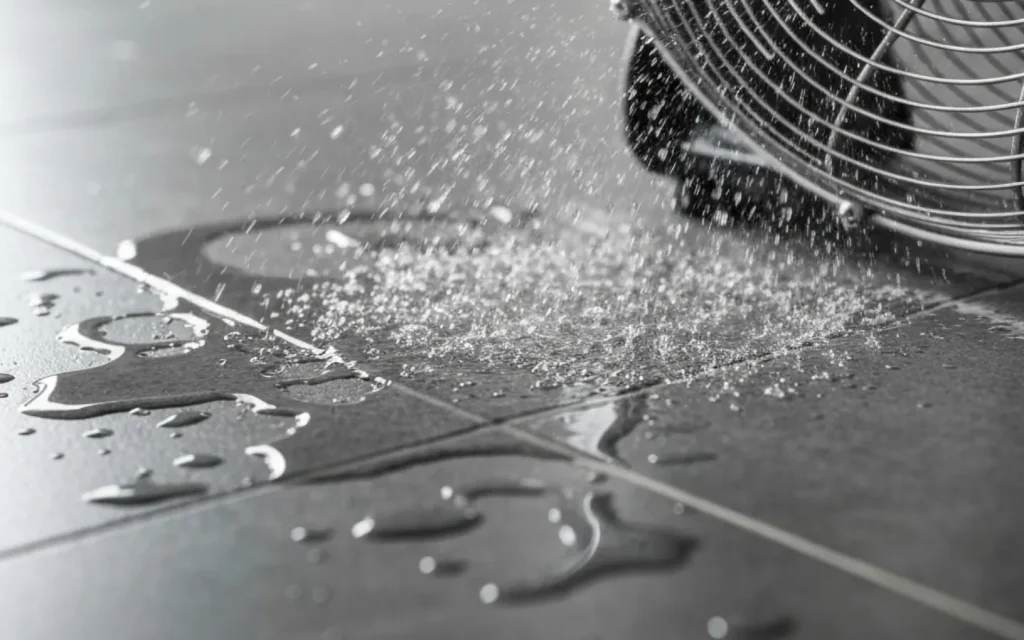
Airflow is often discussed on its own, but it also plays a direct role in how energy is delivered to wet surfaces, and how fast it’s lost through evaporation.
By now, we should know how airflow affects evaporation, how much is actually needed to dry common building materials, and why “sensible” airflow isn’t enough. Yet the ongoing online debates over airflow in the IICRC S500 Standard for Professional Water Damage Restoration shows otherwise.
Humidity Control: More Opinion Than Answer

Just like airflow, humidity control sets the stage for energy to do its job. Without it, you might have energy present, but drying will still stall.
But how does drying the air accelerate the drying of materials? What role does it play in moving water in the vapor phase? How does low humidity support surface evaporation? What’s the minimum humidity ratio needed to trigger phase change from liquid to gas? What are the specific roles of humidity control in the overall process?
Again, we should have clear answers to these questions, but that’s not the case. The water damage restoration community offers plenty of opinions, but very few facts. Until we find those answers, we can’t progress from knowledge to understanding or reach real insight into how airflow and humidity control support drying.
Energy: The Most Misunderstood Drying Principle
There is even less that is understood regarding the use of energy in water restoration than either of the preceding two basic principles we’ve discussed.
It is a complex subject, but let’s scratch the surface with one essential fact: you must add energy to the water on every water loss. This isn’t optional. Energy is required for a phase change.
Water exists in three phases: solid, liquid, and vapor, and each phase is determined by the energy level of the individual molecules. What determines whether water evaporates is not the environment alone, but the amount of energy present in the water. If you want liquid to become vapor, you must add energy. It’s a simple and logical sequence of cause and effect.
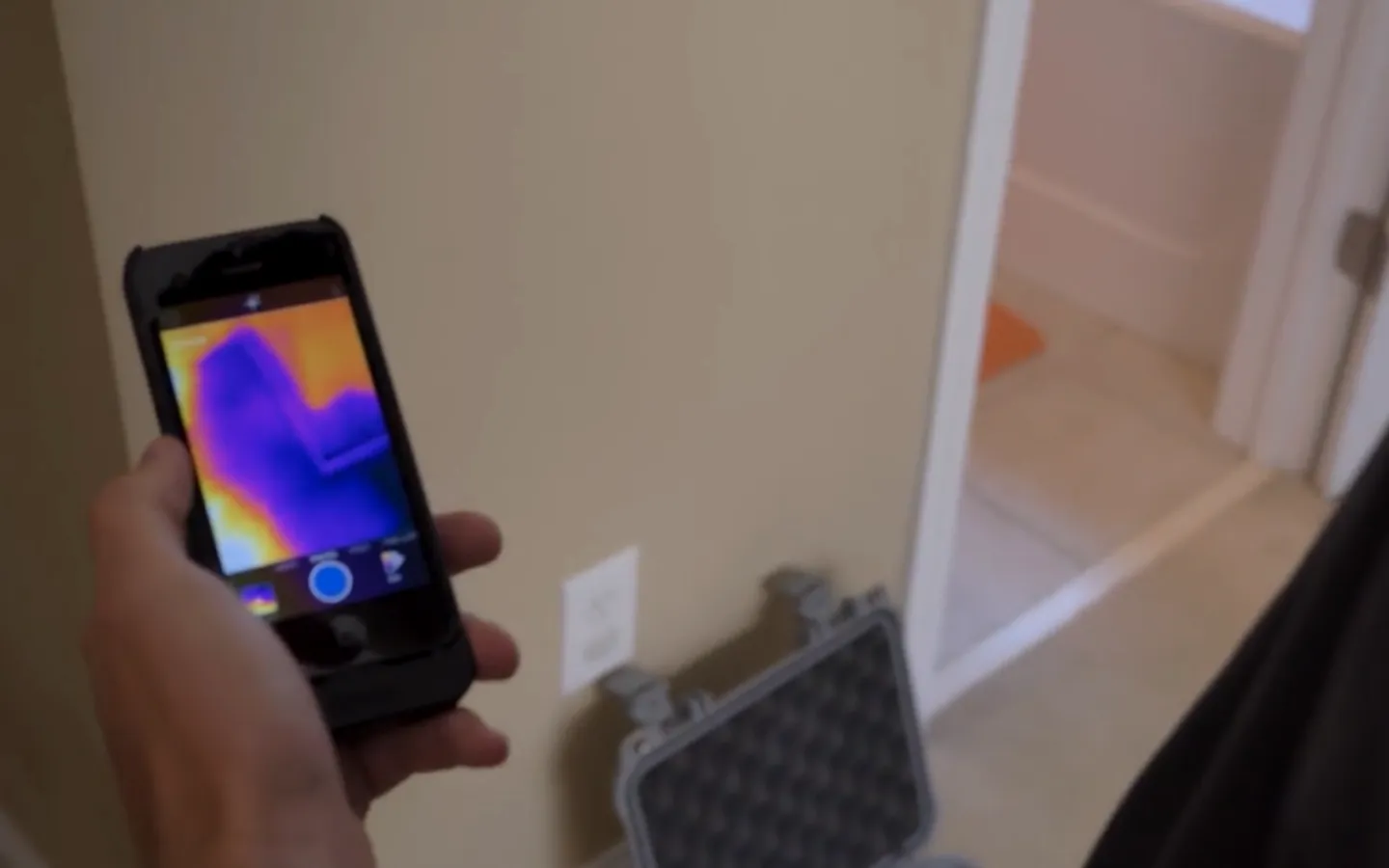
This is how drying works on every job. When you use an IR camera and see cool areas, you’re seeing evaporative cooling. As water evaporates, it pulls thermal energy from the surface. That energy loss shows up as a temperature drop.
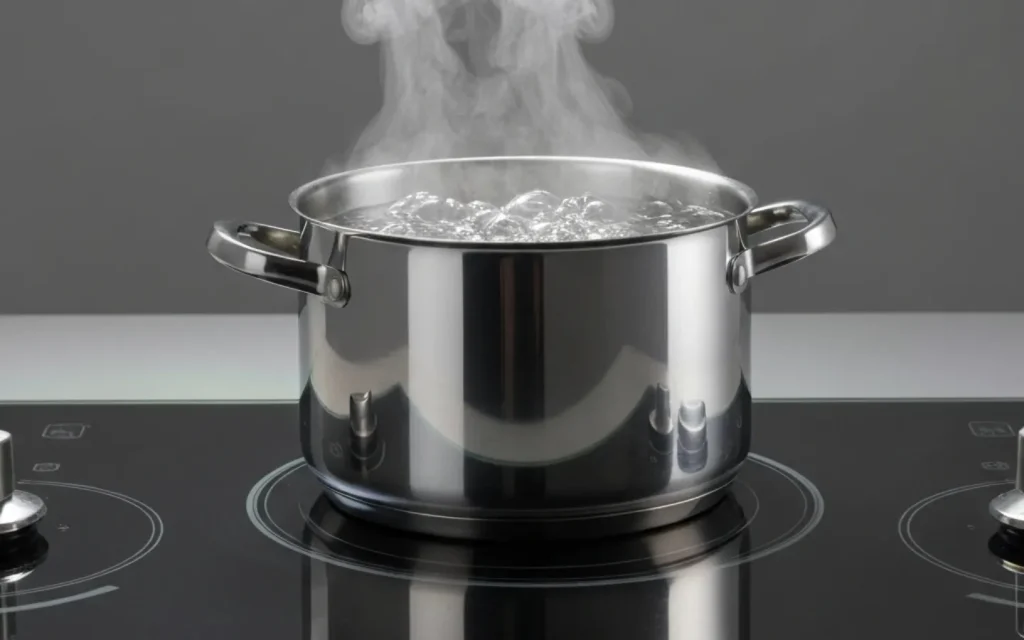
This energy loss is known as the latent heat of vaporization. The energy is stored in the vapor and can’t be measured as heat until it condenses again. You can observe this when boiling water: the temperature holds steady at 212°F because the added energy is used to drive evaporation, not to increase temperature.
Why Evaporative Cooling Slows Drying
Evaporative cooling naturally slows drying because it removes the very energy needed to sustain evaporation. If that energy isn’t replaced, the surface cools, the vapor pressure between the surface and the air equalizes, and evaporation stops.
That’s why, when you walk into a stagnant water loss and your IR camera shows no moisture patterns, the site may be at or near equilibrium. Add air movement or energy, and the temperature drop reappears because evaporation has started again.
Often, restorers are already adding energy without realizing it. Dehumidifiers, HVAC systems, or even ambient heat in the structure contribute energy. When evaporation continues, it’s because energy is present.
The key insight is this: drying only continues when the energy lost through evaporation is replaced.
How to Apply Energy Effectively in Drying

Now that we’ve covered how energy supports evaporation, the next step is knowing how to apply it intelligently.
There’s a common assumption that if a little energy helps, more must be better. But in restorative drying, overuse can be as ineffective as underuse. That’s why energy is often treated with caution (sometimes to the point of avoidance) even though the real issue is misapplication, not the presence of energy itself.
In practice, there’s no reason to raise the ambient temperature of a drying environment to extreme levels like 110°F or more. Instead, controlled increases in ambient temperatures to the range of 85°F to 95°F are both safe and effective. This level of heat significantly improves drying conditions without creating risk.
Why Targeted Heat Application Works Better Than Raising Room Temperature
Instead of heating the entire environment, apply energy directly to wet materials. Directed-heat drying systems can deliver warm air under containments or to exposed surfaces, typically increasing surface temperatures 15 to 35°F above ambient.
Even the warm air discharged from a dehumidifier can be used this way, though with less intensity.
To assess whether your energy application is helping, measure the vapor pressure differential between the air and the wet surface.
As this differential increases, so does the potential for evaporation. While it doesn’t give you exact drying speed, since other variables like porosity and surface moisture matter, it does confirm that your energy input is creating favorable drying conditions.
Advance Your Skills with Our Training
This is only a small part of the broader conversation around energy use, but it’s a start. Being cautious is wise. Avoiding energy altogether is not. The real risk is failing to understand the role energy plays in effective drying. When combined with proper airflow and humidity control, intelligent energy application turns knowledge into results.
This is just one of many topics within the science of drying. At our academy, we cover a wide range of essential subjects, from psychrometry and moisture mapping to advanced drying techniques and industry standards.
With years of hands-on experience and industry leadership, we provide both livestreaming and in-person courses designed to deliver practical, actionable training. Our expert instructors guide you through the latest methods and standards, so that you gain real-world skills that make a difference on every job.
Explore our upcoming courses and take the next step in mastering the essential principles of drying!

Nick Sharp
Nick Sharp has worked with Jeremy Reets for nearly 2 decades. He started in carpet cleaning and mitigation before moving to the construction side as a project manager. He then was the senior estimator for Champion Construction for over 8 years. Since its inception in 2015, Nick has been an instructor of our Restoration Estimating & Negotiating course. His most recent venture is as a restoration estimate consultant. Nick is an Xactware Certified Trainer and also has his Levels 1-3 Xactimate Certifications. He’s a bad boy on that sketch but better at finding where you may be losing money!


770-712-7293