Table of Contents:
If you’re already in the restoration industry, you’ve probably worked in crawlspaces.
You’ve dried them after water damages. You’ve tried to prevent mold growth. You’ve explained to homeowners why their floors are warping or why that musty smell keeps coming back.
But what if your team didn’t just clean up the damages?
What if you could provide a long-term solution for your clients?
That’s where crawl space encapsulation comes in! We see increasing numbers of restoration companies starting to offer this service because it brings in steady and profitable work.
This article explains how to start a crawl space encapsulation business, how to price the work, and what crawl space encapsulation training is needed to help your crew do it right!
What Is Crawl Space Encapsulation

Crawl space encapsulation is the process of sealing a crawl space to prevent moisture intrusion, improve air quality, and protect the structure of the home. It involves sealing vents and gaps, installing a vapor barrier across the floor and walls, and using a crawl-space-rated dehumidifier to control humidity.
This service is required because moisture in a crawl space isn’t confined there. It travels up into the home, carrying with it musty odors, various allergens, and sometimes mold spores. It can damage flooring, weaken framing, and cause homeowners to spend more money on heating and cooling.
Crawl space encapsulation helps prevent moisture problems at the source, and well-equipped restoration professionals offer this service because they understand how moisture behaves inside homes.
Why Restoration Companies Are Best Fit for This Work
If you’re wondering how to start a crawl space encapsulation business, the good news is you may already have half the pieces in place.
You already have the tools: moisture meters, PPE, air movers, and containment supplies. Your team already understands airflow, drying science, and how to assess damage, and you’ve been in crawl spaces after floods, leaks, and microbial contamination occurrences.
What you might be missing is a structured process for offering crawl space encapsulation services as a standalone, revenue-generating solution.
The demand is already there. You’ve seen the problems. The work fits naturally into your schedule. Encapsulation jobs are planned, scoped, and don’t rely on emergencies or insurance approvals. That makes it a reliable way to fill slower weeks and keep your team working on jobs that bring in steady revenue.
What Crawl Space Encapsulation Actually Solves

Crawl space encapsulation, if done right, helps solve:
- Chronic high humidity
- Vapor infiltration from the soil
- Musty odors entering the home
- Softening or deterioration of subfloors
- Pest entry points
- Energy loss due to unconditioned airflow
Many homeowners don’t realize that up to 50% of the air on the first floor comes from the crawl space. If that space stays damp or untreated, the rest of the home is affected.
Why Mold Keeps Coming Back in Crawl Spaces
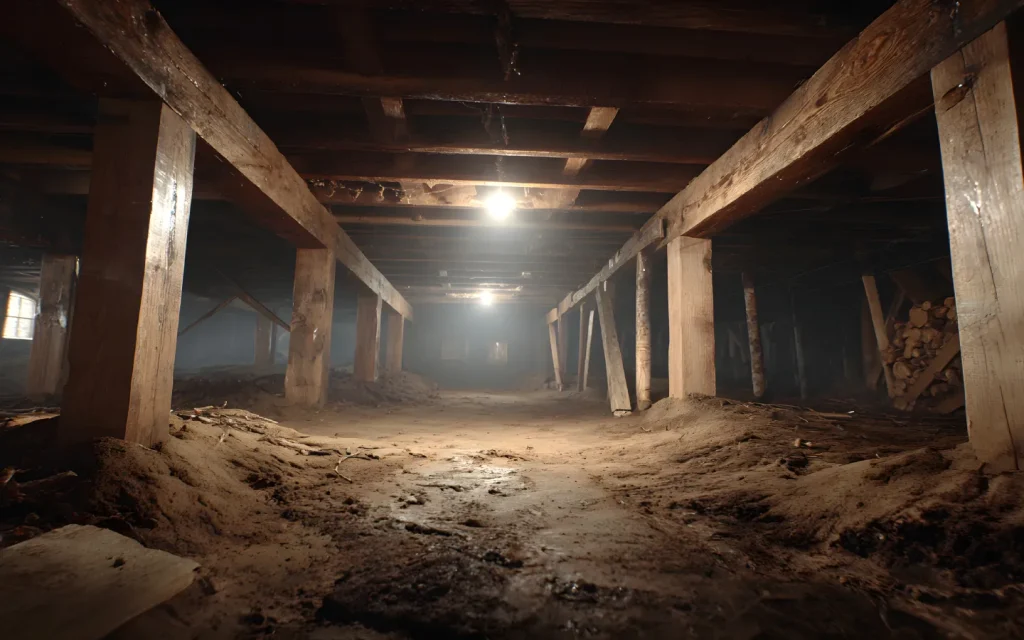
You can remediate a crawl space thoroughly, but if the moisture stays, the mold can come back. We teach all this in our microbial remediation course at Reets Drying Academy.
Crawl spaces have everything mold needs to grow: organic material like framing and subflooring, dark and stagnant conditions, and often, elevated humidity. Once relative humidity rises above 60%, that’s usually when moisture begins to collect at the surface level, and microbial activity follows.
This is especially common in vented crawl spaces. As outside air enters and cools inside the crawl space, relative humidity rises. That’s why even in drier climates, these spaces often tip over into unsafe RH levels for parts of the year.
Encapsulation is the only reliable way to prevent this from repeating. It seals off the air pathways, blocks vapor from the soil, and manages humidity through use of a properly sized dehumidifier for the space.
What Homeowners Really Want to Know
Homeowners may not ask for crawl space encapsulation by name, but they’re asking for what it does. They want the smell to go away. They want to prevent the damage to their floors and furniture. They want to stop dealing with mold or paying for repeated cleanups.
Most customers want the problem solved completely and are ready to invest if they know what they are getting. Once you show them what’s under their home, explain how air moves through it, and walk them through what the encapsulation system will do, the value becomes clear.
How to Price Crawl Space Encapsulation Jobs
Most crawl space encapsulation jobs land somewhere between $5,000 and $15,000. The range depends on what you’re walking into.
A small, open crawl space with no drainage issues might only need a basic vapor barrier and a single dehumidifier. A tight space with high piers, standing water, and complex access could take more time, thicker materials, and a multi-step approach.
Here’s what impacts pricing:
- Total square footage and access
- Height of foundation walls and number of piers
- Whether the space is above or below grade
- Vapor barrier thickness and coverage
- Need for drainage correction before install
- Type and placement of the dehumidifier
- Labor and material rates in your region
If you’ve been wondering whether crawl space encapsulation businesses are profitable, the answer is yes. The work is scoped ahead of time, the labor is predictable, and the system creates future opportunities.
When something needs checking, whether it’s the barrier, the dehumidifier, or the conditions after heavy rain, the homeowner is going to call the person who installed it. That means you.
Crawl Space Encapsulation Training at Reets Drying Academy

If you’re not sure how to start a crawl space encapsulation business, the logical first step is to learn how to do this work the right way.
At Reets Drying Academy, we developed a training program that was built for restoration professionals, based on the science of moisture and backed by field-tested results.
In our hands-on course we teach you how to:
- Inspect and evaluate crawl space conditions
- Identify humidity issues, drainage problems, and potential hazards
- Install vapor barriers with correct overlap, wrapping, and sealing
- Choose and place the right dehumidifier for the space
- Sequence antimicrobial work, drainage, and barrier installation
- Communicate clearly with homeowners and document your work
Knowing how to start a crawl space encapsulation business is the first step.
Doing it right takes the right training, which is why we teach a full crawl space encapsulation system developed by the same team that trains thousands of restorers every year, built around the challenges you already deal with on the job.
If you want to offer crawl space encapsulation services with confidence, we’ll show you how to do it right.
Join the Crawl Space Encapsulation Specialist course at Reets Drying Academy.

Nick Sharp
Nick Sharp has worked with Jeremy Reets for nearly 2 decades. He started in carpet cleaning and mitigation before moving to the construction side as a project manager. He then was the senior estimator for Champion Construction for over 8 years. Since its inception in 2015, Nick has been an instructor of our Restoration Estimating & Negotiating course. His most recent venture is as a restoration estimate consultant. Nick is an Xactware Certified Trainer and also has his Levels 1-3 Xactimate Certifications. He’s a bad boy on that sketch but better at finding where you may be losing money!


770-712-7293