Table of Contents:
It takes a special person to want to help someone at their lowest moments or during some of the most difficult times in their life, and that person might be you. But how can you step in when someone has lost a loved one or experienced a serious injury in their home?
The answer is, by becoming a Trauma and Crime Scene Technician.
What is Trauma and Crime Scene Cleanup?

If you’re looking into crime scene cleanup as a service to add to your business, there are a few important things you need to know.
First, trauma and crime scene cleanup involves removing biohazards, such as blood, bodily fluids, and other potentially infectious materials, from places where traumatic events have occurred. The goal isn’t just to clean, but to restore the space to a safe and livable condition while following strict health and safety protocols.
The challenges? There are many. But sometimes, the hardest part is staying professional while having empathy for those going through one of the worst days of their lives.
Let’s break down what crime scene cleanup involves and what you need to know to do it the right way.
1. Crime Scene Cleanup Is Much More Than Just Cleaning
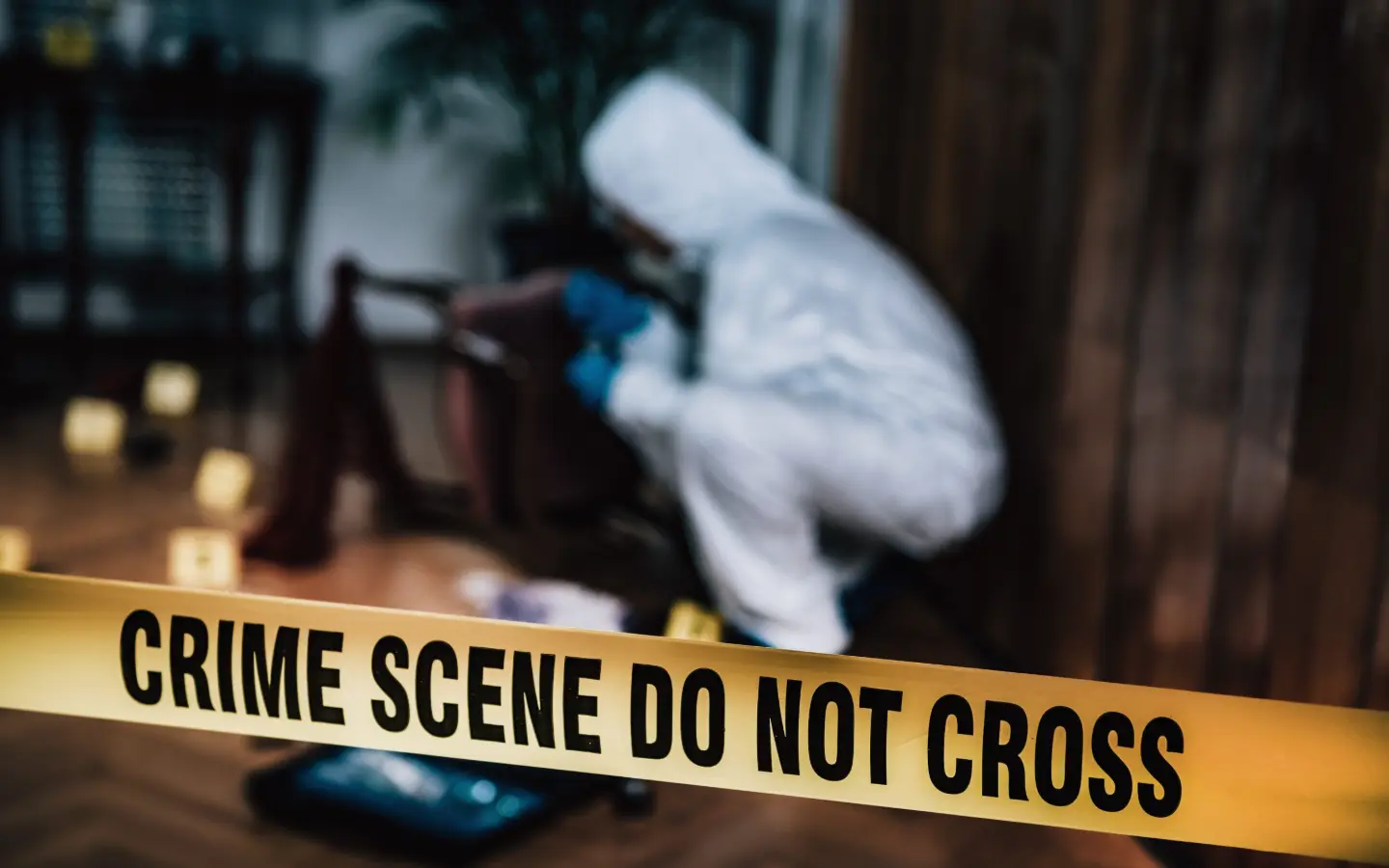
When tragedy strikes – be it a homicide, suicide, unattended death, or a major accident – the scene holds hidden dangers. Blood, other bodily fluids, and tissue can seep into floors, walls, furniture, and even air vents, where they can pose serious health risks if not handled properly.
Now, imagine an unattended death case.
A person who lived alone passed away in their home, unnoticed. Days go by before anyone realizes something is wrong. By the time the body is discovered, decomposition has already taken hold, releasing fluids and gases that seep into carpets, soak through flooring, and cling to walls.
The air is thick with an overwhelming odor, and contaminants have spread deep into porous materials.
A simple wipe-down won’t fix it. Biohazards can reach far beyond the surface, which in many cases calls for complete removal of affected materials and using specialized tools such as enzyme-based cleaners and industrial-grade ozone machines.
Only in this way, biohazards can be broken down and eliminated at a molecular level.
2. Safety Should Always Come First
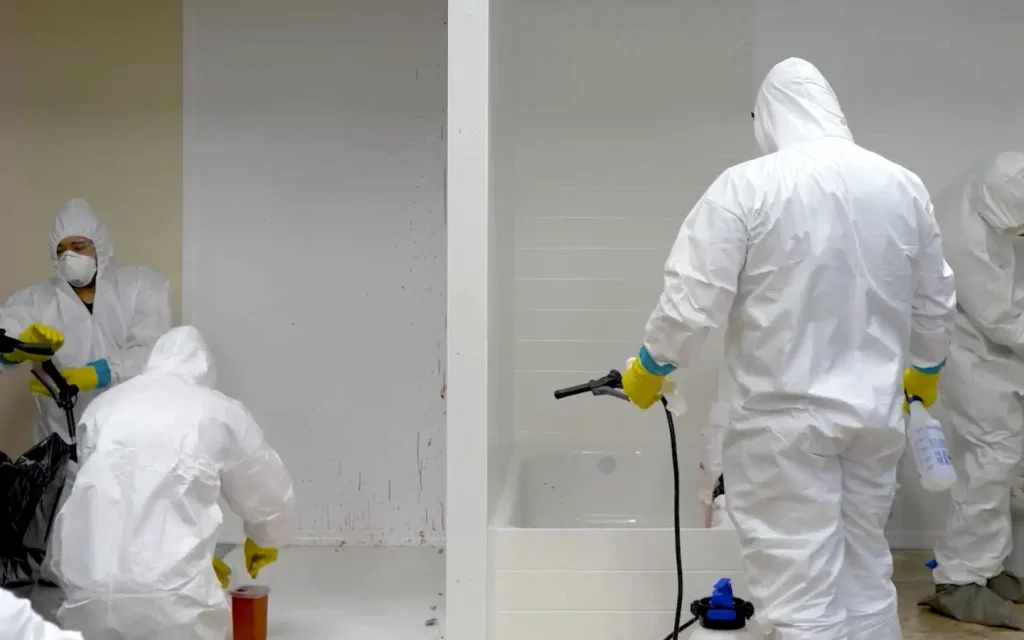
Without the proper safety gear, you expose yourself and others to dangerous infections like HIV, Hepatitis B and C, and MRSA. Top quality PPE is mandatory, which means wearing:
- Gloves designed to block biohazard exposure
- Full-body suits to prevent contamination
- Respirators to protect against airborne risks
But PPE alone isn’t enough, as every step of the process must follow strict OSHA and EPA guidelines—from setting up containment zones to executing decontamination procedures correctly.
3. Why Training and Certification Matter
There’s no “winging it” in crime scene cleanup.
Without proper training and certification, you risk not only your health but also your business’s reputation. What you need is the IICRC Trauma & Crime Scene Technician certification.
At Reets Drying Academy, we offer both Livestream and in-person training to make sure you get the skills you need. You’ll learn how to stay compliant with OSHA and EPA regulations, how to properly handle biohazards, and dispose of hazardous materials properly.
Training also covers PPE use and containment setup to prevent cross-contamination, as well as industry-approved cleaning techniques for complete decontamination.
The advantage of our in-person course is that you’re not just learning theory—you’re training with industry-leading experts who have real-world experience in trauma and crime scene cleanup.
If you are not able to attend our in-person training, check out our TCST Livestream Training!
4. The Emotional Side of This Job
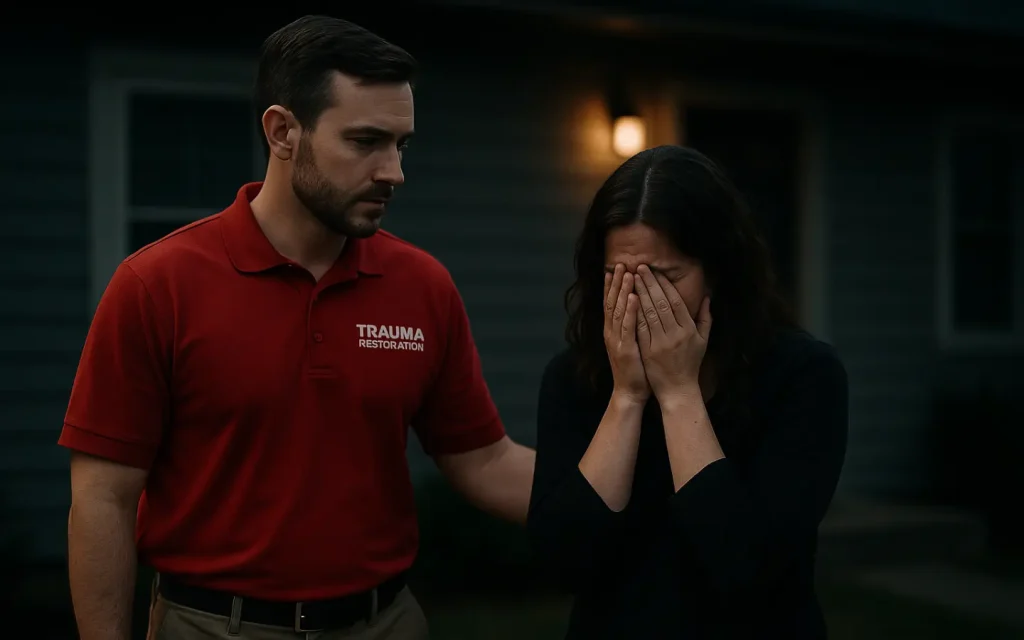
All the technical details aside, the emotional side of things can be more challenging for some people.
And while some learn to manage it over time, others struggle to detach their feelings from work and usually don’t last long in the field. And it’s not just about handling the bloody scenes. When you clean up after suicides or violent crimes, you’re stepping into environments filled with grief, shock, and trauma that you can almost feel in the air.
Families may still be present, their emotions running high, and the reality of the situation can be too much to handle. If you can handle all that and also show empathy and respect, you will make a real difference by helping people take the first step toward healing.
5. Crime Scene Cleanup Is More Than Crime Scenes
When most people hear “crime scene cleanup,” they think of homicides.
But the scope of this work is, as you can see, much wider. You might be called out for extreme hoarding situations where mold and bacteria have taken over, industrial accidents, tear gas removal or even decontamination after drug lab incidents.
Each type of scene has its own challenges and requires specific tools and techniques.
Because the work spans so many scenarios, a well-trained and properly equipped crime scene cleaning company can tap into multiple revenue streams and stay profitable year-round.
6. Crime Scene Cleanup is Profitable

The sad truth is that accidents, suicides, and unattended deaths happen all the time.
That means there is a constant need for crime scene cleanup crews. Because this is physically and emotionally demanding work and requires specialized skills, the pay is higher than in many other cleaning industries.
According to ZipRecruiter, crime scene technicians earn between $40,000 and $80,000 per year. Business owners have the potential to earn significantly more. Well-established companies generate hundreds of thousands of dollars in revenue annually, depending on their market and the range of services they offer.
And there’s no single right way to bill for trauma and crime scene cleanup. You can choose a system that works best for your business. Programs like Xactimate have specific categories for trauma and crime scene cleanup (TCR), that include cleaning, disinfecting, and equipment line items.
For more information about Xactimate, check out our Estimating and Negotiating class.
Ready to Get Trained in Crime Scene Cleanup?
If you’re serious about entering the field of crime scene cleanup, proper training is your first step.
At Reets Drying Academy, we are here to help!
As the #1 restoration training academy in the world, we specialize in equipping professionals like you with the skills and knowledge you need to excel in this demanding industry.
Our IICRC Trauma and Crime Scene In-Person Classroom Training offers hands-on experience guided by industry experts. By enrolling in our courses, you’ll gain the skills and experience needed to handle the complexities of trauma and crime scene cleanup with confidence and expertise to do the job right from day one.
📍 Book your IICRC Trauma and Crime Scene Technician Training today!

Nick Sharp
Nick Sharp has worked with Jeremy Reets for nearly 2 decades. He started in carpet cleaning and mitigation before moving to the construction side as a project manager. He then was the senior estimator for Champion Construction for over 8 years. Since its inception in 2015, Nick has been an instructor of our Restoration Estimating & Negotiating course. His most recent venture is as a restoration estimate consultant. Nick is an Xactware Certified Trainer and also has his Levels 1-3 Xactimate Certifications. He’s a bad boy on that sketch but better at finding where you may be losing money!


770-712-7293