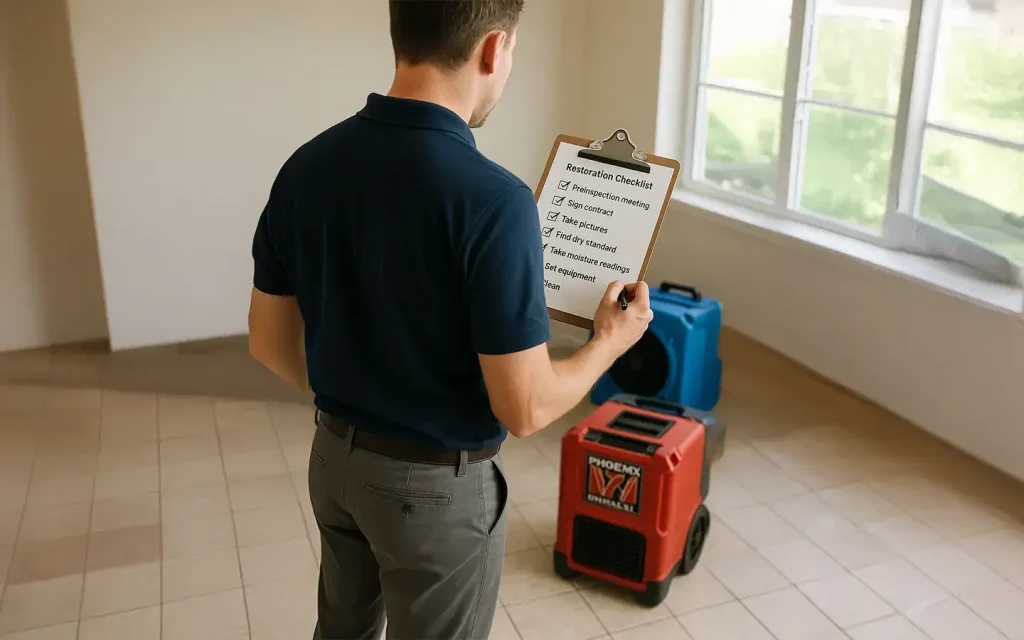
A common (and costly) mistake made in water restoration is production crew members unintentionally stepping into the role of decision maker while making scoping decisions. It usually comes from a good place: experience, confidence, and the desire to move a project forward. But at times, decisions need to be made that are not specifically called out in the standard. Or within the standard, direction is not clearly stated. Meaning only a recommendation is given (recommend, can. may). When we make decisions based on our personal opinions, we put revenue, credibility, and payment at risk.
Who Are The Decision Makers on a Project?
On a water damage project, there are two primary decision makers:
- The property owner
- The insurance carrier
But isn’t it our project? Aren’t we held responsible for what happens on our projects? Yes and yes. We make decisions using the framework provided by the IICRC standards, OSHA requirements, manufacturer instructions, and other recognized third parties such as local codes or industry best practices.
When technicians make unilateral calls—such as using air filtration devices on Cat 1 projects or drying for an extended period of time, they tend to step into the decision maker role without consulting the real decision makers. That’s when payment disputes, denials, and pushback begin. The key is to act as a consultant by communicating, presenting options and then acting on the information we receive to gain agreement.
The Technician as a Consultant

Consulting doesn’t mean being passive. It means being strategic, informed, and defensible.
A consultant:
- Observes conditions
- Gathers data
- References applicable standards
- Presents options and consequences
- Documents everything
- Allows the decision makers to decide
This approach protects everyone involved—especially the restoration company.
The Pre-Inspection Meeting: Where Consulting Begins
The consulting process starts before equipment is ever set.
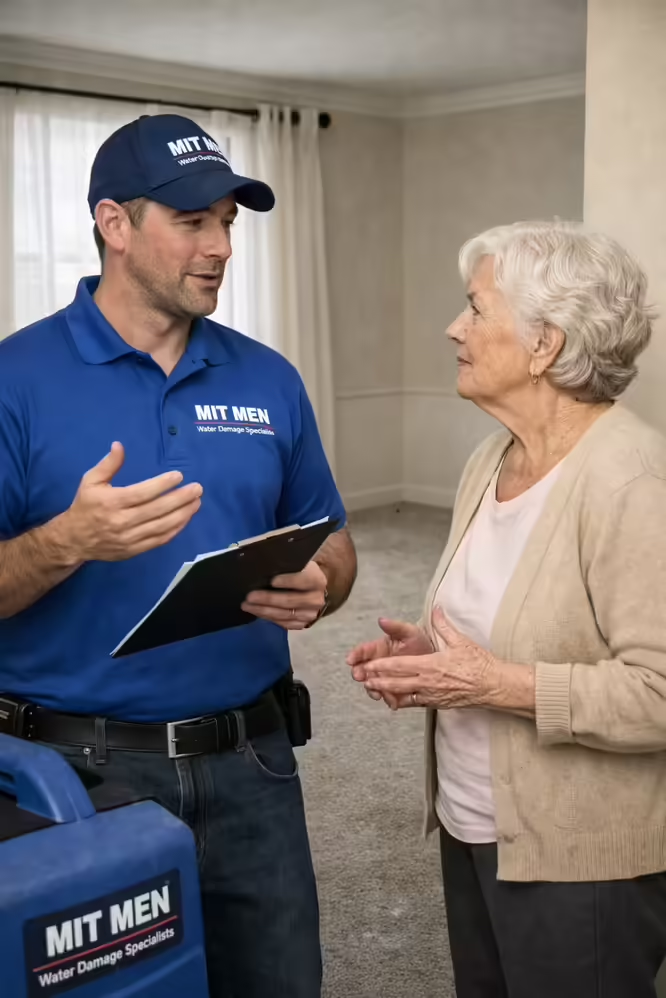
During a pre-inspection meeting, technicians should focus on:
- Establishing facts and scoping based on the standards.
- Identifying what may be a red flag based on the project and the carrier they will be working with.
- Communicating with the customer to gain agreement and then forwarding that communication to the office.
Key elements of an effective pre-inspection include:
- Initial Observation and Information Gathering
Document the source, duration, and extent of moisture intrusion. Take readings, photos, and notes. - Reference the Standard
Use the standard definitions to determine class and category as well as scope of work. Use the formulas for air movement and reference the formulas in the appendix of the s500 for dehu formulas. - Present Options, Not Decisions
Ask questions and explain any items that may be red flags to property owners to gain agreement. Use an initial work plan to communicate with the office and highlight the reasons the decisions were made in the field. - Communicate Consequences
Outline what happens if steps are taken—or not taken, then gain agreement. For example: the homeowner would like to stay in the home during drying. Because they may adjust the thermostat or turn off equipment, ask them questions and confirm they understand this may lead to extended drying times. - Document the Conversation
The pre-inspection meeting should be reflected in notes, job files, and reports. Documentation supports what was agreed upon with the decision maker. Then the office will work to gain agreement with the carrier early in the process.
Why This Matters for Getting Paid
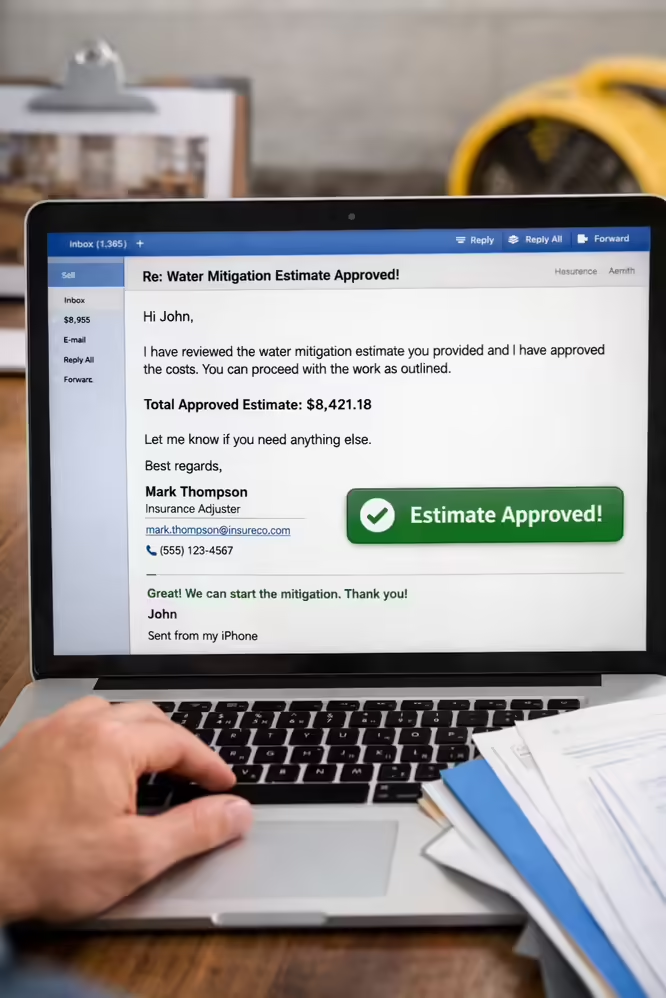
When technicians act as consultants:
- Decisions are defensible
- Scope aligns with standards
- Documentation supports billing
- Liability is reduced
- Questions are answered up front. If there are concerns, adjustments can be made to the scope of work real time instead of negotiating when the work is done with zero leverage.
What Should Estimators Do With the Gathered Information?
Historically, estimators invoice the customer based on the technician’s scope of work, after the work has been completed. But when there are complexities or limitations, this can be problematic. Decisions made by technicians may be justified, but that doesn’t always lead to payment. The S500 uses words like “recommended”, “can”, or “may”. These tasks are not standard of care. Without agreement, these tasks fall under the “professional opinion” category. And you know who else has a professional opinion? The decision makers!
Instead of leaving negotiations to the end, come to agreement earlier in the process. Per the s500 10.8, project work plans should be developed and used. These work plans can be sent to the adjuster and customer to gain agreement on a scope of work before the work is done.
When estimators gain agreement earlier in the process:
- You can pinpoint the pushback and make adjustments to your scope of work.
- You can come to an agreement on who will pay for a task. If the carrier won’t agree, is the customer willing to pay it? If not, can it be avoided and the proper documentation signed to limit liability?
- Nothing on the invoice is a surprise and notes are used to remind the decision makers of the agreements already in place.
- Payments will be faster and more profitable in many cases.
Most payment issues don’t stem from “doing too much work.” They stem from making decisions without agreement (not approval) from decision makers.
By grounding recommendations in the standard and recognized third parties like OSHA—and consulting with the decision makers early in the process—technicians and estimators protect both the job and the profitability of the company.
The most profitable restoration companies don’t guess. They consult, document, and let the standard do the talking.

Nick Sharp
Nick Sharp has worked with Jeremy Reets for nearly 2 decades. He started in carpet cleaning and mitigation before moving to the construction side as a project manager. He then was the senior estimator for Champion Construction for over 8 years. Since its inception in 2015, Nick has been an instructor of our Restoration Estimating & Negotiating course. His most recent venture is as a restoration estimate consultant. Nick is an Xactware Certified Trainer and also has his Levels 1-3 Xactimate Certifications. He’s a bad boy on that sketch but better at finding where you may be losing money!


770-712-7293