Table of Contents:
Water damage can lead to a range of problems, from structural issues to the growth of harmful mold and bacteria. To effectively combat these challenges, the use of antimicrobials has become an essential part of the remediation process. This comprehensive guide is designed to provide you with a clear understanding of how antimicrobials work, their benefits, and best practices for their application.
Reets Drying Academy teaches thousands of restorers every year how to properly determine if antimicrobial usage is appropriate at our IICRC approved WRT and ASD courses. If you are not certified in these areas, book a course today!
What Are Antimicrobials in Restoration?
Antimicrobial spray is used on water damage products to mitigate microbial (mold and bacteria) amplification. This is important because the addition of water causes the mold and bacteria that is already present to multiply. Under the right conditions, these can spread quickly resulting in health, safety, and odor complaints.
When Should You Use Antimicrobials in Restoration?
Restorers should assess each water damage project to determine if antimicrobial usage is suitable. This is discussed in detail in our IICRC WRT and ASD classes. As we explore various water damage scenarios, we discover that antimicrobial spray is often an appropriate solution.
For instance, materials contaminated with Category 2 or 3 water loss should be treated with antimicrobial spray after a thorough washing to eliminate contaminants.
What about Category 1 water losses? The principle remains the same: restorers should evaluate each water damage project to determine if antimicrobial usage is appropriate.
So, how do you determine if antimicrobial spray is the right choice? The answer lies in asking questions. Explain the purpose and concerns associated with antimicrobials to the property owner. They may express concerns about mold growth and request that you apply antimicrobial spray. Alternatively, the customer may ask what to spray to prevent mold after water damage. In such cases, antimicrobial spray would be an appropriate solution.
Another scenario where antimicrobial spray for water damage may be beneficial is when there are concerns about bacterial odors after water damage. In such situations, applying antimicrobial spray can be appropriate.
As you can see, most of the time antimicrobial spray for water damage is the right answer, if you choose a safe product.
Benefits of Using Antimicrobials in Drying and Restoration
Using antimicrobial spray for water damage can reduce the mold, viruses, and bacteria present in a home or business. This may result in healthier, cleaner environments when safer botanical antimicrobials are used according to label directions.
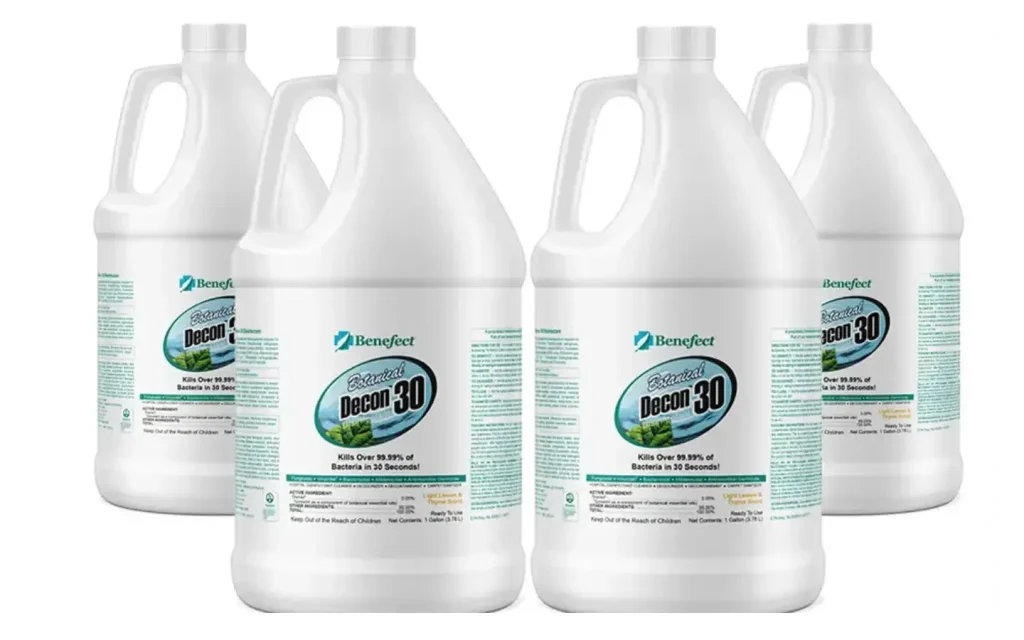
Due diligence means taking reasonable steps in a situation. For water damage, we might use a botanical antimicrobial spray. There’s little downside to using antimicrobials on all water restoration jobs. Botanical products like Benefect are safe and effective.
Antimicrobial spray can help control microbial activity in a water damage environment. When someone asks what to spray to prevent mold after water damage, antimicrobial spray is the best answer. While it cannot completely prevent mold, it can mitigate growth on materials that have been treated with the antimicrobial spray. The same is true for concerns with bacterial amplification.
Applying botanical antimicrobial spray is easy and makes you wonder why not? The benefits outweigh the concerns.
Tips for Applying Antimicrobials Safely and Effectively
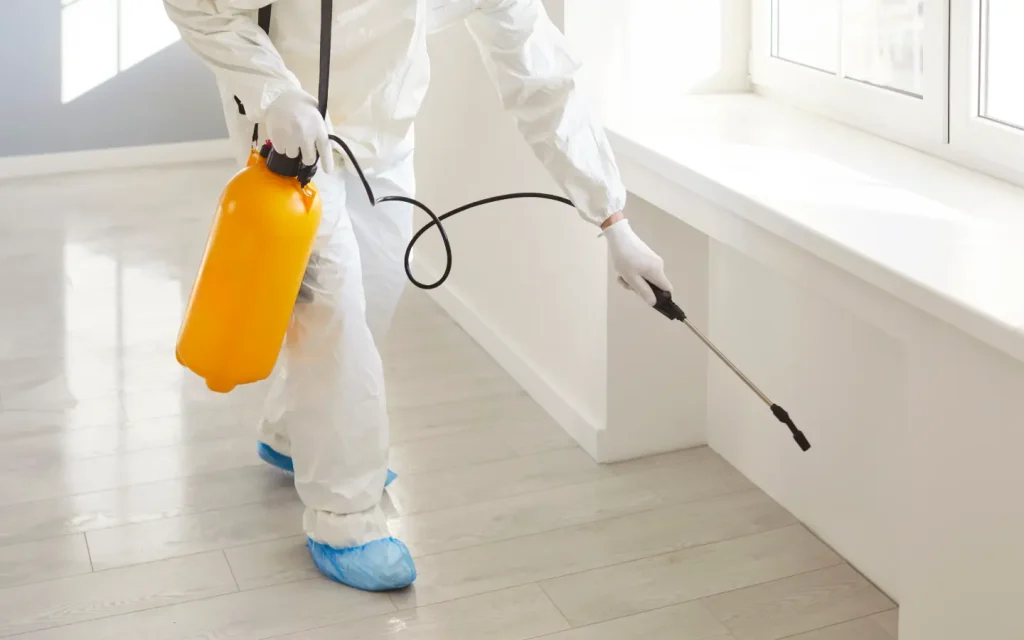
In Reets Drying Academy’s IICRC WRT and ASD courses, we show you the correct way to apply antimicrobial spray.
There are many different chemicals used for antimicrobial spray. Additionally, antimicrobials are registered as pesticides so some types of antimicrobials are potentially hazardous for people and pets.
First, select an antimicrobial spray that is a safer product. Antimicrobials are registered as pesticides and some types carry a measure of risk. Botanical antimicrobial for water damage significantly limits the hazards associated with most traditional chemical solutions. Benefect antimicrobial has a Category IV rating -the lowest toxicity profile allowed by law. As a result, EPA labeling legislation does not require any signal words, warnings, cautions or first aid statements on the product label.
Before beginning application of antimicrobials, explain to occupants what products will be used and get written authorization on a right to know document. Get the Right To Know Document for free HERE
Next, apply according to the product label directions. There may be direction to clean surfaces first. You may also find dilution and other directions on the label that must be followed.
Essential Forms and Documentation for Antimicrobial Application
Since antimicrobials are registered as pesticides, some states require that companies maintain a pesticide commercial applicators license to legally apply antimicrobial spray. Check with your state agricultural department for details.
Conclusion
Using antimicrobial spray for water damage can make your home or business healthier when safer products are used properly. Antimicrobial spray for mold can also be beneficial as a part of a complete remediation process. In both cases, proper cleaning should be part of the process used when applying antimicrobial spray for water damage or antimicrobials for mold. IICRC certified technicians have been trained in complete processes for cleaning up behind water damages and mold, and are the best resource for determining when antimicrobial spray should be used.

Nick Sharp
Nick Sharp has worked with Jeremy Reets for nearly 2 decades. He started in carpet cleaning and mitigation before moving to the construction side as a project manager. He then was the senior estimator for Champion Construction for over 8 years. Since its inception in 2015, Nick has been an instructor of our Restoration Estimating & Negotiating course. His most recent venture is as a restoration estimate consultant. Nick is an Xactware Certified Trainer and also has his Levels 1-3 Xactimate Certifications. He’s a bad boy on that sketch but better at finding where you may be losing money!


770-712-7293