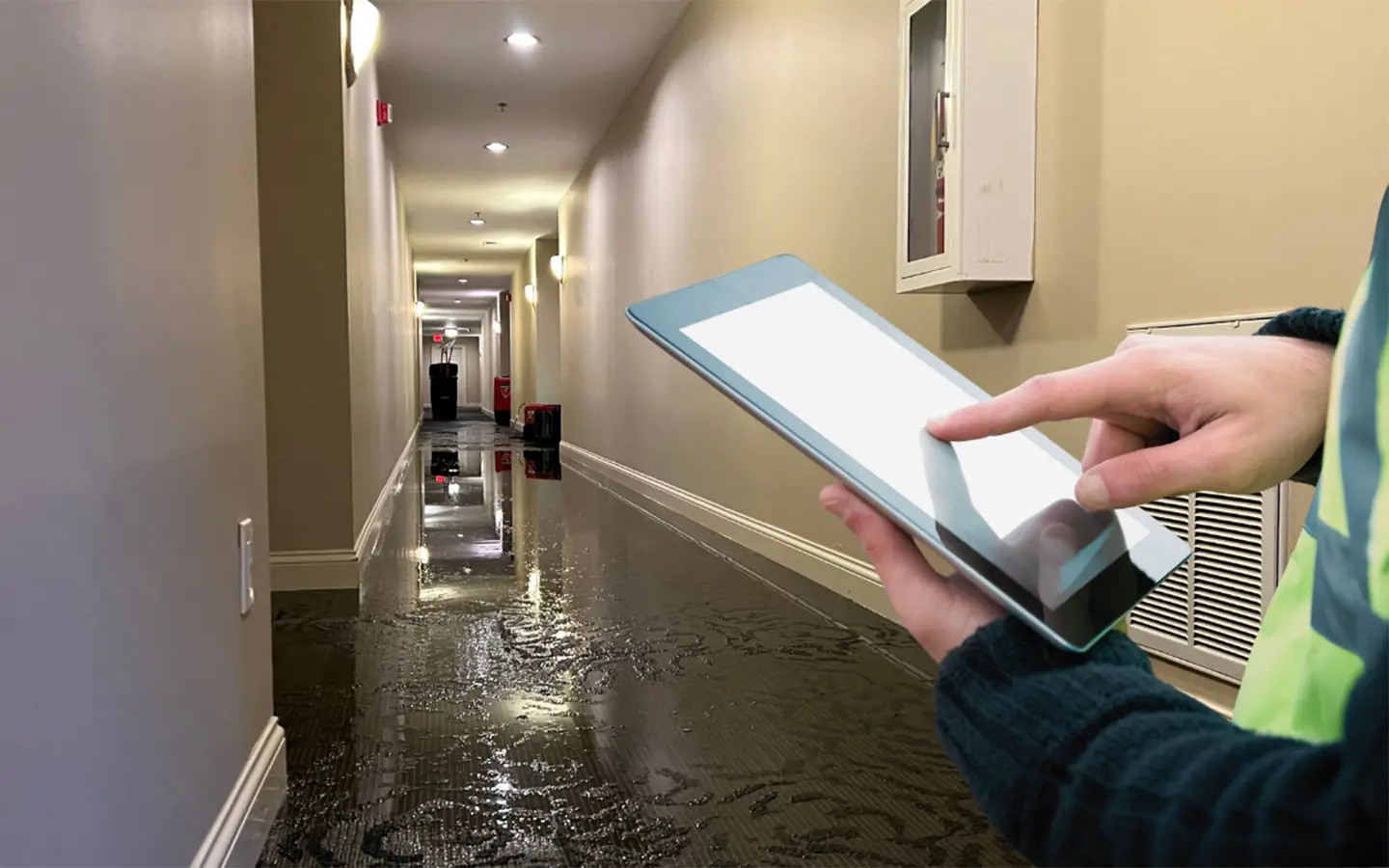
One of the most overlooked factors in restoration—and one of the biggest threats to your profit margins—is not monitoring your average dollar sale.
What Is the Average Dollar Sale (ADS)?
Average dollar sale is a simple metric that shows how much revenue you make per job. To calculate the average dollar sale, divide your total revenue by the number of jobs completed. You can do this for any time period that makes sense for your business—daily, weekly, or monthly.
Let’s say your company completed 75 jobs in a month and generated $150,000 in revenue. The average dollar sale would be $2,000. Simple, right?
Why Does Average Dollar Sale Matter in Restoration?
You can learn much about what’s happening inside your restoration business just by keeping track of your average dollar sale.
A sudden drop in ADS can suggest that crews aren’t following the standard procedures that they are required to follow. Maybe they’re skipping necessary steps, like applying botanical antimicrobial treatments to every water damage job, not just category 3. Maybe they ran out of Benefect, or perhaps they just aren’t using it. If you aren’t keeping track of your average dollar sales and trying to improve them, you are leaving money on the table.
How to Track Average Dollar Sales in Your Restoration Business
The first step towards increasing your average dollar sale is to track it consistently. You can do this manually with spreadsheets or use job management software to monitor trends over time.
Collect data from finished projects:
- Total revenue per job
- Which services were applied
- How many jobs were completed
Calculate your average dollar sale based on this. Over time, you will begin to notice patterns and how seasonal trends impact your ADS. You may see things like water damage calls spiking after heavy rain during certain months or fire restorations picking up as temperatures drop.
With this info, you can adjust your pricing, staff, and marketing to stay on top of the demand.
Another valuable insight you will get from tracking your ADS is how your team or different crews perform. Some crews tend to bring in more revenue per job, so take a closer look at what they’re doing differently.
They may always offer antimicrobial treatments after water damage. Or they don’t forget to explain how cleaning HVAC ductwork after a fire may lead to lingering smoke odors, so more homeowners request removal and replacement of the ductwork. Find out what they do differently and use it to lift the rest of the team and your ADS across the board.
A Small Increase in ADS Can Lead to Big Profits

If your company completes 40 jobs per month with an average dollar sale of $3,750, that’s $150,000 in revenue. After expenses, with a 70% profit margin, you take home $105,000.
Now, say you increase ADS by just $300 per job. That extra $12,000 in revenue turns into $8,400 more profit every month without taking on a single extra job.
Instead of chasing more work, setting ADS goals helps your team get more out of every job by making sure every service is billed, every upsell is offered, and no revenue is left on the table.
4 Strategies to Increase Your Average Dollar Sale in Drying and Restoration Jobs
At this point, you likely have a good understanding of how to increase your average dollar sale. But if you need more direction, here are four strategies that can serve as a starting point.
1. Know what the Standard Says
Your technicians should know the s500 like the back of their hand. They should know the justification for when and why certain processes are necessary..
For example, during a water damage project, instead of just drying the affected areas, offer to apply antimicrobial if there is a need for it. A technician can say, “Are there any health concerns I should know about prior to starting the water restoration process?” If so, follow up with, “Would you prefer I apply a botanical disinfectant to address your concerns?””
The customer is more likely to approve the justifiable work if the reason for the service is explained. Plus, this would fall within the standards found in the s500 chapter 7 section1.
2. Train Your Crews on Customer Education
It’s essential to train your crews to explain the “why” behind each service.
For instance, during a fire restoration, a technician could say, “Smoke particles can settle in your vents, and every time the HVAC system runs, it recirculates that contaminated air. We recommend cleaning the ducts to avoid long-term health issues.”
Well-informed customers are more likely to say “yes” to services that protect their property.
3. Review Every Estimate for Accuracy
Often, companies leave money on the table by offering unnecessary discounts or failing to charge appropriately. For example, if you’re responding to an emergency water damage job during after-hours, make sure you’re adding an emergency service call after business hours to the invoice. Also, review the estimate to confirm all line items that were done after hours are billed accordingly.
Many companies overlook reviewing their estimate. Inputting errors can tank your average dollar sale. So have a procedure in place to review all estimates for errors. Forgetting to add after hours to a line item is easily missed when creating an estimate, but will stand out to an estimate reviewer. .
4. Consider Adjusting the Unit Pricing
Did you know that you can adjust Xactimate pricing through the price list editor? Adjusting the pricing through either factoring or by correcting the estimate components (labor, equipment and material) is a fast way to increase your average dollar sale.
Is adjusting your pricing justified? The short answer is, possibly. By using resources like the Xactware White Paper on Pricing Methodology, you can research the situations in which Verisk suggests adjusting pricing.
Want to learn how to adjust pricing in Xactimate’s price list editor? Join our Estimating and Negotiating course at Reets Drying Academy.

Nick Sharp
Nick Sharp has worked with Jeremy Reets for nearly 2 decades. He started in carpet cleaning and mitigation before moving to the construction side as a project manager. He then was the senior estimator for Champion Construction for over 8 years. Since its inception in 2015, Nick has been an instructor of our Restoration Estimating & Negotiating course. His most recent venture is as a restoration estimate consultant. Nick is an Xactware Certified Trainer and also has his Levels 1-3 Xactimate Certifications. He’s a bad boy on that sketch but better at finding where you may be losing money!


770-712-7293