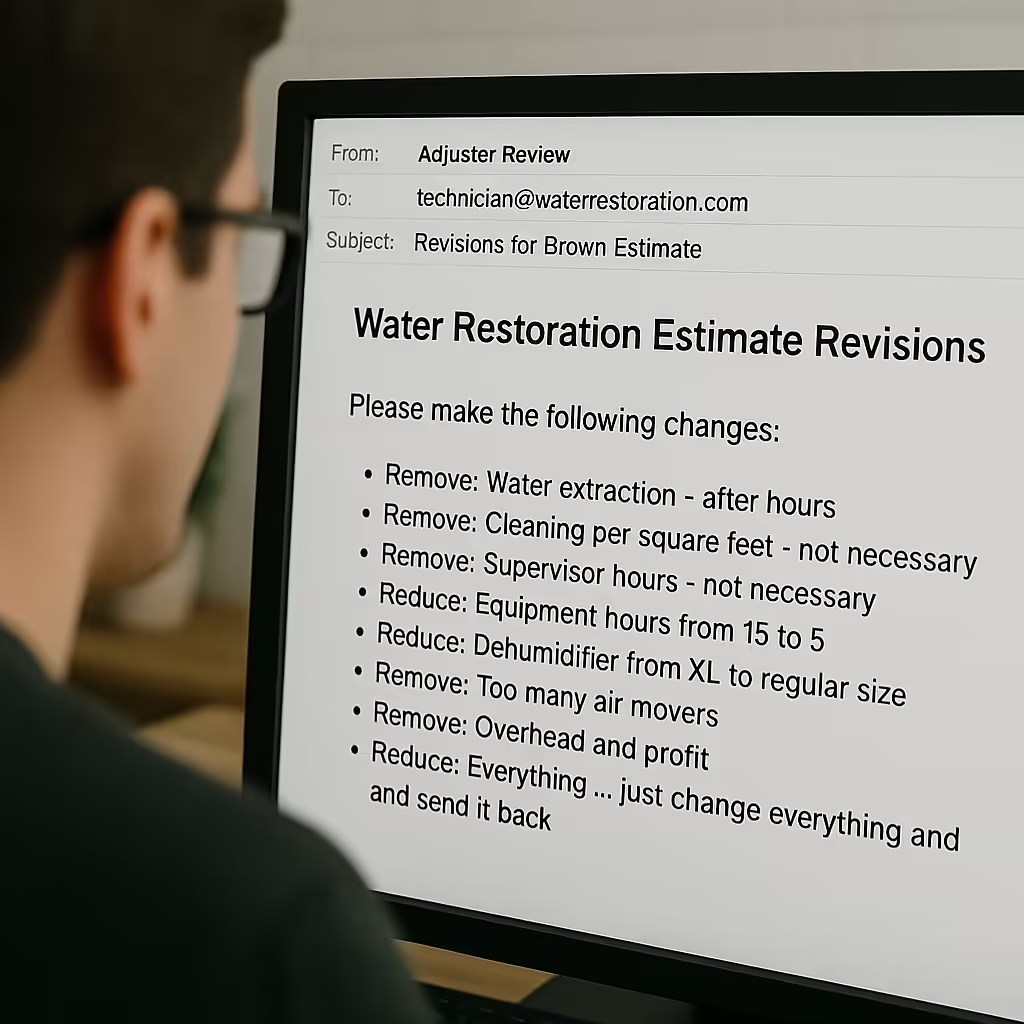
If you’ve created and submitted restoration estimates for any length of time, you’ve likely experienced this moment.
You submit the estimate.
You’ve already discussed the scope with the adjuster.
Then suddenly you receive an email from a third-party reviewer reducing equipment, drying days, or entire portions of the job.
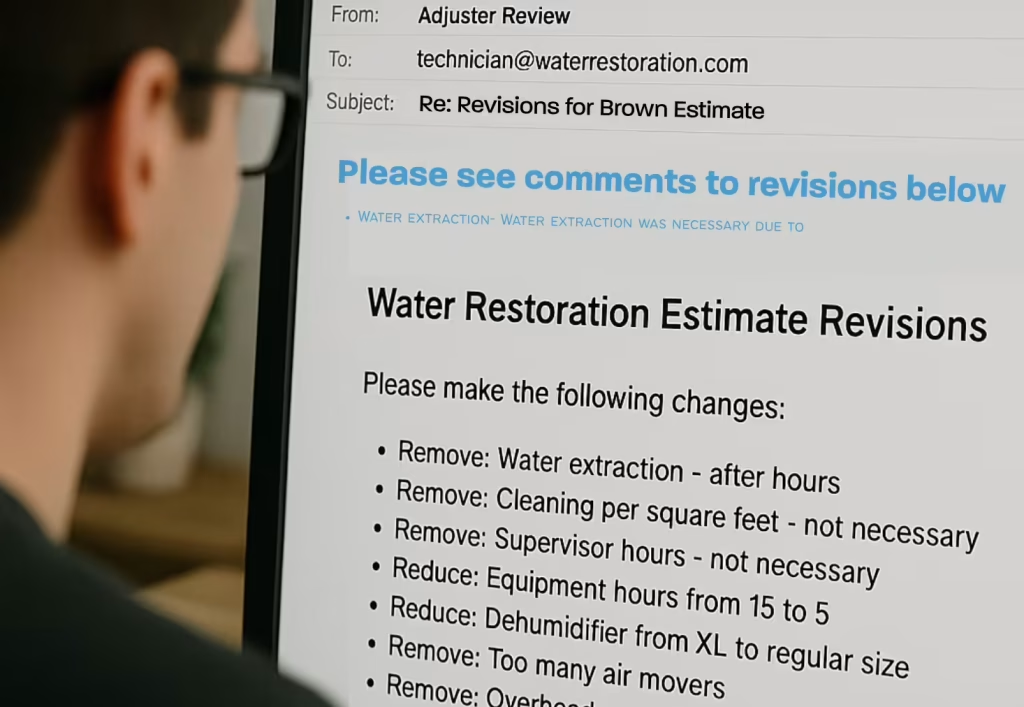
You reply to the adjuster to clarify the changes.
And then… nothing.
No response.
Just another email from the reviewer.
For many estimators, this situation can be frustrating because it feels like you’re arguing with someone who wasn’t at the job and seems like they don’t know what they’re talking about. Meanwhile, the adjuster you originally worked with has gone quiet.
The truth is that there are several reasons this happens. Understanding them can help you determine the best path forward.
Scenario 1: When Water Damage Documentation Wasn’t Strong Enough

Sometimes pushback happens because the estimate lacks clear justification.
Water mitigation decisions are based on field conditions, but if those conditions aren’t documented, the reviewer only sees line items.
From their perspective, they may see:
- more air movers than expected
- additional drying days than what they think is “standard”
- equipment that may be deemed unnecessary
Without supporting documentation, those items can appear excessive.
When this happens, the best strategy is to focus on building the justification.
Provide documentation such as:
- moisture readings and moisture maps
- daily drying logs
- psychrometric readings
- photos tied to affected materials
- notes explaining drying goals
The more clearly you can connect the estimate to the conditions observed on site, the easier it becomes for an adjuster to defend the scope. This means the production crews need to take great photos, have airtight documentation and should communicate any complexities or limitations as soon as possible. We may think the documentation is great. But for many companies it is truly lacking.
To resolve this, be sure everyone in the company has the appropriate training. Technicians, sales team members, lead techs and estimators have different learning paths. Be sure to tailor the training to their role.
Every learning path should start with IICRC WRT.
Scenario 2: When the Water Damage Documentation Was There — But the Pushback Continues
This is the scenario that frustrates estimators the most.
You documented the job.
You thoroughly explained the line items.
The drying plan followed recognized standards and you came to agreement with all the decision makers.
Yet the reviewer still pushes back on the invoice.
In many cases, this occurs because third-party review systems compare claims to historical averages. If the estimate falls outside those patterns, it may automatically be flagged for reduction.
This is where it becomes important to bring the discussion back to job-specific conditions rather than averages.
Instead of arguing about numbers, focus on explaining:
- what materials were wet
- how moisture migrated through the structure
- why the drying environment required the equipment used
- what drying goals were established
By tying your explanation to site conditions and industry standards, you help move the conversation away from generalized assumptions.
Remember, the goal isn’t to “win an argument.”
It’s to show that the drying decisions were based on measured conditions and recognized methodology. When this doesn’t work, it may be time to move to scenario 3.
Scenario 3: Reroute the Conversation Through the Customer

One strategy that is often overlooked is involving the property owner when communication stalls.
The carrier and the restoration contractor both ultimately serve the customer. The adjuster may try to bring in their third-party, which is fine. But that does not mean they are a part of your contract. When a third-party reviewer is being unreasonable, the customer can help reopen the discussion through the adjuster.
For example, if scope decisions were previously discussed with the adjuster and an agreement was made, inform the customer about the third-party. Allow the customer to keep the conversation going with the adjuster. Try to set up a three way call or have the customer speak with their agent.
A simple message to the customer might say:
We previously discussed the scope with you and your adjuster and proceeded based on that agreement. Your adjuster has now involved another company to try to lessen the invoice after the work was done.
Then present a few options that would help keep the process moving. This approach keeps the conversation professional while reminding everyone involved that the goal is resolving the claim fairly for the policyholder. Approach this with the understanding that all documentation is accounted for, your invoice has no errors and you actually did come to agreements with the adjuster on the scope of work before proceeding.
Understanding the Role of Third-Party Review in Water Damages
Many restoration estimates today pass through additional levels of review beyond the adjuster who originally handled the claim.
These review systems may evaluate estimates using statistical comparisons or automated claim analysis tools. When estimates fall outside those patterns, reviewers may request reductions or additional justification.
This doesn’t necessarily mean the estimate is wrong.
It simply means the estimate needs to be supported by clear documentation and explanation of the conditions that required the work performed.
A Practical Approach for Estimators Negotiation Water Damages
When facing pushback from reviewers, it can help to approach the situation step by step:
- Review your documentation.
Make sure the file clearly shows the conditions that led to your drying plan. - Explain the reasoning, not just the line items.
Describe the conditions that required the work. - Reengage the adjuster when possible.
They are often the person best positioned to interpret the claim. - Use the customer appropriately.
If communication stalls, the policyholder can help clarify prior discussions. - Stay professional and focused on the facts.
Clear documentation and measured conditions are the strongest foundation for productive claim discussions.
The Estimator’s Role
Writing estimates for water damage restoration is more than entering line items into software. It requires translating field conditions into clear documentation that others — including adjusters and reviewers — can understand.
That communication gap is where many claims become difficult.
The more effectively estimators document the why behind their decisions, the easier it becomes for adjusters to support the work that was performed.
Because in the end, the goal is the same for everyone involved:
Restoring the property properly and resolving the claim fairly.

Nick Sharp
Nick Sharp has worked with Jeremy Reets for nearly 2 decades. He started in carpet cleaning and mitigation before moving to the construction side as a project manager. He then was the senior estimator for Champion Construction for over 8 years. Since its inception in 2015, Nick has been an instructor of our Restoration Estimating & Negotiating course. His most recent venture is as a restoration estimate consultant. Nick is an Xactware Certified Trainer and also has his Levels 1-3 Xactimate Certifications. He’s a bad boy on that sketch but better at finding where you may be losing money!


770-712-7293