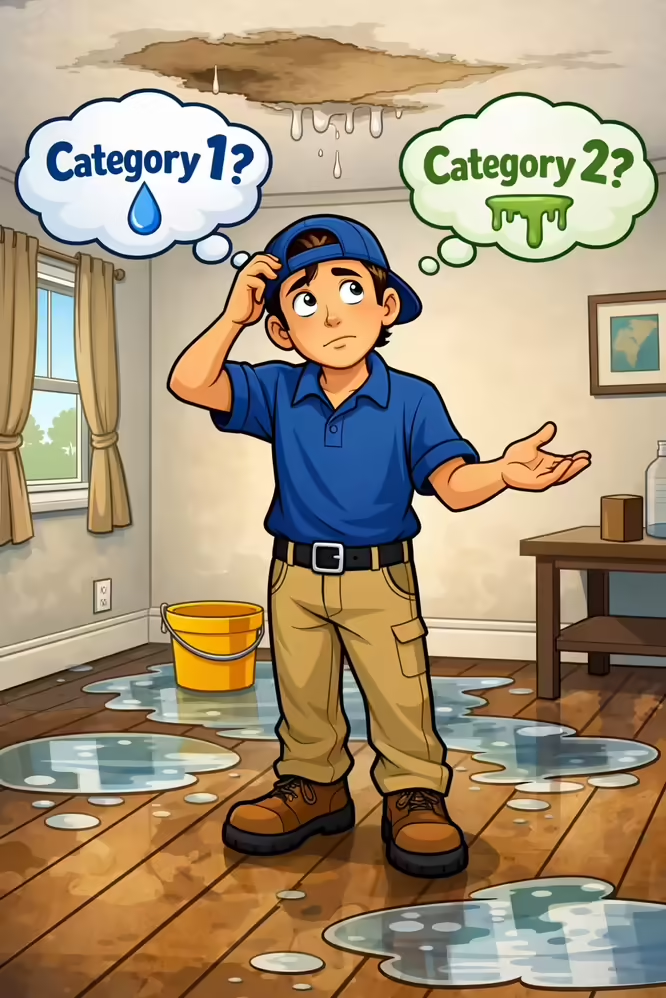
In the water damage restoration industry, a persistent myth costs companies time, money, and credibility. The belief that Category 1 water projects don’t exist. Many restoration technicians and project managers assume that by the time they arrive, every job has already become a Category 2 or 3. Because of that assumption, projects are not being categorized correctly. If this is what you were taught, sorry. But it’s wrong. And your company is losing profit because of it.
Here’s the truth: Category 1 water losses absolutely exist. Not only do they exist, but when properly identified and documented, they often are the most profitable projects your water damage restoration company will handle.
Problems When Restorers Miscategorize Category 1 Projects
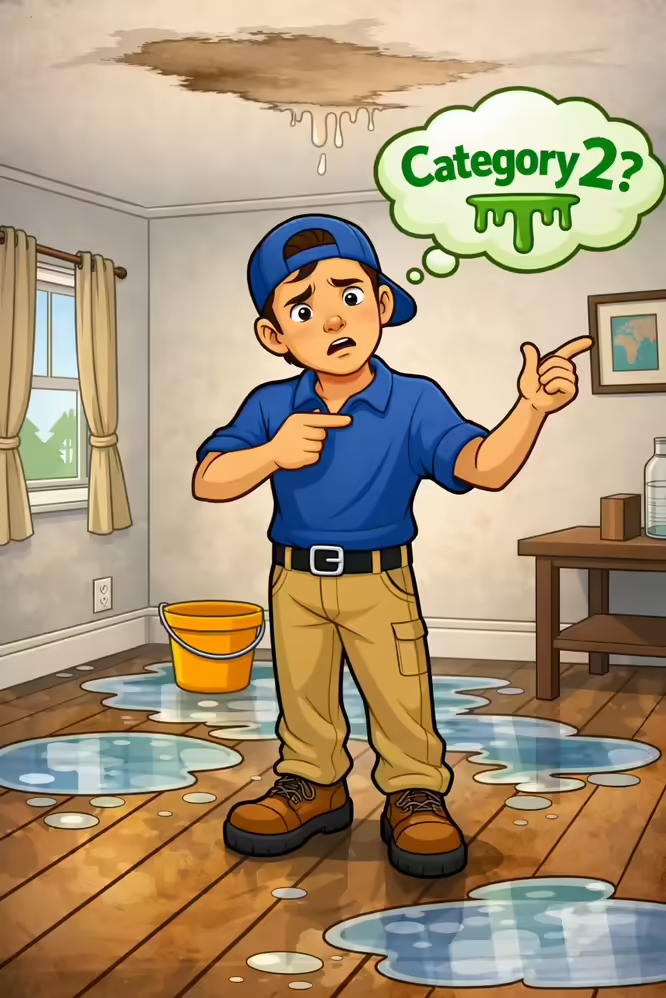
In today’s restoration market, production crews are taught Category 1 projects don’t exist for a few reasons. One, in the past, the s500 stated water that flows and touches building materials can constitute a change of category. Second, the prevailing thought is that the revenue on contaminated projects is higher than Category 1.
But miscategorizing Category 1 water projects creates two major problems:
1. You are not working according to the standard (IICRC s500).
Can water from a Category 1 source deteriorate to Category 2 or 3? Absolutely! What contributes to that? According to the s500 definitions (page 15 and 16), “Category 1 water can deteriorate to Category 2 or 3. Category 1 water that flows into an uncontaminated building does not constitute an immediate change in the category. However, Category 1 water that flows into a contaminated building can constitute an immediate change in the category. Once microorganisms become wet from the water intrusion, depending upon the length of time that they remain wet and the temperature, they can begin to grow in numbers and can change the category of the water. Odors can indicate that Category 1 water has deteriorated.”
When water flows into a contaminated area, it can change category. Also, time can be a deterioration of the water that could lead to microbial amplification. There isn’t a specific amount of time, like over 48 hours. Instead, the time varies based on the conditions within the property. The temperature of the water, the interior and exterior of the home also plays a role. We must look for evidence and justification for a change in category in order to properly scope a project.
2. You reduce profitability—dramatically.
Category 1 projects require less labor, more equipment, possibly extended dry times, and more monitoring visits. This increases your profits. It also lowers construction costs to the customer and carrier because it opens the path to drying full assemblies with minimal demo.
The Hidden Truth: Category 1 Projects Are Your Profit Powerhouse
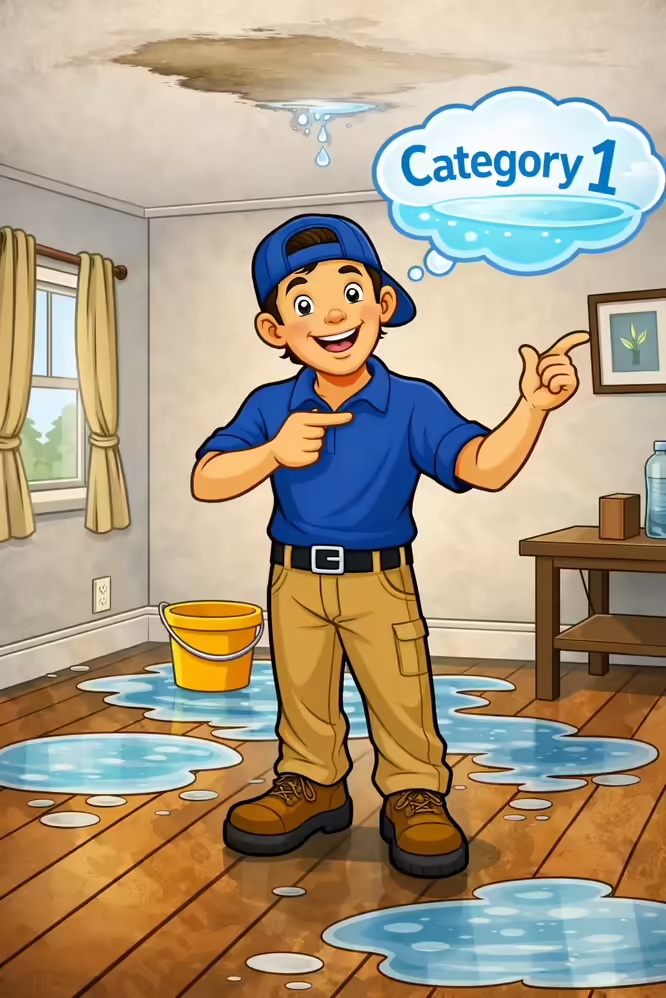
A well-run Category 1 water loss is one of the most profitable jobs a water damage restoration team can perform. When your technicians confidently categorize a job correctly, your company benefits from:
- Faster production cycles
- Lower overhead
- Higher daily revenue yield
- Fewer callbacks
- Smoother adjuster communication
- Lower demo charges and higher equipment rates
Category 1 isn’t a “lesser” project—it’s an opportunity. And for many companies, it’s the easiest path to predictable profit.
How to Stop Miscategorizing Water Projects
This problem for most production crews comes from uncertainty. Many teams need confidence and adequate training about what makes a water loss a Category 1 project according to the standard, how to verify conditions, and how to document it in a way that stands up to scrutiny whether the project remains a Cat 1 or if it does deteriorate.
Once techs understand the why behind Category 1 decisions, something powerful happens:
- They will perform work according to the standard.
- They stop guessing at category classification.
- They stop performing unnecessary demo.
- And most importantly—they will increase the company’s average dollar sale.
How to Come to Agreement When You Suspect a Change in Category
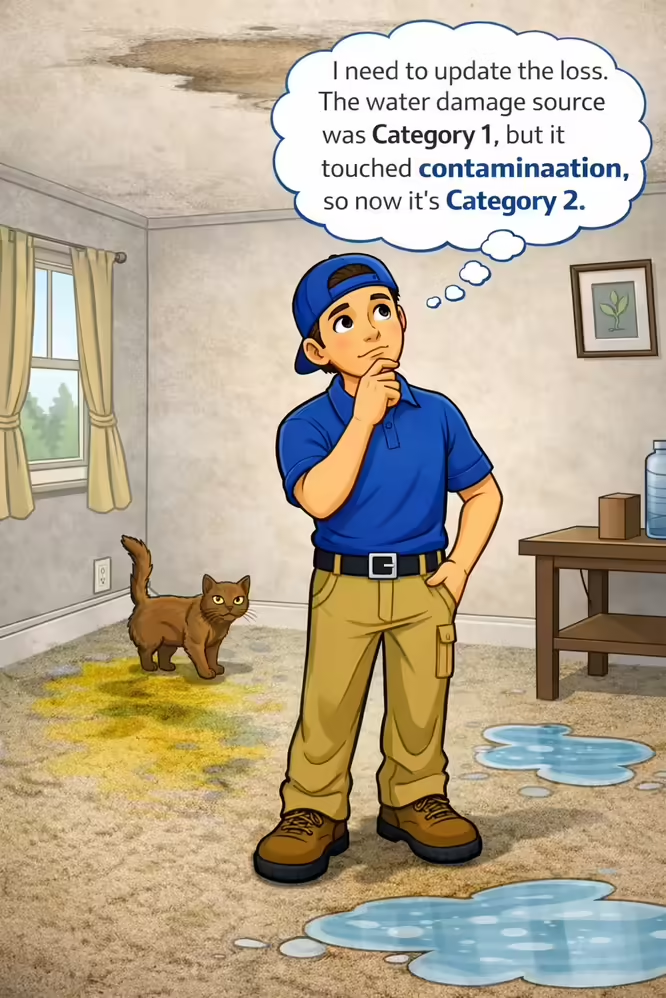
Can water that came from a Category 1 source deteriorate? Yes! According to the standard, when water touches contamination (not just building materials) or when microbes grow due to time and temperature, then the water may deteriorate to a Category 2 or 3 project. Odor may be an indication of this.
Many companies read this and make decisions on what should be done. When a change of category is suspected, it is better to gain agreement among all the decision makers (customer and carrier). This doesn’t mean stopping work, but it means acting as a consultant to provide evidence of deterioration. If all parties are in agreement that the water has deteriorated, you have a much higher chance of getting paid for your work.
- Send a work plan that details the change of category
- Provide the proof (photos of contamination in the home, third-party documentation, etc)
- Come to agreement on the adjustment via email
👉 Learn how to create justified work plans by attending Get Paid for Water Restoration
Embrace being a mitigation company instead of a drying company. When demo is necessary, remove what you should! When cleaning is necessary, clean! When materials can be saved, save them! Category 1 projects exist and they shouldn’t be avoided. They should be embraced!

Nick Sharp
Nick Sharp has worked with Jeremy Reets for nearly 2 decades. He started in carpet cleaning and mitigation before moving to the construction side as a project manager. He then was the senior estimator for Champion Construction for over 8 years. Since its inception in 2015, Nick has been an instructor of our Restoration Estimating & Negotiating course. His most recent venture is as a restoration estimate consultant. Nick is an Xactware Certified Trainer and also has his Levels 1-3 Xactimate Certifications. He’s a bad boy on that sketch but better at finding where you may be losing money!


770-712-7293