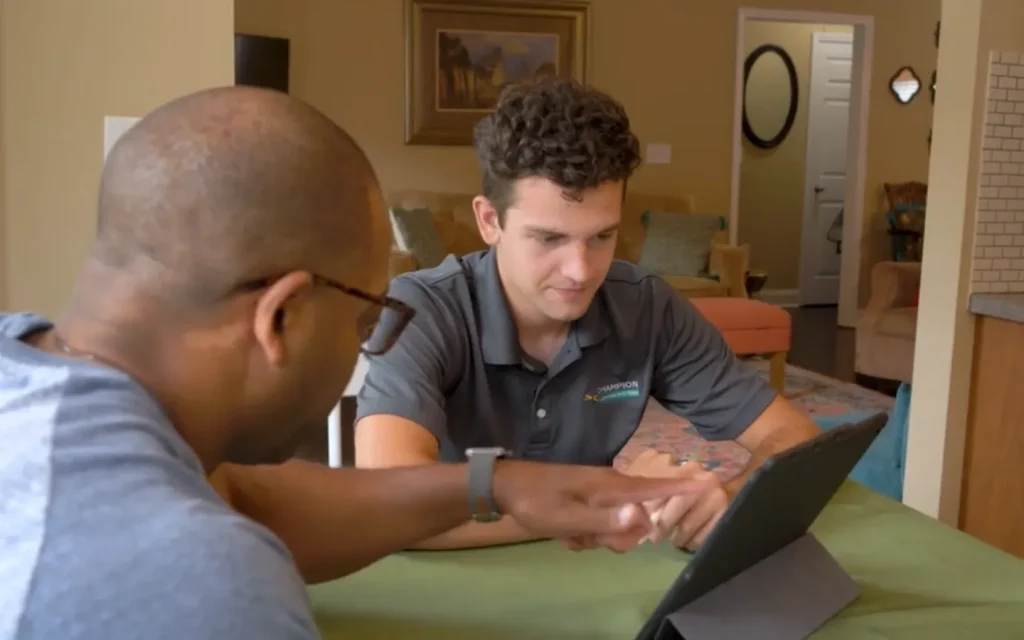
In water restoration, estimators occupy one of the most difficult positions in the entire company.
You’re responsible for turning a scope of work from a job site you’ve probably never been to into a defensible invoice. You’re negotiating with adjusters, carriers, and third-party reviewers who often scrutinize every drying day, every piece of equipment, and every line item. And many times, that means educating individuals that don’t know about water restoration. That can be frustrating.
You’re facing many challenges. But the solution may be more in your control than you think. It may be as simple as correcting the communication gap between the field and the office.
True, production crews are the ones crawling into tight crawl spaces, working around occupied homes, and making real-time decisions when conditions change. Estimators, on the other hand, must defend those decisions later—often days after the work has been performed.
When the field documentation doesn’t clearly explain why decisions were made, estimators are left negotiating with incomplete information. And incomplete information leads to give-backs.
Why Communication Matters in Water Restoration
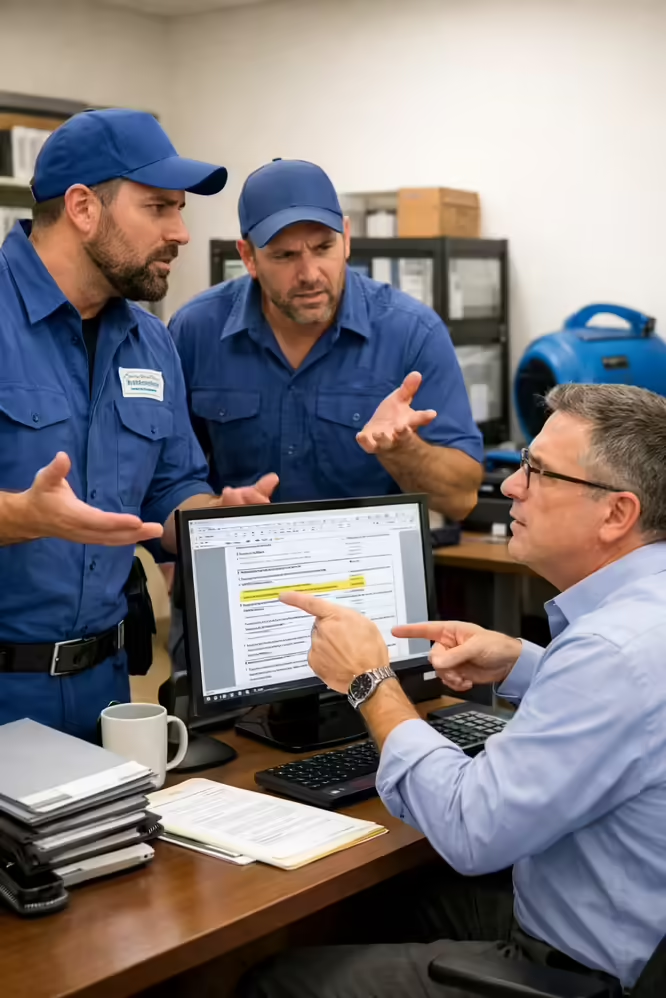
When communication breaks down, everyone loses. Crews feel blamed for decisions that were made in the spur of the moment or late at night. Estimators don’t feel confident during adjuster negotiations. And the company risks not getting paid for doing the right job.
From the production crew’s perspective, poor communication can mean:
- Being told equipment (like air filtration devices) won’t be paid for after it’s already been set
- Having drying days questioned by adjusters who never saw the conditions
- Feeling like the office “doesn’t get it” when it comes to real-world challenges
- Questioning decisions like stabilization, testing, category of loss or even what was demoed on a project
These issues can affect the commission of some technicians. Making the communication gap even wider!
Strong communication helps the office defend the scope of work, justify extended drying, explain situations when the water deteriorates, and gain agreement with customers and adjusters earlier in the process. Without clear information from the field, the office is negotiating blind and give backs will increase.
Estimators (You) Aren’t the Enemy—But Neither are the Techs
One of the biggest frustrations estimators experience within the company is hearing whispers like, “The estimator in the office is trash, we do the job and then they don’t get it paid for.” Or some techs hear the statement “The adjuster won’t pay for it”, and immediately blame the estimator.
What often gets overlooked is that estimators are historians. We are reliant on the pre-inspection meeting, sketch, pictures and scope of work provided to them. If we don’t understand the challenges, limitations, complexities and adjustments to the process—we can’t explain it to decision makers.
Most technicians aren’t intentionally doing bad work. They just don’t know what pushback we receive from adjusters, why we receive it and haven’t been given a clear path to resolving the pushback.
How Estimators and Production Crews Can Communicate More Effectively
Improving communication doesn’t mean more paperwork—it means better information.
1. Explain Conditions and Base Decisions on the S500
Techs- Instead of saying “set air filtration devices,” explain why. “The customer decided air filtration was necessary due to a health concern on this Cat 1 project.” But there are steps that need to be taken before making this determination based on the standard. Do the techs know the steps? Do they communicate these steps were taken to the office in order to gain agreement early in the process? Do they know the difference between “should” or “recommended” in the standard?
Estimators– Document the red flags and send a work plan to the decision makers to gain agreement. Don’t just quote the standard. Use the standard language and apply it to why this standard was applicable for this project.
2. Use Photos to Tell The Story
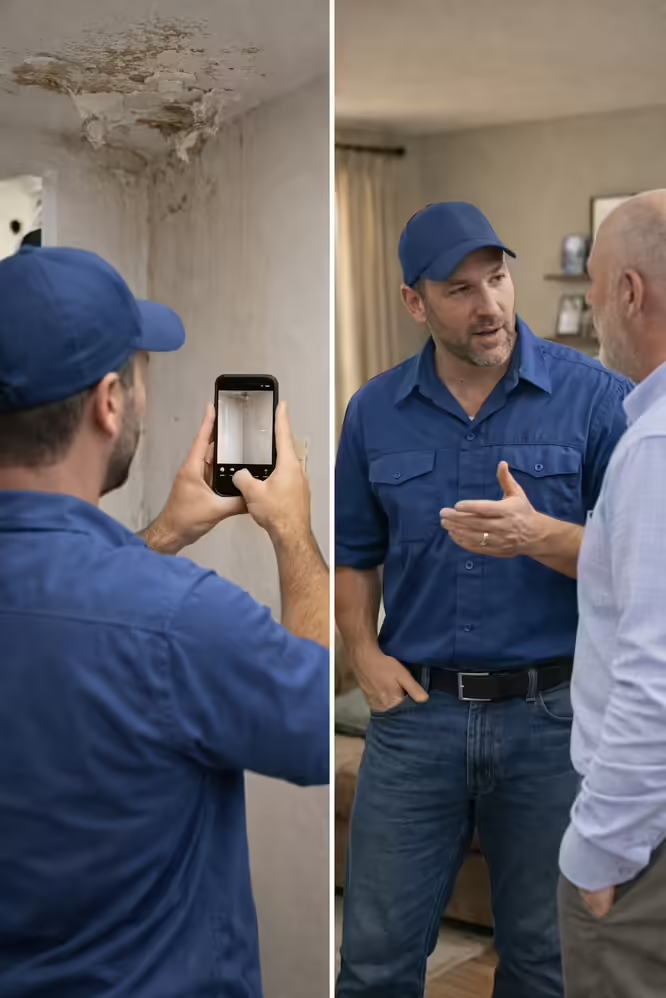
Techs and Estimators- Capture the entire room. Then the reasons for the necessary work. Finally, take pictures of equipment and monitoring justification. Photos can include containment, moisture readings, PPE, cleaning. etc. A picture that shows why work was difficult is powerful during adjuster negotiations.
3. Speak in Outcomes, Not Emotions
Techs- When speaking to customers, act as a consultant. Ask the right questions to determine what the right scope of work is for that customer. Present options when the standard of care is not definitive (uses recommended, can or may).
Estimators- It’s frustrating when adjusters push back—but emotional language doesn’t help, it actually harms your negotiations. Stick to facts: safety concerns, standard-driven decisions, and the limitations encountered during water restoration. Be confident knowing your team has done the right job and hold the line!
4. Communicate Early—Not After Pushback
Techs- When the customer gives direction on complexities or limitations, notify the office as soon as possible.
Estimators- Waiting until an adjuster or third-party reviewer denies items puts everyone on defense. Share your work plan with the decision makers on day 1. That way an initial action plan can be sent to decision makers. This is how they can gain agreement earlier in the process. Give the carrier an opportunity to call you so you can present options to them. Then, get the decision makers on the same page. If it is necessary, and the carrier won’t pay, is the customer willing to pay it? If not, we can help them with their adjuster. Or they can sign the proper documentation so you limit your liability. Either way, don’t do work without knowing you are getting paid.
5. Remember: You’re the Expert on Site
Techs- Production crews are the subject-matter experts of the job site. Your experience matters. It’s what makes you a great consultant! When you communicate confidently and clearly with the proper individuals at the right time, you help the entire company get paid for proper water restoration work.
Estimators– You need to know what the right scope is and also how to translate that and justify it to the carrier. This takes teamwork, experience and training. But when you are the expert, you will know your s500, know if the proper process was completed and how to gain agreement early in the process.
The Bigger Picture
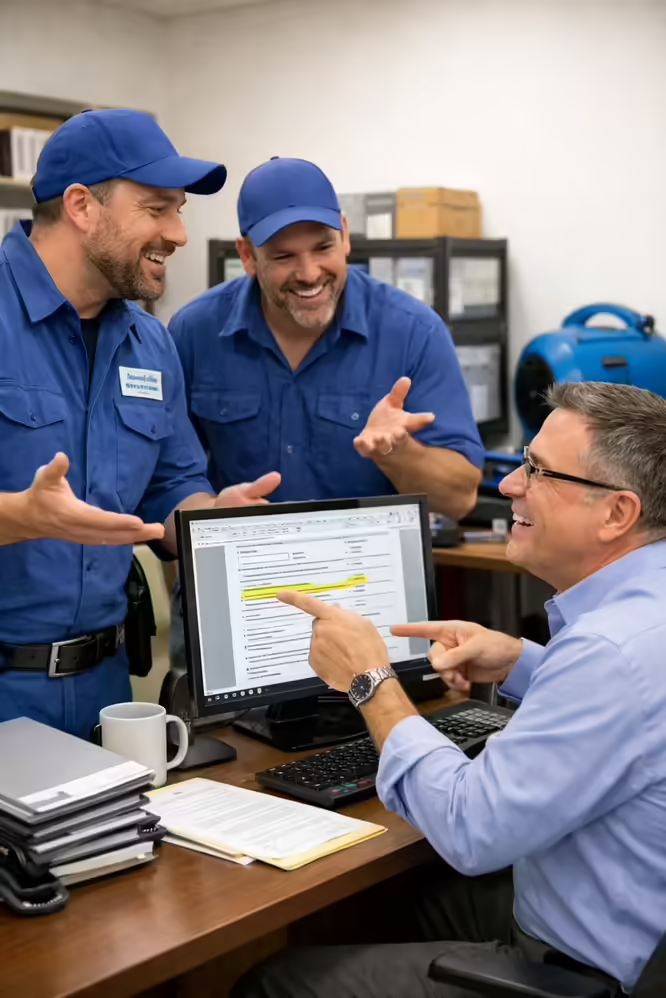
At its core, water restoration is a team effort. Production crews, estimators, and other office staff all want the same thing: to do the right job and get paid for it. Strong communication bridges the gap between the physical reality of the field and the financial reality of adjuster negotiations.
When production crews communicate with customers and estimators—clearly, professionally, and consistently—the office can advocate effectively. And when the office understands what you faced in the field, they’re no longer guessing. They’re defending your work.
Better communication doesn’t just reduce frustration. It protects your labor, your expertise, and the integrity of water restoration as a profession.

Nick Sharp
Nick Sharp has worked with Jeremy Reets for nearly 2 decades. He started in carpet cleaning and mitigation before moving to the construction side as a project manager. He then was the senior estimator for Champion Construction for over 8 years. Since its inception in 2015, Nick has been an instructor of our Restoration Estimating & Negotiating course. His most recent venture is as a restoration estimate consultant. Nick is an Xactware Certified Trainer and also has his Levels 1-3 Xactimate Certifications. He’s a bad boy on that sketch but better at finding where you may be losing money!


770-712-7293