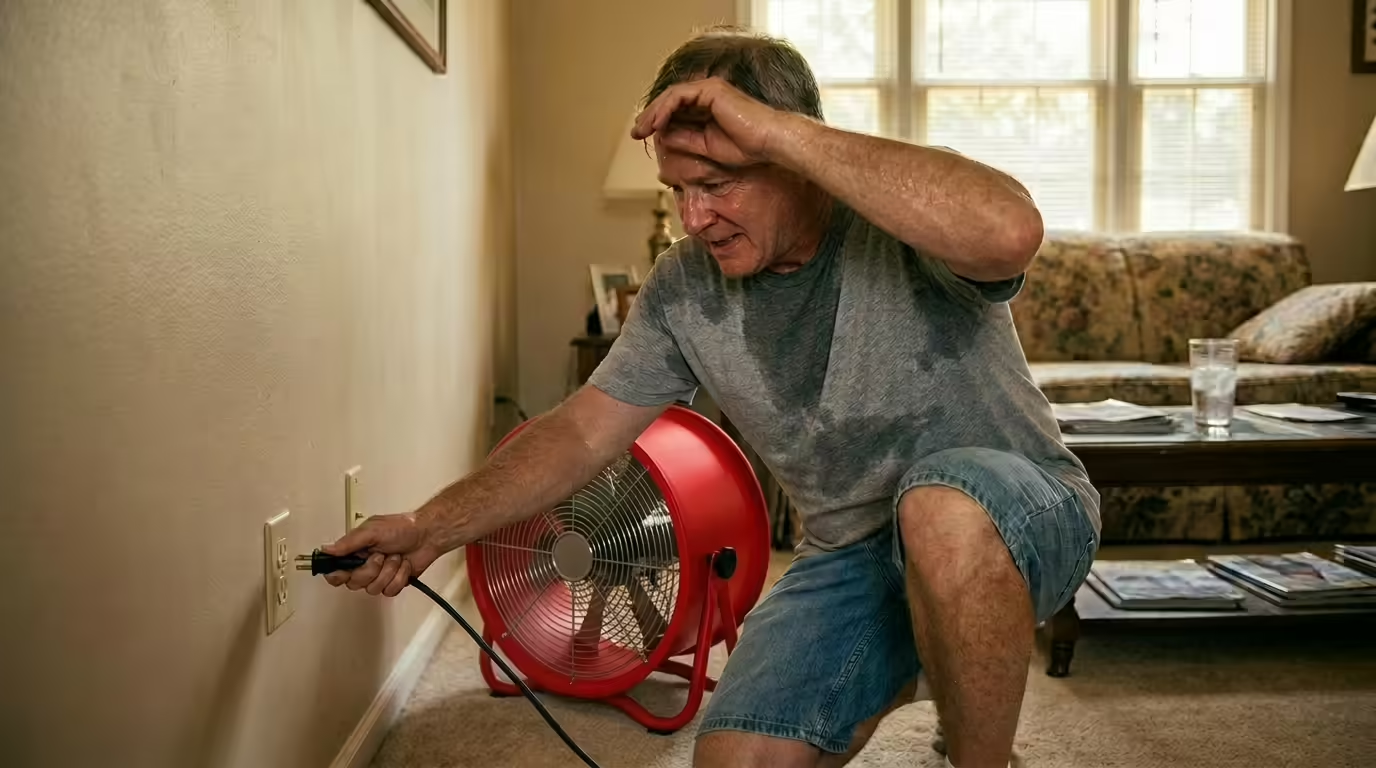
If you’ve ever had a water damage project at your own home, you know how uncomfortable it is. So, when you hear a homeowner say:
- “It’s too loud to sleep.”
- “The house is too hot.”
- “Can we shut this off for a few hours?”
You understand the complaints are reasonable.
But, from the contractor’s perspective, it’s a problem.
Air movers and dehumidifiers are designed to run continuously. When equipment is shut off — even for part of the day — evaporation ceases and drying time increases.
How Equipment Shut-Offs Lead to Payment Challenges Due to Extended Drying Time for Water Restoration
Adjusters need sufficient justification when paying invoices for water restoration projects.
They look at:
- Number of drying days
- Moisture readings
- Equipment run time
- Documentation consistency
Adjusters may pushback due to extended drying time if they don’t think there is justification. But what is the proper justification? And what is extended drying time?
Techs end up doing the right work — and the company doesn’t get paid for it if we don’t have the answers to these two questions.
Pre-Restoration Questions Every Water Restoration Technician Should Ask

The fix isn’t more equipment.
The fix is acting as a consultant during the inspection. Consultants ask the right questions and present options to decision makers in order to set the proper scope of work for that individual project.
Technicians can ascertain what the homeowner needs by asking:
“Will you be staying in the home during the drying process?”
Once you ascertain this answer, it guides the next few questions and the scope of work.
If the homeowner is staying in the home we can ask:
“In order to mitigate the damage to the home, we would like to dry as quickly as possible. This would mean the air conditioner would need to be set at around 90 degrees. Or, would you prefer to control the thermostat?
Now we know what the decision maker would like to do. We are asking the right questions. This reveals if there may be a potential for extended drying on day one.
Next we act as a consultant by presenting options.
“If you would like to control the thermostat, it will affect the drying time which may lead to a larger invoice.
Come to agreement with the homeowner on site. Let them know we are ok with either option. But allow them to make the decision with our guidance.
Communicating Water Restoration Drying Plans to Insurance Adjusters
Once the homeowner agreement is in place, the next step is communication. Estimators should send the initial drying plan to both the customer and the carrier.
The carrier needs to know:
- That we are going to continue with the plan unless we hear from them
- What the homeowner decided
- That there is a potential for extended drying
If the insurance company has concerns, they need to contact the contractor as soon as possible. This gives us an opportunity to present options to them and gain agreement with all parties. If the plan changes, be sure the homeowner is involved and understands. Once all sides are in agreement, adjustments to the plan can be made.
It’s not about approval. It’s about gaining agreement while we still have leverage. Once the project is complete, we have no leverage and no options to make adjustments.
What is Extended Drying Time on Water Restoration Projects?
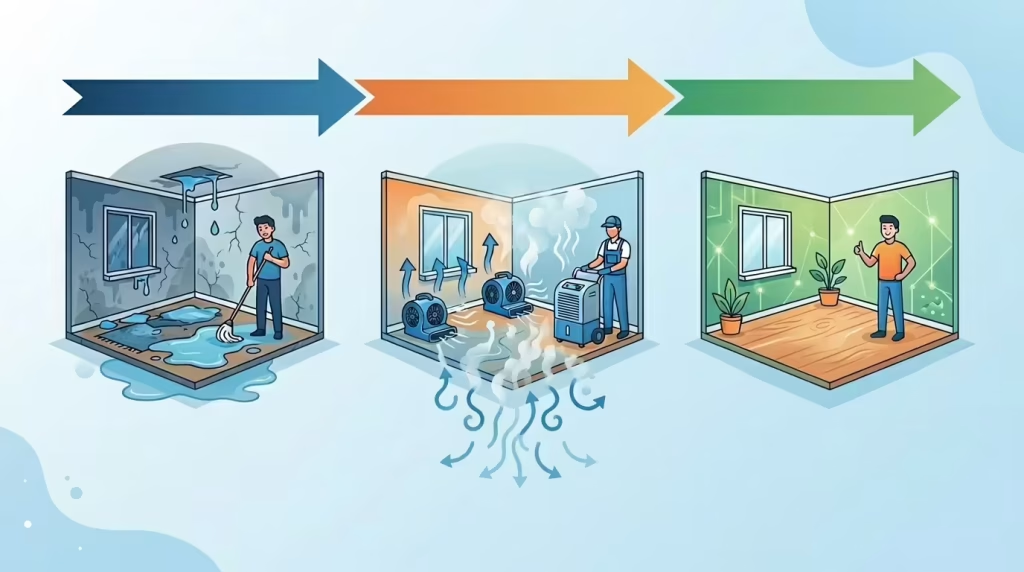
There has been an incorrect industry assumption that drying a water damage in 3 days is standard. The reality is each home, property and project is different. Each region in the country is different. Drying in a humid summer is different from drying in the winter when it’s drier. Drying is complete when we reach the drying target set for individual properties.
Also, carriers have different standards in what they view as extended drying. Some view it as 3 days, others as much as 5 days.
You should track pushback on:
- Each carrier
- When you start receiving pushback on days of drying
- What was adjusted in the process to address the pushback up front
By doing this, we can see what extended drying is and then tailor the communication to match their expectations. Once the project goes into what the carrier considers “extended drying”, send communication updating the carrier of the situation. Once again, if there are questions, we have leverage to present options.
Get Paid for Extended Drying Time on Water Restoration Projects
Most drying time denials are caused by a lack of communication.
Ask the right questions during the pre-restoration meeting.
Gain agreement with decision makers early in the process.
That’s how technicians establish the proper scope of work to do the right job — and make sure the company gets paid for the work that was actually done.

Nick Sharp
Nick Sharp has worked with Jeremy Reets for nearly 2 decades. He started in carpet cleaning and mitigation before moving to the construction side as a project manager. He then was the senior estimator for Champion Construction for over 8 years. Since its inception in 2015, Nick has been an instructor of our Restoration Estimating & Negotiating course. His most recent venture is as a restoration estimate consultant. Nick is an Xactware Certified Trainer and also has his Levels 1-3 Xactimate Certifications. He’s a bad boy on that sketch but better at finding where you may be losing money!


770-712-7293