This scenario plays out every day:
A water damage occurs and you want to get it dried as soon as possible. But from the customer’s perspective:
- They’re uncomfortable because the house is 90+ degrees
- The air movers are loud
- They’re worried about energy costs
This leads to complaints or homeowners simply turning off the equipment or turning the thermostat down. From a water restoration standpoint, that decision can lead to:
- Extended drying time
- Adjuster pushback
- A bill that isn’t fully paid
This is where many production crews get stuck:
- Say yes and risk non-payment
- Say no and either damage the customer relationship or battle with them turning off your equipment
There’s a third option—and it’s the one most crews are never taught.
Shift the Role: From Technician to Consultant
Production crews don’t need to be decision-makers. They need to be consultants.
A consultant:
- Asks questions
- Explains cause and effect
- Presents options
- Documents decisions
- Communicates upstream
This approach protects every aspect of the water restoration project.
Step 1: Use Questions to Reveal the Real Need

Instead of overstepping and making decisions that puts money at risk, ask the right questions to the customer during the pre-inspection meeting.
Examples:
- “Will you be staying in the home?”
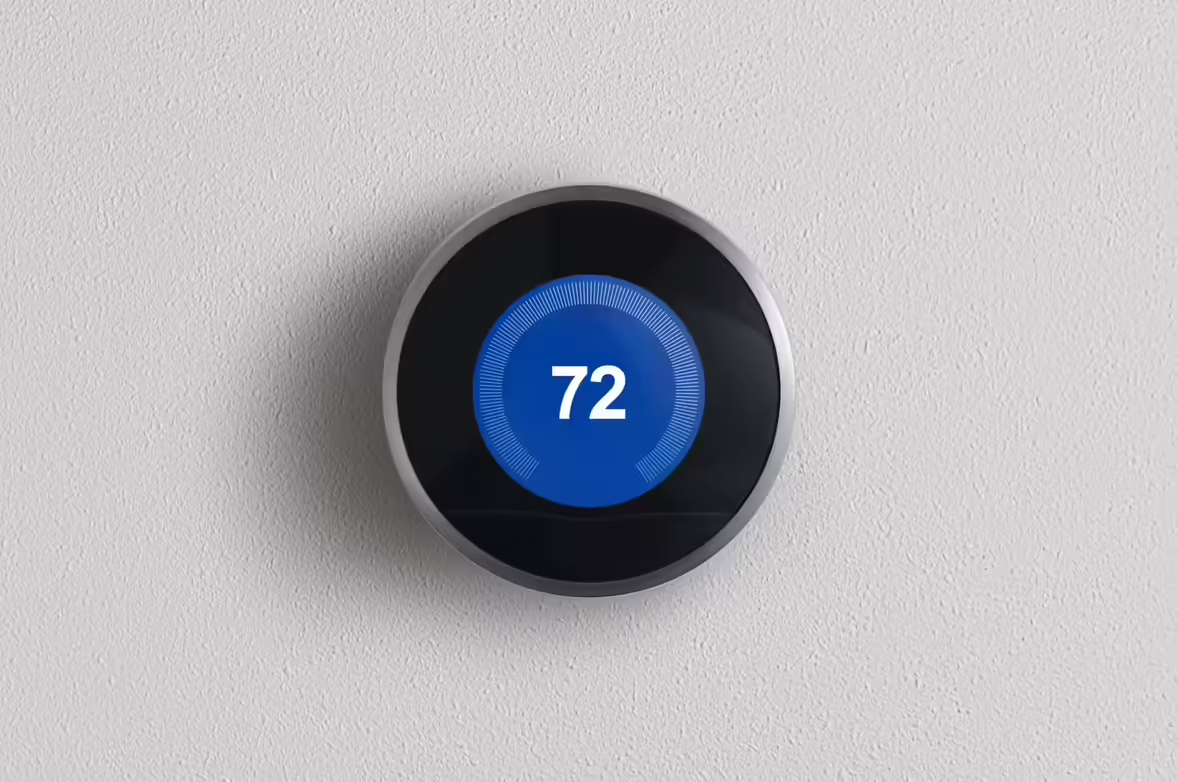
- “In order to hit the drying goals in a timely manner, we would like to control the thermostat. We will set it at 90 degrees. Or would you prefer to control the thermostat?”
These questions do two things:
- They allow the decision maker to make the decision.
- They allow us to ask further questions, present options and establish what the correct scope is for that customer.
You are guiding the conversation—and acting as a consultant now!
Step 2: Present Options (Not Instructions)
Consultants don’t make decisions. They explain options and consequences so the decision maker can make an informed decision.
Outline the options clearly. Example language crews can use:
“By controlling the thermostat, we can maintain optimal drying conditions to ensure the drying is completed in a timely manner. If you’d like to control the thermostat, you will be more comfortable but the drying may take a few days more.”
Now the decision belongs to the customer—and they can make an informed decision.
That’s professional water damage restoration customer service that leads to agreement.
Step 3: Gain Agreement and Document It
Once the customer chooses, document the decision.
- Customer preference
- Environmental changes
- Impact on drying conditions
- Conversations held on site
Documentation supports the office by letting them know what the customer has decided.
Step 4: Communicate with the Office Immediately

This is where many production crews unintentionally lose money. The office cannot negotiate what they don’t know. They certainly can’t gain agreement early in the process if they don’t have the information from the pre-inspection meeting.
Production crews should communicate:
- What the customer requested
- Why they requested it
- What options were presented
- What was agreed to
- How it affected drying
When the office understands the story, they can:
- Align documentation
- Set expectations with adjusters by sending an initial action plan
- Document the agreement between both adjusters and customers
- Present options if one of the parties is not in agreement. Once all members are in agreement, changes can be made and work can proceed
Crews aren’t responsible for negotiations—but they are responsible for providing the facts.
The Reality for Production Crews
Being a water restoration technician today isn’t easy:
- You’re managing equipment
- Monitoring drying
- Educating homeowners
- Protecting payment through your justification
- Following IICRC s500 standards and OSHA regulations
Customer service in water damage restoration isn’t about saying yes or no.
It’s about helping the customer to understand the project and making informed decisions when a scope item doesn’t have justification in the standard or is a red flag during negotiations.
When production crews act as consultants:
- Customers feel respected
- Adjusters see consistency
- Agreement is gained early in the project
- Offices can advocate effectively
- Companies get paid for doing the right job
That’s not just good customer service. It’s professional water restoration.

Nick Sharp
Nick Sharp has worked with Jeremy Reets for nearly 2 decades. He started in carpet cleaning and mitigation before moving to the construction side as a project manager. He then was the senior estimator for Champion Construction for over 8 years. Since its inception in 2015, Nick has been an instructor of our Restoration Estimating & Negotiating course. His most recent venture is as a restoration estimate consultant. Nick is an Xactware Certified Trainer and also has his Levels 1-3 Xactimate Certifications. He’s a bad boy on that sketch but better at finding where you may be losing money!


770-712-7293


