In reviewing water damage invoices, we have noticed 2 issues, regardless of category:
- Contractors aren’t using AFDs on enough projects
- When using AFDs, contractors are not using enough air filtration due to not calculating them correctly.
You’ll hear things like:
- “We didn’t have enough on the truck.”
- “We usually just throw one on the project.”
- “The app said this was fine.”
- “We don’t get paid for them.”
The problem? That approach isn’t backed by math — or the standard. It is putting customers and fellow employees at risk. And it is missing out on potential profitable activities.
Nobody wins…. So let’s fix it. This article will cover how to calculate AFDs.
The Standard Gives Guidance How to Calculate AFDs
The IICRC S520 provides guidance for determining the proper number of air filtration devices based on air changes per hour (ACH). The IICRC S500 suggests using the S520 as a guide when installing AFDs.
Project crews must know the formulas. Once you know it, AFD calculations become straightforward. So what is the formula?
The 3 Things You Need to Calculate AFDs
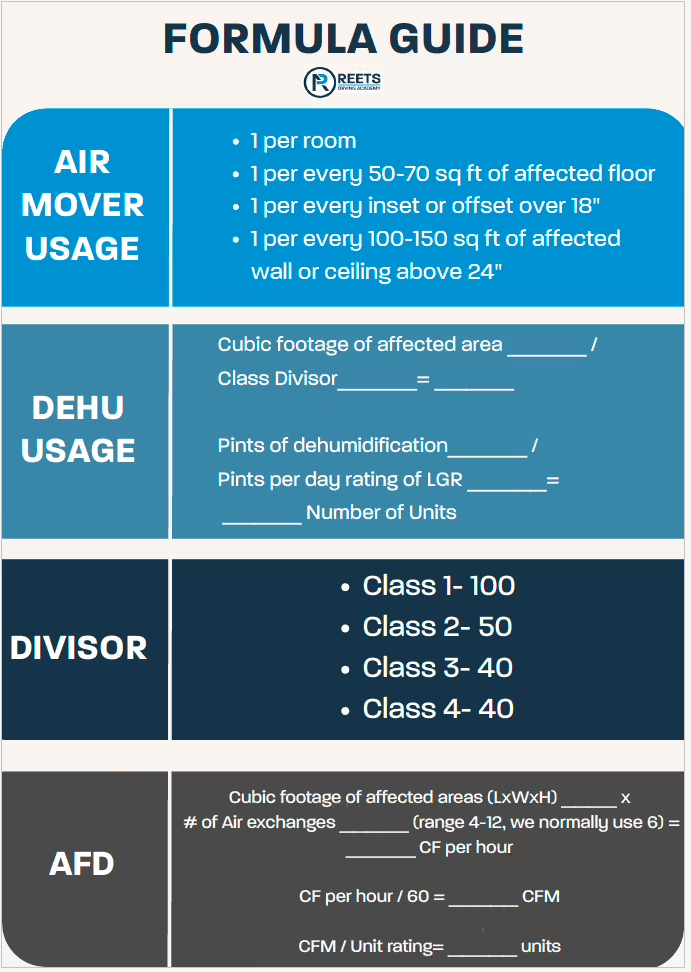
- Cubic Footage of the Affected Space
This is calculated by multiplying:
Length × Width × Height
Example:
A one story home measures 50x20x10. That would make the drying chamber 10,000 cubic feet.
- Required Air Changes Per Hour (ACH)
Air changes per hour answer this question:
How many times per hour do we want to process all the air in this space through an AFD?
The S520 recommends a minimum of 4 air changes per hour, with higher ACH being deemed appropriate depending on conditions.
Suggestion: Using 6 ACH is a way to easily calculate what is necessary and can be used as a baseline for projects that don’t have excessive contamination or aerosolized particulates.
- CFM Rating of the AFD
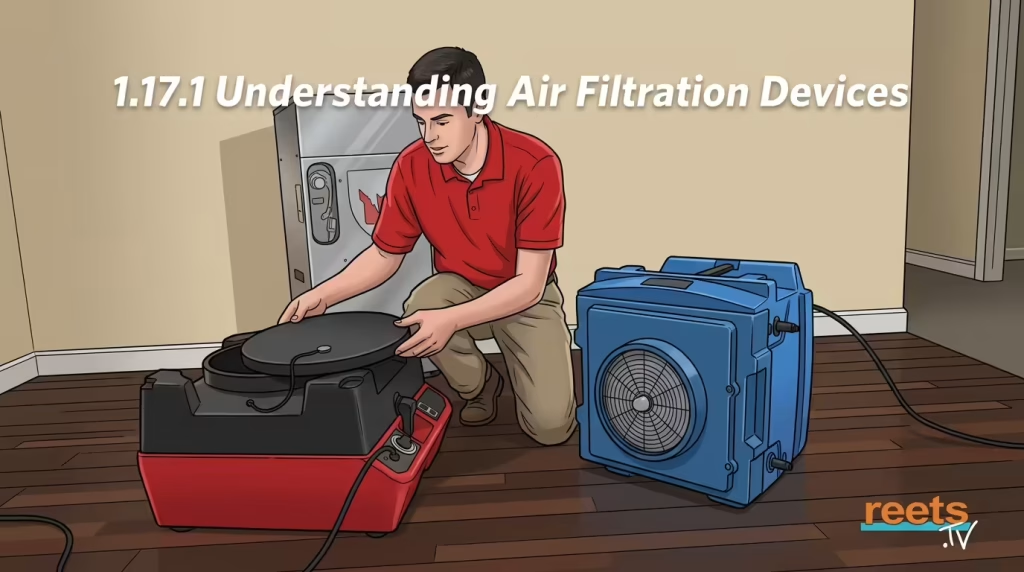
Every AFD has a manufacturer-rated airflow. For example, the Dri-Eaz HEPA 700 Air Scrubber is rated at 700 cubic feet per minute and the Sterilizair HEPA AFD from ASD Products is rated at 600 CFM.
You must know this number to calculate correctly.
Step-by-Step AFD Calculation Example
Real-world example: 6 Air Changes Per Hour
- Cubic footage: 10,000
- Air changes per hour: 6
Formula:
(10,000 × 6) ÷ 60 = 1,000 CFM required
If your AFD is rated at 600 CFM:
1,000 ÷ 600 = 1.67
You can’t use 1.67 AFDs — so you round up.
Answer: 2 AFDs
Why This Matters (More Than You Think)
When AFDs aren’t calculated properly:
- Equipment use is harder to justify
- Techs tend to short how much air filtration is recommended
- Adjusters push back with little justification
- Companies leave money on the table
When they are calculated correctly:
- Your setup is justified and defensible
- Your documentation is stronger
- Your work aligns with the standard
- You get paid for the equipment you install
Final Thought: Apps Are Fine — If You Understand the Math
There are apps and software tools that will calculate AFDs for you — but if you don’t understand the formula behind them, you won’t know when the numbers are wrong.This formula is the foundation.
Once you know it, everything else makes sense.

Nick Sharp
Nick Sharp has worked with Jeremy Reets for nearly 2 decades. He started in carpet cleaning and mitigation before moving to the construction side as a project manager. He then was the senior estimator for Champion Construction for over 8 years. Since its inception in 2015, Nick has been an instructor of our Restoration Estimating & Negotiating course. His most recent venture is as a restoration estimate consultant. Nick is an Xactware Certified Trainer and also has his Levels 1-3 Xactimate Certifications. He’s a bad boy on that sketch but better at finding where you may be losing money!


770-712-7293