

1. The Problem: Proper Categorization of Loss Affects What Cleaning is Necessary
Every water loss starts with an inspection and categorization of loss. Category of loss dictates the cleaning strategy, necessary safety measures, and equipment you may use to accomplish these things. Relying on outdated practices, misinformation or guesswork leads to:
🔹 Incomplete contamination removal
🔹 Elevated risk of microbial growth
🔹 Unhappy customers and pushback from carriers
Only the IICRC standards have the definitions for the category of loss and the workflows for each category. Get to know the standards! It’s easy for an experienced technician or even AI to give you incorrect or outdated information. We will cover some of the water damage restoration workflow referencing cleaning below but not the entire workflow. So acquire and read the most current standards for yourself!
Click here to get a copy of the standards. Use the referral code REET when ordering.
2. Solution | Category 1 Inspection and Cleaning
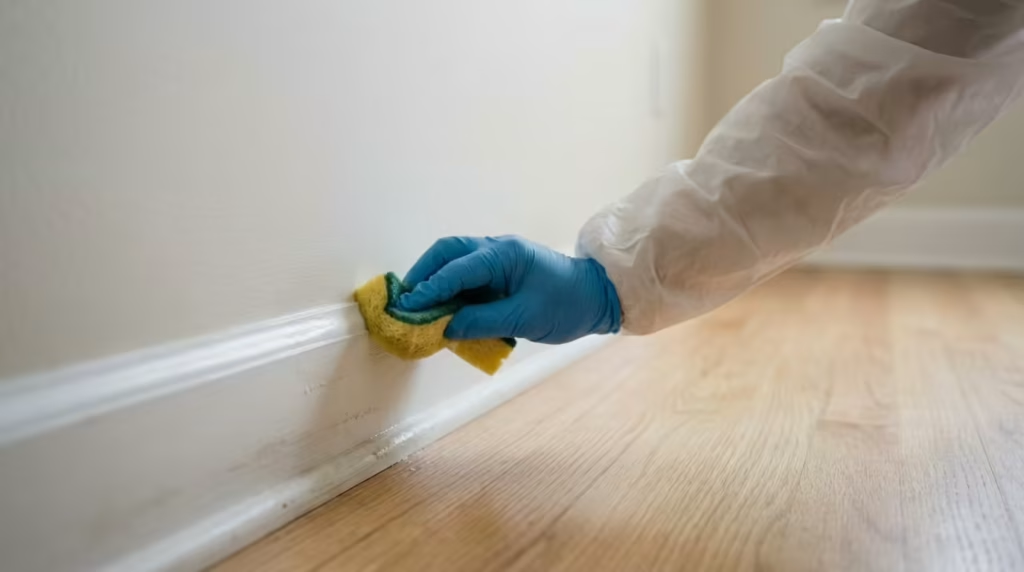
Problem: Category 1 water is from a sanitary source (e.g., broken supply line, faucet leak) and doesn’t pose substantial risk if someone is exposed to it. This doesn’t mean the water is always potable. It doesn’t mean it is even “clean”. Instead, it is the level of contamination in the water that is important. Why? We must identify and address health risks and hazards that may affect employees and customers.
What the Category 1 workflow includes (s500 12.4):
- Confirm source of the water damage upon arrival.
- Control spread of water
- Potentially stabilize atmospheric conditions
- Evaluate if cleaning is necessary (visible dust or debris)
- Document cleaning needs in photos
- Perform initial cleaning
Why this important:
Once there is confirmation that the water didn’t deteriorate into category 2 or 3 project, you can then proceed. An evaluation is necessary to see if there is a need to clean the baseboards, walls up to 2 feet or floors. If necessary, you can either wet wipe or a HEPA vacuum the areas deemed necessary. This should be done on every Category 1 project. This will minimize particulates that could cause health concerns or discomfort for employees or customers. This is also a profitable way to do the right job and get paid for it.
Estimators:
If the process was followed per the standard and documented with photos, use the proper cleaning line items to bill for these tasks. Use the wet wiping (CLNAV) or HEPA vacuuming (WTRHEPAVAL) line items as appropriate. Justification for these services should include documented agreement from the work plan sent to the adjuster and customer and F9 notes detailing the standard language and how it applies to the project.
3. Solution | Category 2 and 3 Projects- Containment and Decontamination

Problem: Category 2 and 3 water have higher levels of contamination (significant or gross). This water can cause sickness or other more adverse reactions. We do not dry Category 2 or 3 projects. We must decontaminate them back to a Category 1 project before starting the drying process.
What the Category 2 and 3 workflow includes (s500 12.3):
- Engineering Controls:
- Don personal protective equipment after a hazard assessment from a qualified or competent person
- Zip walls/containment barriers to establish negative pressure
- Cross-contamination prevention (i.e. decon chambers, floor protection)
- Remove Non-Salvageable Materials:
- Porous or semi-porous materials that were affected should be removed. Carpet on Category 2 projects may be cleaned and salvaged in some cases.
- Low Pressurized Cleaning on Hard Surfaces:
- After extraction and demo, clean salvageable components
- Use low pressure washing to flush contaminants. Mopping does not remove contaminants
- Collect and dispose of contaminated water (second extraction)
- Antimicrobial Application
- When decontamination cannot be completed by cleaning alone, an antimicrobial is recommended.
Why this matters:
The health and safety of employees and occupants is our utmost concern. Work should be performed under negative pressure to limit the spread of contamination. Demo, cleaning and disposal is necessary to prevent sickness or illnesses.
Estimators:
Use the s500 12.3.9 to justify if low pressure flushing was necessary. Use Xactimate line items that cover cleaning with a truck mount (CLNSTM) or a portable machine (CLNPWASH++) depending on the equipment used on site. On top of this, an extraction will be necessary to collect and dispose of the wastewater (WTREXTH or WTREXTHS).
4. Cleaning is valuable in many ways
Here’s the takeaway for production crews:
- Category 1 doesn’t mean a clean environment. Cleaning of debris and particulates should be done based on a thorough evaluation.
- Use air filtration devices to establish negative pressure to contain Category 2/3 projects.
- Know and follow the IICRC s500 standards.
When water restoration projects are complete, risks should have been minimized and the building should be clean and dry. If we do that, we will have accomplished some of our main objectives.

Nick Sharp
Nick Sharp has worked with Jeremy Reets for nearly 2 decades. He started in carpet cleaning and mitigation before moving to the construction side as a project manager. He then was the senior estimator for Champion Construction for over 8 years. Since its inception in 2015, Nick has been an instructor of our Restoration Estimating & Negotiating course. His most recent venture is as a restoration estimate consultant. Nick is an Xactware Certified Trainer and also has his Levels 1-3 Xactimate Certifications. He’s a bad boy on that sketch but better at finding where you may be losing money!


770-712-7293


