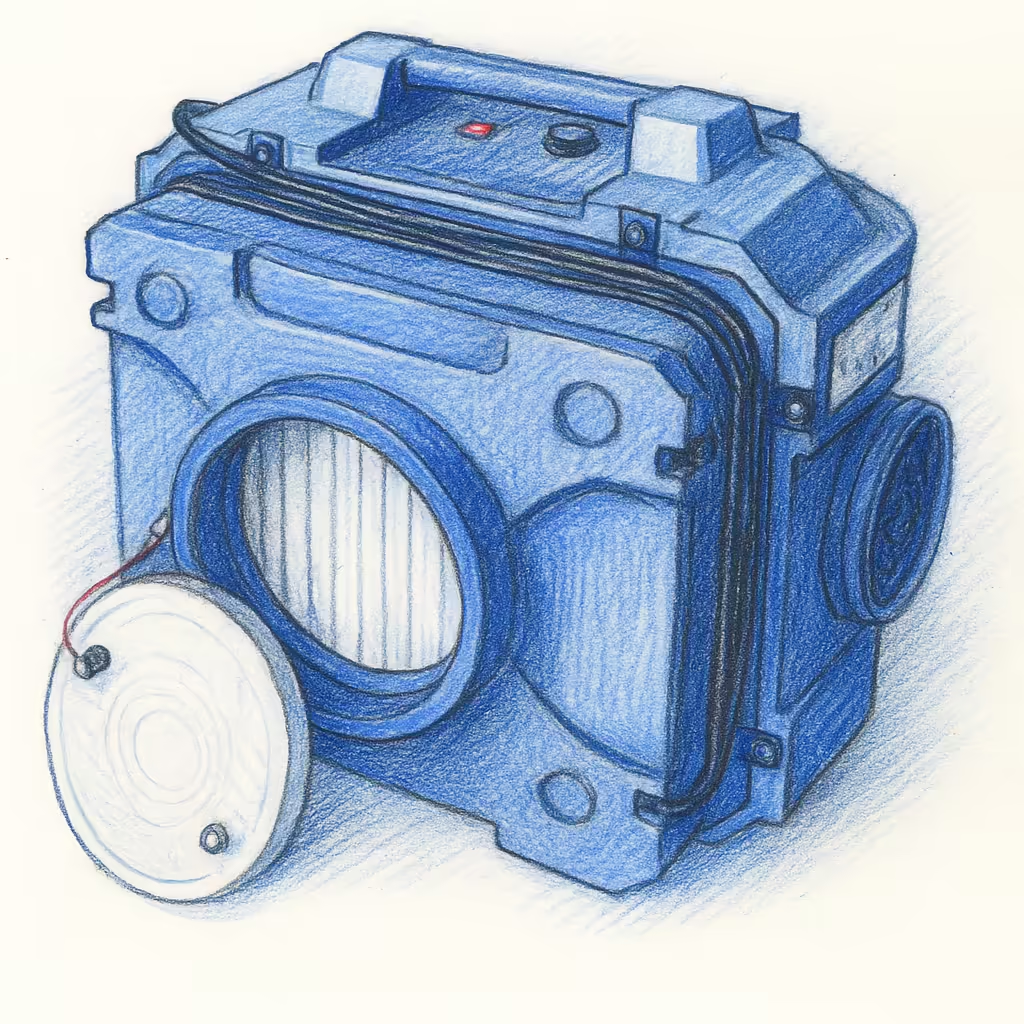
Many technicians think air filtration devices (AFDs) are only needed on mold jobs, when there’s heavy demolition, or contamination on a project.
But according to the IICRC S500, that thinking leaves a major gap in how Category 1 water losses are handled — especially when it comes to air quality, occupant safety, and documentation.
Let’s break it down in plain language.
Do Category 1 Losses Really Have Health and Safety Risks?
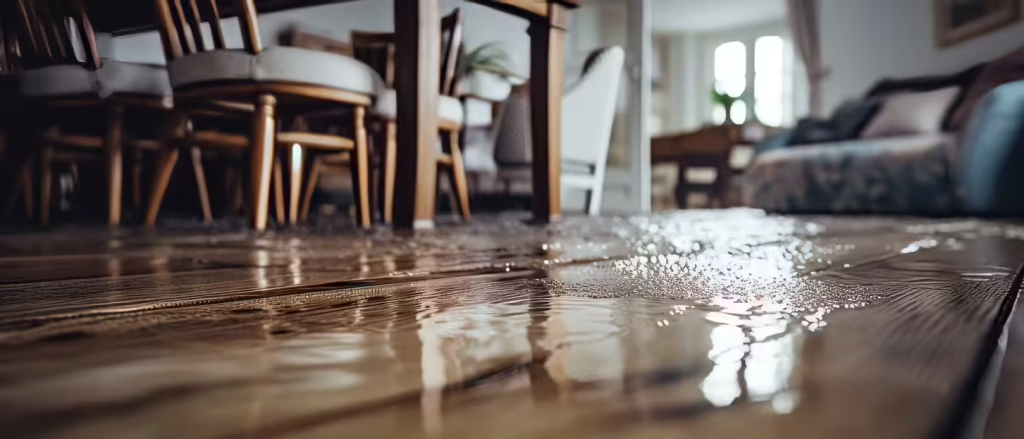
Yes — and the S500 is clear on this.
You don’t need gross contamination to have a problem. OSHA requires restorers to communicate known or potential hazards to occupants or workers present on a work site.
Two things immediately impact air quality on a Category 1 loss:
- Extraction and demolition
At our flood house and lab in Georgia, tests using particle counters have noted the air quality can be drastically affected as soon as extraction begins. Aerosolized particulates continue to be an issue while performing demolition. - Rapid airflow from drying equipment
Air movers push air across materials lifting dust, particulates and potential allergens into the air.
Are AFDs Necessary on Cat 1 Projects?
The S500 answers this in more than one place.
During demolition on Category 2 and 3 projects, the standard states that contaminants can easily become aerosolized and that restorers should use engineering controls to minimize dust and particles. Air filtration devices are a primary engineering control.
But what about Category 1 water damage projects?
The s500 12.4.5 states: As materials dry, more particles continue to aerosolize over time. The standard specifically recommends installing AFDs when:
- Soil or particulates cannot be fully removed by cleaning
- High-risk occupants are present
- Health, comfort, or cleanliness may be impacted
Here’s the key takeaway:
We need to evaluate each project for visible dust and debris, address the dust and debris, determine the risks and potential hazards for employees and the customer.
How Do You Know if an Occupant Is “High Risk”?
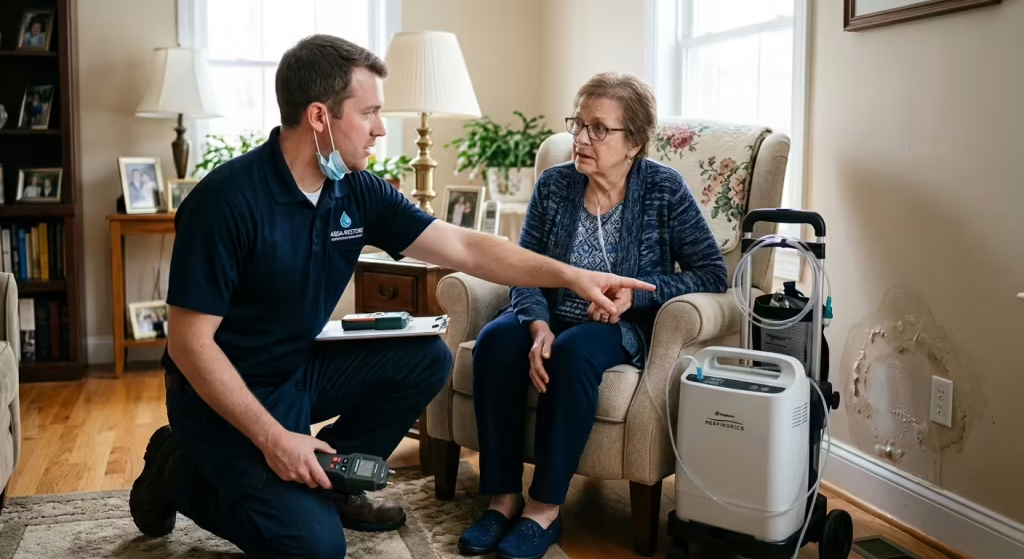
Consultants ask the right questions so decision makers can make a decision with all the pertinent knowledge in front of them.
Explain what will happen to the customer:
- Demo and rapid airflow will aerosilize particles and potential allergens
- It is recommended air filtration be used if there are health concerns
Then ask a simple question:
“Would you like us to install air filtration devices to help clean the air during the drying process?”
If the customer says yes — facilitate and document the request.
How Long Should AFDs Stay on the Job?
This is where many jobs get underpaid.
If AFDs are used only for demolition, one day may be appropriate.
But if they’re being used to address ongoing aerosolization during drying, they should remain in place for the entire dry-out.
The air quality on many projects may worsen on day two of the water damage. According to the s500 12.4.5, as materials dry, the chance of particles aerosolizing increases compared to when they were wet.
Removing AFDs early contradicts what the standard explains about particle behavior during evaporation.
Gaining Agreement with Adjusters When Using AFDs on Category 1 Water Restoration Projects
As an estimator, you can get AFD used on Category 1 projects paid. How?
It starts with confirming your techs followed the correct steps from the s500. Did you see them above?
- Evaluate the project. Was cleaning necessary?
- Was the cleaning sufficient to remove the dust or particulate?
- Is the customer considered “high-risk”?
This information should be gathered and placed in the work plan that is sent to the customer and the adjuster. This allows you to come to an agreement between all parties. It could mean a green light! It may mean the carrier needs further justification and images to back up the work plan. We can provide that. Or it may mean they won’t pay for it and we can now determine if the homeowner would still like the air filtration devices set at their cost.
All of this can be accomplished if we gain agreement when we have the leverage.
Want to learn how to create work plans? Sign up for the Get Paid for Water Damage course.
The Bottom Line
On every Category 1 loss:
- Occupants care about their health
- There is potential for aerosolizing particulate or allergens
- After cleaning visible dust, reevaluate
- AFDs should stay for the duration of drying if there are health concerns
- The number of AFDs must be accurately calculated
This isn’t stuffing estimates or projects with unnecessary equipment.
It’s standard-based restoration done correctly.
If you’re not confident explaining or calculating AFD usage yet, that’s exactly what follow-up training is for.
Want more field-level breakdowns like this?
Explore ReetsTV and advanced water restoration training designed for technicians who want to do the job right — and get paid for it.

Nick Sharp
Nick Sharp has worked with Jeremy Reets for nearly 2 decades. He started in carpet cleaning and mitigation before moving to the construction side as a project manager. He then was the senior estimator for Champion Construction for over 8 years. Since its inception in 2015, Nick has been an instructor of our Restoration Estimating & Negotiating course. His most recent venture is as a restoration estimate consultant. Nick is an Xactware Certified Trainer and also has his Levels 1-3 Xactimate Certifications. He’s a bad boy on that sketch but better at finding where you may be losing money!


770-712-7293