Table of Contents:
Writing Xactimate water mitigation estimates can be intimidating. Xactimate uses categories and selector codes to section off the 20,000+ line items. WTR is the category code for Water Extraction and Remediation. The selector codes break down the category even further to individual line items. The selector codes consist of base 3-4 letters. Then, you can add letters to specify additional options for the line item.
For example, you go to a job at 8 PM and start extracting. WTREXT is the code, but that doesn’t cover the additional labor burden for the after hours call. So you can add an A to make this line item after hours. Got it? Let’s get into the details of the 11 mit line items listed above.
Is there a water damage Xactimate cheat sheet that collects Xactimate codes for water damage in one place? Yes! We’ve collected the frequently used line items and placed them here for you.
Want a free printable Xactimate line item cheat sheet of these line items? Get one HERE
WTREXT – Extraction

Extraction is a necessary part of many mitigation projects. The Xactimate code WRTEXT covers extraction with a carpet wand on carpet. But there are many variations to this base line item. You may be extracting a hard surface (H), after hours (A), etc. Extraction also has variations on the Category of Loss.
For example, there is extracting Category 3 water (S) and also an addition for Category 2 water (G). The difference between extracting Cat 1 water on a hard surface and Cat 2 is 65%. Once again…. Use the correct line items and increase your average dollar sale. It’s that simple.
WTRINS – Insulation

WTRINS is Xactimate code for insulation. Once again, this includes bagging too. The line item addition for insulation that isn’t in many other selections is Confined Space (C). Does this have to do with the OSHA-defined “Confined Space”or even a “Permit-Required Confined Space”? Not necessarily.
Xactimate placed this wording here to notify you that there is an increased labor burden due to working in an area that is not easily accessible. It will take techs longer to complete the work due to longer breaks, working in a tight space, etc. This line item could be used in an attic or crawlspace or other area not deemed a “confined space” via OSHA standards. If you get into a situation where your qualified or competent person deems an area an actual “confined space” per OSHA requirements, this line item will not cover the additional labor burden you will incur. Know the federal laws on these situations, perform work and bill accordingly.
WTRDRYW – Drywall

This is a commonly used Xactimate line item for water damage. What does it include? Labor to remove and bag wet drywall, including the screws and to discard. This also includes cleanup of drywall residue. How extensive is this cleaning? That’s advanced stuff! You can come to the Reets Drying Estimating and Negotiating course and learn how to really dig into the line items and find out after you learn the basics.
This line item is priced per the square foot. If you are removing a small square, a sheet of drywall or an entire wall or ceiling, this is the line item for you. If you are performing this after hours (A), doing a flood cut of 4”(I) 2’ (LF) or 4’ (4), or removing Cat 3 drywall (S), then you will need to add some combination of letters to the end of the base letters of DRYW.
Is knowing the other additions that big of a deal? Let’s do some math:
Say you cut 2’ up around the entire perimeter of a 15×15 room. That is 120 sq ft of drywall removed. In the Atlanta price list (May 2021), WTRDRYW is $.86 /sq ft. So the total would be $125.44. Using the correct line item, WTRDRYWLF on a 2’ flood cut, the total would be $189. But if this was a Category 3 project, WTRDRYWLS could be used. That line item is $4.65 a lineal foot. So the total would be $279
That’s over 100% difference! $153 doesn’t seem like much. But factor that over 4 rooms in a single job…. That would be an increase of $612 to your average dollar sale. Just for using the correct line item! Over the course of 100 jobs it’s over $60,000.
WTRBLK – Block and Pad
This is another one that is easy money. But it is a necessary line item that is often missed.
This line item is used in conjunction with moving contents. These are the blue tabs or the plastic sheets you put under the feet of furniture to protect the contents.
You certainly wouldn’t want to leave wood or metal furniture on wet flooring. Even when you place someone’s furniture in another space like a garage, they should be blocked. Wet furniture legs on cold concrete can cause damage to the furniture.
Do the right thing, protect the contents.
What do you get for it? In the Atlanta price list, the line item is $42.60 per room. Place these blocks in 4 rooms on an average water loss and increase your ADS by $170.40. Over the course of 200 jobs, $34,080! Make sure these are on every truck, every morning and then use them.
WTRTRI – Trim

If you’re doing demo, you most likely are demoing some kind of trim.
At this time, Xact doesn’t get very detailed when it comes to separating crown molding from shoe molding in the WTR category.
There is a baseboard line item (WTRBASE) but it is the same price as the trim line item.
When using TRI, note that there is no bagging. To add the bagging, make this TRIM. The description says “up to Cat 3”. This doesn’t mean it is used just for Cat 3 jobs. It means it is used up to Category 3 projects.
You may need to bag trim to prevent cross contamination, and prevent the need for additional cleaning in other areas or for ease of debris removal.
Who really wants to carry arm loads of broken up and splintered shoe mold with nails still in it? Not me… that’s for sure.
WTRGRM – Antimicrobial

According to the 2015 IICRC S500, “Antimicrobials are substances used to destroy (biocides) or suppress growth of microorganisms on inanimate objects, surfaces and materials”.
After you apply an antimicrobial, according to instructions on the product label, you will can bill it with the line item WTR GRM. This has an option if it was performed after hours. It also has an option depending on the product type, spore-based (BIO) or a botanical (B).
The 2021 version of the s500 has very specific wording regarding using antimicrobials on Category 1 projects. Should you use them or not? You can learn the basics of water restoration via livestream with the IICRC WRT course.
WTRFC (C/T/V/W) – Flooring

WTRFC is the base for removing various types of flooring. This can be carpet (C), tile (T), vinyl (V) or wood (W). Each one will then have even more additives such as laminate (L) for wood or Category 3 (S) for each type of flooring. Each base Xactimate line item will then have additional add ons. For example you may have cement board underneath the tile or pad underneath the carpet. These items should be added as well.
WTREQ – Monitoring labor
The equipment under the WTR category does not include any labor.
To account for the time it takes to travel to the project, set up equipment, monitor atmospheric conditions on-site each day and come back to remove equipment at the end of the project, you will use EQ hours.
This time should be accurately accounted for each day.
If you have a contract with a third party, you may have a formula that is so many minutes per piece of equipment.
If you do not use a TPA to get your work, then you should do your best to track and bill for the time spent on each job.
WTRDRY – Air Movers

This line item is for air movers. There is an option if you are using axial air movers (+) instead of radial or centrifugal air movers. Do I need to emphasize calculating your air movers? I hope you’re doing that on every single job, every single room.
WTRDHM – Dehumidifiers
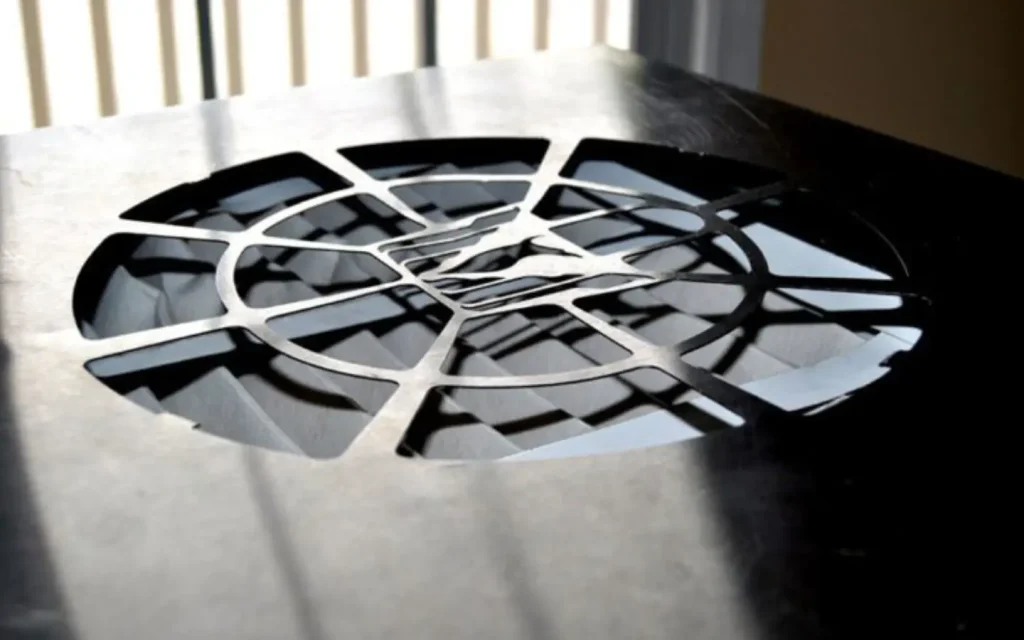
Dehumidification should also be calculated per the standard and adjusted accordingly. When using dehumidification, it is especially important to document the atmospheric conditions accurately. On top of that, inaccurate sketches can cause pushback from adjusters. Why? Because dehumidification is calculated based on cubic footage. If the adjuster doesn’t have the proper information, they will rightfully pushback.
Be sure technicians and estimators align by calculating length, width and height of all rooms. Then be sure that information is relayed to adjusters.
WTRNAFAN – Air Filtration Device
NAFAN is used for an air filtration device. Why do you need to know this? Is this something that should be on every job?
Well, according to the IICRC S500 and considering OSHA standards you probably….. should come to the Reets Drying Estimating and Negotiating class and figure that out! The health and safety of your employees and the occupants, your customer, should be first on your mind.
In addition to that, at $71.54 per day, $286.16 over the course of 4 days…. It’s an important consideration.
Conclusion
This list should get you started in estimating for mitigation. Of course, there are many more line items and profitable activities that aren’t in this one article.
Once you get these down, be looking for more line items that coincide and enhance these. Once you get bundles of line items that you can use on each job, we call them line item clusters. For more clusters, feel free to see us at Reets Drying Academy!

Nick Sharp
Nick Sharp has worked with Jeremy Reets for nearly 2 decades. He started in carpet cleaning and mitigation before moving to the construction side as a project manager. He then was the senior estimator for Champion Construction for over 8 years. Since its inception in 2015, Nick has been an instructor of our Restoration Estimating & Negotiating course. His most recent venture is as a restoration estimate consultant. Nick is an Xactware Certified Trainer and also has his Levels 1-3 Xactimate Certifications. He’s a bad boy on that sketch but better at finding where you may be losing money!


770-712-7293