Table of Contents:
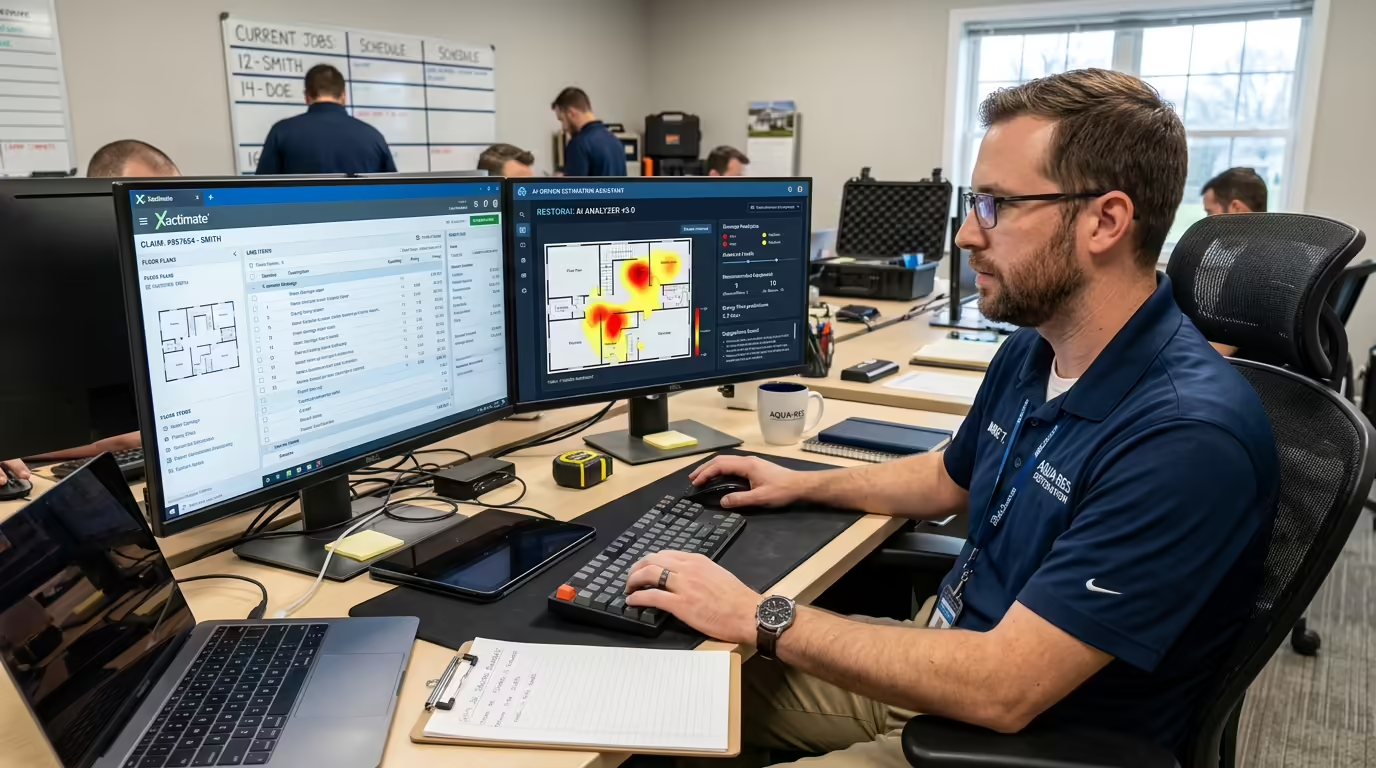
Artificial intelligence is quickly making its way into the world of water restoration estimating—and on the surface, it looks like a game changer.
Faster estimates.
Cleaner justifications.
Less time writing emails.
But here’s the reality:
AI is not ready to scope water damage projects on its own yet.
And if you rely on it in the wrong way, it can cost you real money.
The Problem: AI Doesn’t Truly Understand the Job
Water restoration estimating isn’t just data entry.
It’s decision-making based on:
- Jobsite conditions
- Material behavior
- Drying science
- And most importantly, the IICRC S500 Standard
If you’re unsure how drying decisions should actually be made, start here:
👉 [How to Calculate Air Movers According to the S500]
Here’s where things break down…
Most AI tools:
- Don’t have full access to the S500 (due to paywalls)
- Rely on incomplete or outdated information
- Generate responses based on patterns—not real-world job conditions
That leads to:
- Missing line items
- Incorrect drying recommendations
- Weak or inaccurate justifications
And the worst part?
It often sounds right. Just because it seems confident, doesn’t mean it’s correct.
Why That’s Dangerous for Estimators

When your estimate is built on weak logic, everything downstream suffers:
1. You Lose Credibility
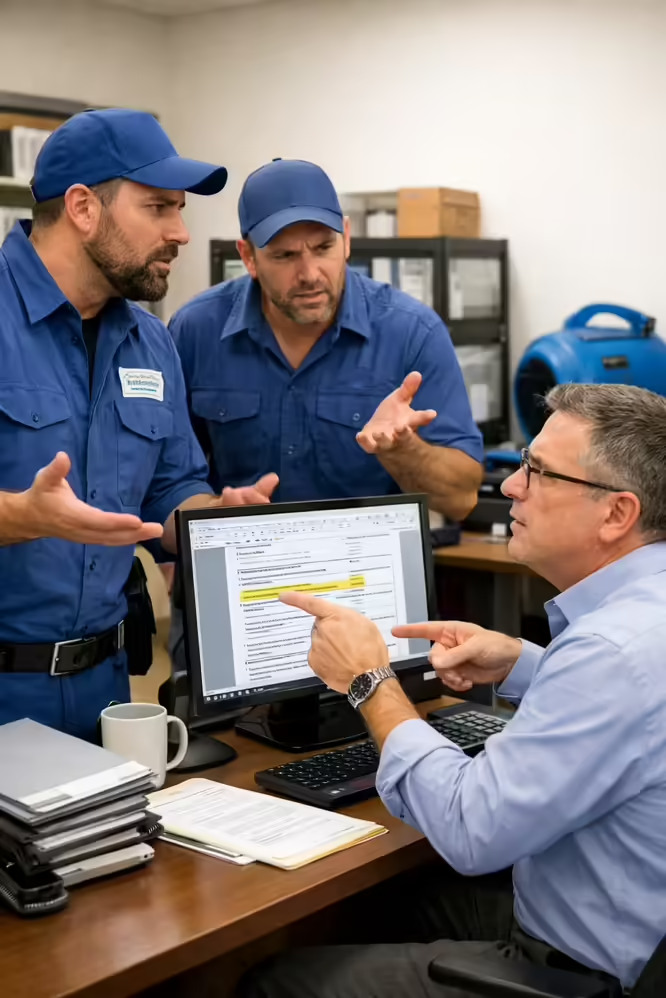
When you use justification for a scoping decision from AI, you may be getting incorrect information. When this inaccurate information is sent to adjusters, you end up looking inept, like you don’t know what you’re doing or, even worse, like a crook. Adjusters and reviewers can quickly spot inconsistencies. Once that happens, every line item will now have a question mark.
2. You Increase Pushback
If you’ve ever dealt with delays or non-responses from adjusters, you know how quickly things can stall:
👉 [What to Do When Adjusters Won’t Respond to Your Estimate]
AI-generated justification often includes gaps or overgeneralizations—which are easy targets for reductions. AI has, at times, made up a quote from the standard that doesn’t exist. Can you imagine justifying your scope of work with inaccurate info? That is not going to fly.
3. You Give Back Profit
Missing just one line item, just one piece of equipment, can impact the profitability of a project. Over the course of a year, this can be tens or even hundreds of thousands of dollars in lost profit.
Adjusters or third-party reviewers need real reasons based on the facts of the project to get payments approved. If we don’t have the justification for even one line item, that is lost money.
Line items are not just numbers on a page, they are dollars into the company. Each line item matters! We should fight for each justified line item. But that means we must know what was done on our projects, how it was done and why it was done. Trying to justify bad decisions made in the field is not a way to have a profitable restoration company. AI can’t bridge that gap. Each bad decision or unjustified line item affects profitability.
Where AI Actually Helps Estimators
AI can be a great tool for us though!
The best use of AI right now?
Communication
AI can help you:
- Write clear, professional emails to adjusters
- Structure your justification in a logical way
- Summarize documentation into digestible explanations
If you struggle with explaining scope clearly, this is a critical skill to build:
👉 [How to Justify Your Water Damage Scope Using the S500]
The Other Side: Insurance Companies Are Already Using AI

Something else to keep in mind.
You’re not the only one using AI.
Insurance carriers and third-party reviewers are using AI to:
- Analyze estimates at scale
- Identify deviations from “expected” patterns
- Generate templated pushback responses
- Flag line items for reduction
If you’re seeing more structured or repetitive pushback, you’re not imagining it.
The New Challenge: Negotiating Against AI
When you’re negotiating against a company using AI, you’re not just dealing with a person anymore.
You’re dealing with:
- Pattern recognition
- Pre-built logic
- Automated scrutiny
And if your file isn’t tight? You’re going to lose ground quickly.
Best Practices for Estimators Using (and Facing) AI
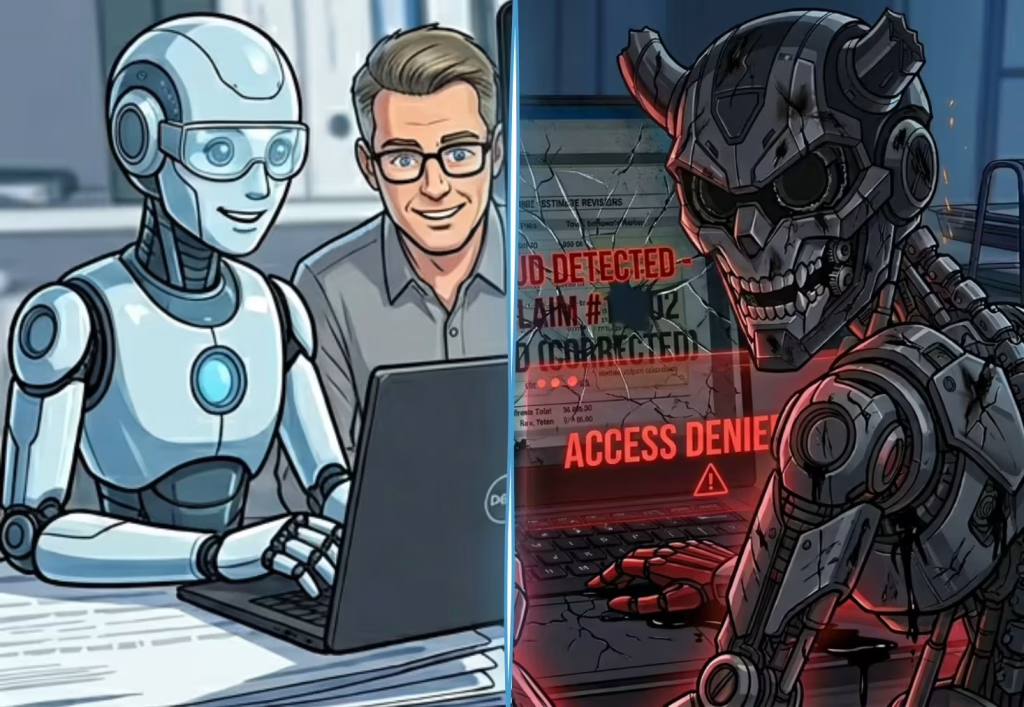
1. Don’t Let AI Build Your Scope
Techs should use their training to interpret and apply the S500 standards to each project when determining:
- Equipment counts
- Drying strategies
- Cleaning requirements
Techs should also be communicating with the homeowner when a decision needs to be made that is not a “shall” or “should” in the standard. Once the homeowner makes a decision this should be communicated to the office so the agreement can be gained with the carrier. AI can’t do these interactions (yet).
2. Use AI to Strengthen Your Argument
Instead of asking AI:
“What should I include?” or “Help me clearly explain why this is required based on these conditions.”
Feed it:
- Your notes
- Your photos
- Your reasoning
- Your initial work plan and any established agreements made via calls or emails
- The email and justification you already have written
Feel free to use a prompt like this:
“Revise this email to clearly and concisely communicate why the decisions made in the field were justified, based on the actual job conditions and supporting documentation.
Include the following elements:
- Reinforce Field Decisions
- Clearly explain that all actions taken were based on site conditions, drying goals, and industry standards such as the IICRC S500 Standard
- Keep the explanation factual and specific to the job (no generic language)
- Establish Prior Communication Attempts
- Incorporate the timeline of communication attempts provided below
- Clearly state that efforts were made to gain agreement early in the process
- Reference dates/times of emails, work plans, or calls
- Example structure:
“We initially submitted the work plan on [date], followed by additional communication on [date(s)] to review and confirm the scope. We did not receive a response during this time.” - Set a Professional Boundary
- Clearly communicate that:
- The work has been completed
- The scope cannot be retroactively changed
- The invoice reflects the work that was necessary and performed
- Clearly communicate that:
- Example tone (not exact wording):
“At this stage, the project has been completed in accordance with the conditions observed and documented. As a result, the scope cannot be modified after the fact.” - Keep the Tone Firm but Professional
- Not aggressive
- Not defensive
- Confident and matter-of-fact
- End with a Clear Path Forward
- Request payment in a professional way as the project has been completed
Important Constraints:
- Do NOT apologize for the work performed
- Do NOT imply uncertainty in decisions
- Do NOT invite broad re-scoping of the project
- Keep it concise, direct, and job-specific
3. Anchor Everything to the Standard
AI may not fully understand the S500—but you do.
If you want stronger negotiations and fewer give-backs, this is where estimators level up:
[Get Paid for Water Restoration: Scoping & Documentation Training] (insert course link)
Your advantage is:
- Knowing the standard
- Applying it correctly
- Communicating it clearly
4. Document Like You’re Talking to AI
When you know you are dealing with an AI, your documentation should:
- Be clear
- Be specific
- Answer “why”
- Remove ambiguity
If a reviewer—or their AI—can’t find the answer quickly… they’ll default to reducing your estimate. So be sure to include your documentation, agreements and standard quotations along with how the standard was applied to this project.
You may find that dealing with an AI may be even easier than negotiating with a person. They can be reasonable and don’t have any preconceived biases.
5. Use the Customer as Leverage
When communication stalls:
- Reconfirm scope with the customer
- Document agreement
- Reintroduce that into the claim conversation
This is one of the most underused negotiation tools in restoration.
What’s Coming- The Future of Water Restoration Using AI
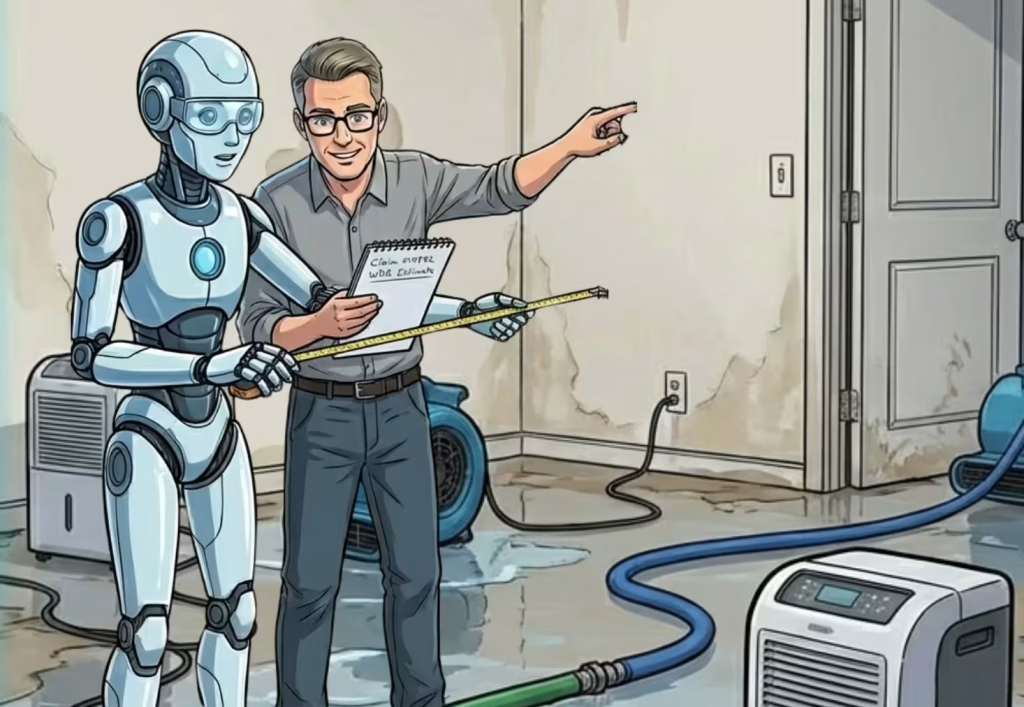
AI eventually will change how we do our jobs, both techs and estimators. Documentation will be developed that uses your measurements to give drying suggestions. Equipment already uses bluetooth to communicate to our devices. One day, this equipment will be even more useful to document and justify projects, both atmospheric conditions and moisture content of the structure. This AI might be able to send that information directly to the office, customer and adjuster! Some of these things already exist, it’s just a matter of time before someone puts them together to create a seamless process.
Estimators are already seeing the adjustments. Sketches are being done on phones and tablets quicker and more accurately than ever before. Those same devices can tell what is in a room (contents-wise), what the room should look like, what was removed and needs to be replaced, etc. The technology exists to take this information and create complete estimates!
What won’t change is:
- A person will need to be in control of the communication between the office, the field and the decision makers
- A person will need to be able to justify the project to the carrier and the customer using the standards and documenting the decisions that the standard doesn’t cover
But how these things occur may adjust. Don’t be scared, but don’t get left behind! Stay up-to-date with the changing technology. Use it to create better and more justified estimates and invoices.
Final Thought: AI Is a Tool—Not a Shortcut
AI is changing the estimating landscape.
But it hasn’t replaced:
- Experience
- Standards
- Judgment
The estimators who succeed won’t be the ones who rely on AI to think for them.
They’ll be the ones who:
- Understand the job
- Apply the standard
- Use AI to communicate more effectively
Because at the end of the day—
Getting paid still comes down to one thing:
Doing the right job and then justifying your scope to get paid.

Nick Sharp
Nick Sharp has worked with Jeremy Reets for nearly 2 decades. He started in carpet cleaning and mitigation before moving to the construction side as a project manager. He then was the senior estimator for Champion Construction for over 8 years. Since its inception in 2015, Nick has been an instructor of our Restoration Estimating & Negotiating course. His most recent venture is as a restoration estimate consultant. Nick is an Xactware Certified Trainer and also has his Levels 1-3 Xactimate Certifications. He’s a bad boy on that sketch but better at finding where you may be losing money!


770-712-7293